Digital Drive, Hybrid Format Powers TDP’s Mahanadu Success

29 May 2026 2:44 PM IST29 May 2026 2:44 PM IST
The TDP adopted a hybrid format for its Mahanadu conclave, combining physical participation with a network of digitally connected centres across AP to facilitate cadre engagement.
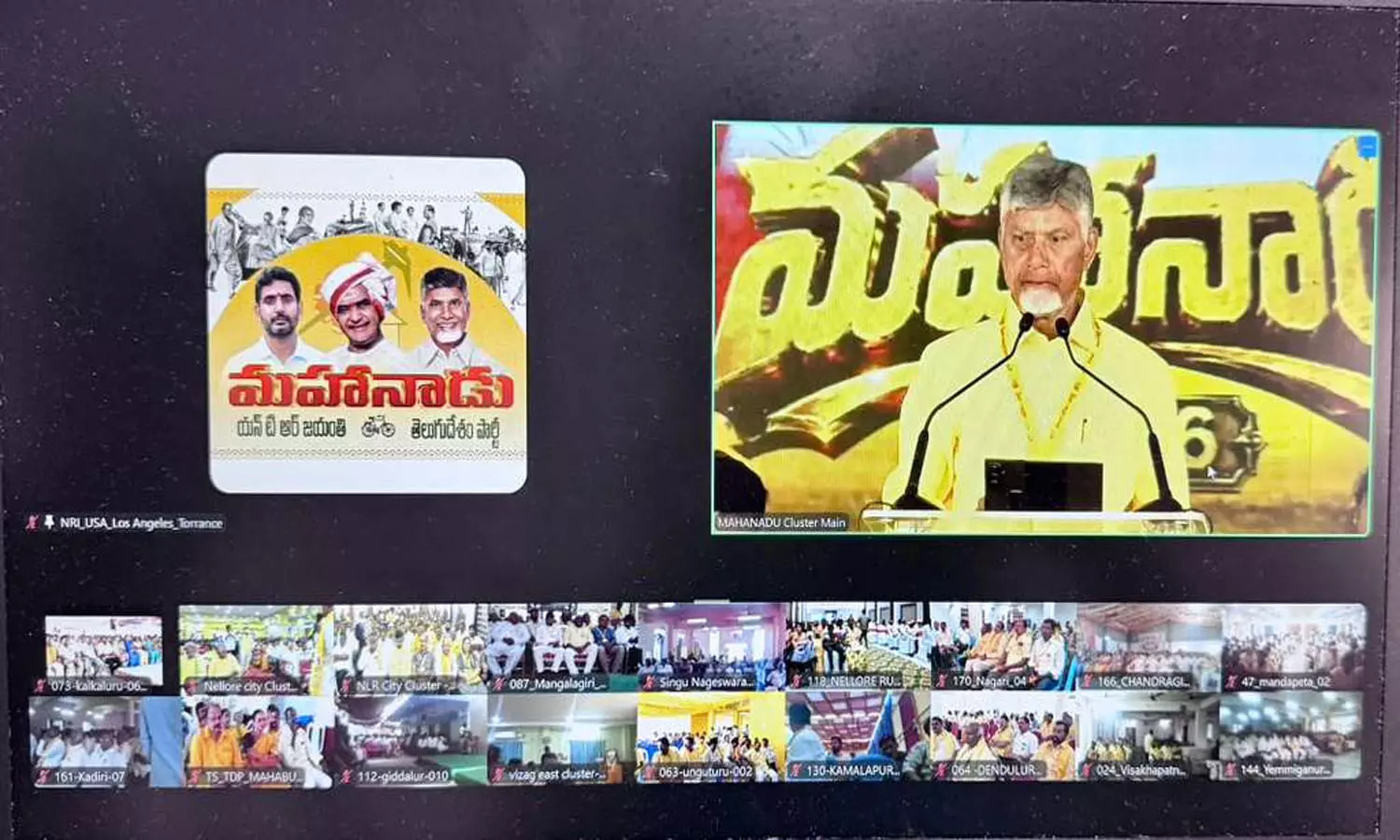
TDP Mahanadu 2026 | Image Source: TDP X
Amaravati: The Telugu Desam Party (TDP) adopted a hybrid format for its Mahanadu conclave this year, which concluded on Thursday, combining physical participation with a network of digitally connected centres across Andhra Pradesh to facilitate cadre engagement.T
The two-day conclave, organised annually to mark the birth anniversary of TDP founder N T Rama Rao, served as a platform for the party to deliberate on organisational matters, adopt resolutions and outline its political roadmap.
The conclave featured discussions on organisational strengthening, women's empowerment, youth participation, technology adoption, government achievements and the party's strategy for upcoming elections.
According to party functionaries, the model was developed under the guidance of TDP national working president and IT Minister Nara Lokesh to expand participation beyond the main venue. Party functionaries said the decentralised arrangement reduced the need for large-scale travel to the main venue and allowed participation from cadres in rural and semi-urban areas.
"This year's Hybrid Mahanadu reflects how technology can be leveraged to connect grassroots cadres and manage organisational activities on a large scale," said a TDP press release late on Thursday.
The party said more than seven lakh cadres participated through a combination of physical attendance and digitally connected centres established across the state.
A key component of the exercise was the setting up of around 1,875 "Mahanadu Cluster Centres" across constituencies and mandals, where cadres gathered to follow the proceedings remotely.
According to TDP, the centres were equipped with LED screens, internet connectivity, audio systems and live-streaming infrastructure, allowing participants to watch speeches, follow discussions and take part in activities linked to resolutions. The TDP also utilised a GPS-enabled digital invitation system integrated with the MyTDP platform.
Participants received digital invitations linked to nearby centres through geolocation-based mapping, it said, adding that the system was intended to help distribute participants across centres and generate attendance-related data.
The party further said the event was monitored through a central command-and-control centre that tracked participation and technical operations across the state.
The facility monitored live feeds from cluster centres, attendance patterns, streaming status, bandwidth availability and other operational metrics during the programme. To support local operations, the TDP deployed booth-level and constituency-level volunteers at participation centres.
These volunteers assisted cadres with registration, app onboarding, QR-based attendance systems, streaming access and technical troubleshooting where required. The volunteers also acted as a communication channel between local centres and the command-and-control facility, relaying operational issues and coordinating support.
Observers noted that the exercise combined the party's booth-level organisational structure with digital coordination mechanisms. The event relied on cloud-based streaming systems, GPS-enabled mapping tools, QR and mobile-based authentication mechanisms, real-time analytics dashboards and mobile communication platforms.
The party also said adaptive bitrate streaming technology was used to accommodate varying internet speeds across locations, particularly in areas with limited connectivity.
The technology infrastructure was tested before deployment to handle simultaneous participation from a large number of locations, said the press release.
According to TDP, the party mobile application served as the primary platform for participant registration, attendance authentication, streaming access, notifications, feedback collection and other event-related activities, according to organisers. The application also enabled the leadership to communicate with cadres and track participation-related data during the conclave.
The event additionally featured a digital feedback mechanism through which participants could respond to speeches, announcements and resolutions using mobile-based tools integrated into the platform. According to party functionaries, the model could be considered for future organisational meetings and political events requiring participation from multiple locations.
( Source : PTI )

Next Story