Deficit Rain Affects Raising of Nurseries, Bengal Transplantation Workers Puzzled
There is a major difference between the local transplantation and the Bengal method.
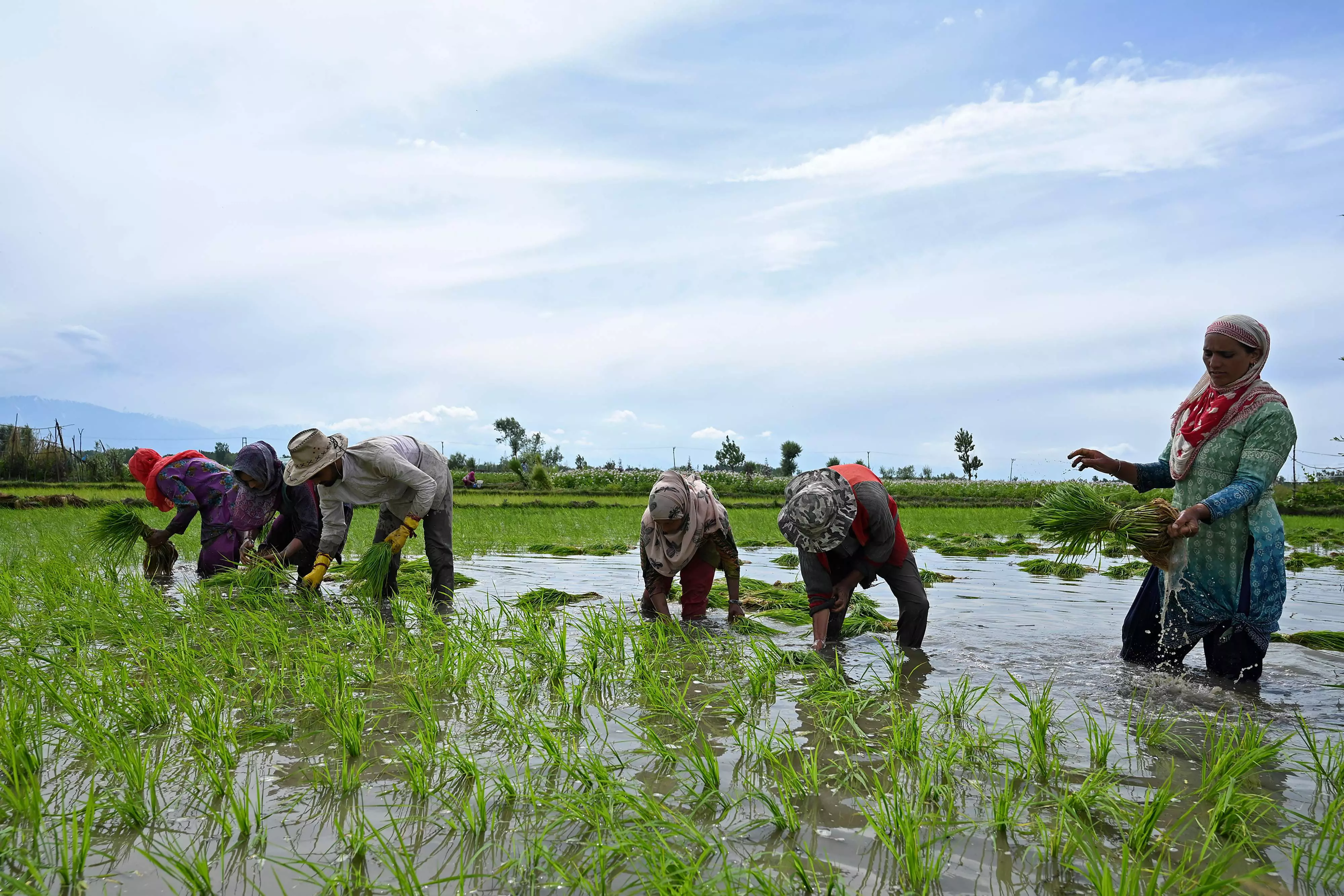
Kakinada: A sharp drop in the number of transplantation workers is reported amid the shortfall in rain that affected the completion of nurseries in Godavari districts--and specially in Konaseema and its upland areas.
A few workers have arrived in these districts while some of the workers left the districts due to lack of work and they are looking for other jobs in other places.
Notably, for the past one decade, the Bengal-type transplantation has become very popular here. Hence, in recent years, workers from West Bengal and Karnataka are coming to AP during the transplantation period in Khariff and Rabi seasons.
There is a major difference between the local transplantation and the Bengal method.
The locals plant the seedlings together whereas the Bengal workers space them apart. This spacing allows the plants to grow larger, develop more tillers and give a higher yield. Agriculture officials recommended the Bengal method of transplantation to the farmers.
Farmers too started preferring the Bengal type workers as their transplantation work involves lesser cost. Bengal-type workers collect Rs 4,200 per acre this time against Rs 3,500 last year, and complete the task immediately. The farmers have to engage nearly 8 to 10 workers per acre by paying Rs 800 to Rs 1,000 as per demand.
Meanwhile, of late, some of these workers are arriving in Godavari districts from the Krishna districts and they too follow the Bengal type of transplants.
The Bengal workers are transplanting the nurseries in straight lines. The Krishna district workers do this in a zigzag pattern. This causes difficulty to the farmers when they remove the weeds from the field.
Farmers approach agents/intermediaries to engage the Bengal workers by offering them some commission. The agents arrange travel and other help for the Bengal workers to get them to the fields. Later, they take a sum from the workers to make up for what they spent on them.
“This year, however, fewer numbers of Bengal type workers are coming from Karnataka and West Bengal due to non-completion of nurseries in the context of a deficit rainfall. Some of those who came to the region have left the districts to get other works elsewhere,’’ said Ch Srinu, an agent in Rajanagaram mandal.
Many from West Bengal, Bihar and Odisha are arriving in the Godavari districts to work as goldsmiths, carpenters, masons and daily labourers. Unit owners engaging these workers are happy about their performance. “These men have the requisite expertise and complete the work at lesser costs to us,” one of them said.
