Cyclones, Including Latest Montha, Worsens Green Cover in North Andhra

Botanists insist on planting native species, instead of administrators’ preference for fast-growing trees
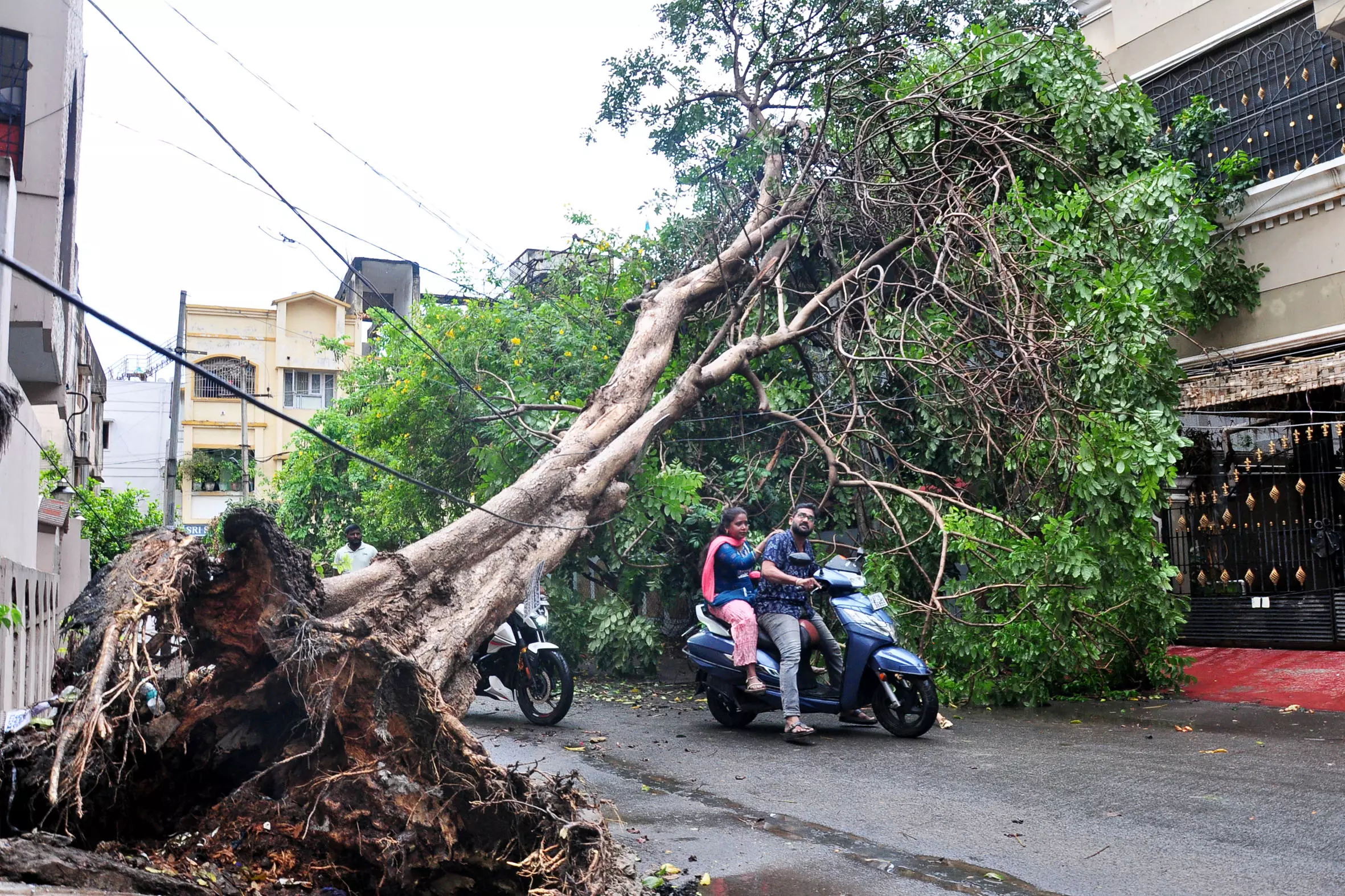
Visakhapatnam: Cyclone Montha has once again exposed the fragile state of green cover in north Andhra Pradesh. Cyclone Hudhud in 2014 and Cyclone Titli in 2018 had widely destroyed trees in both urban and rural areas of Visakhapatnam, Srikakulam, Vizianagaram and Anakapalli districts.
As per the Greater Visakhapatnam Municipal Corporation (GVMC), the city had lost around 150 trees and shrubs wholly or partially across 80 locations till October 2, 2025. By October 28, another 134 trees fell, of which 111 of them have been removed.
Botanists and environmentalists have long warned that the north Andhra region’s trees have struggled to recover from repeated cyclonic events. According to estimates by plant scientists, nearly 70–80 per cent of Visakhapatnam’s greenery has vanished over the past decade. Responding to this, authorities have undertaken tree plantation drives. However, their tendency is to largely plant non-native and fast-growing trees, which do not contribute to long-term ecological stability.
Dr. D. Sandhya Deepika, Professor and Head of Botany Department in Andhra University, points out that native species, such as traditional trees like vepa (Azadirachta indica), chinta (Tamarindus indica), raavi (Ficus religiosa), neredu (Syzygium cumini) and tella maddi (Terminalia arjuna) have been neglected. Instead, species like Alstonia scholaris are being planted, which are ill-suited in withstanding extreme weather conditions.
Sandhya underlines the need to prioritise native trees that are better adapted to local conditions and more resilient to natural disasters.
Former forest officer E. Tulasi Rao recalled that during Cyclone Hudhud, all trees, shrubs and herbs in the Kambalakonda Indira Gandhi Zoological Park got uprooted. However, within six months, many of them began to sprout again. This happened because root systems had remained intact.
Tulasi Rao cautioned against immediately replacing fallen trees with new saplings, arguing that such haste disrupts natural recovery and damages existing roots. Instead, he suggested that uprooted trees must be allowed to regenerate. In the interim, they must be protected from interference.
Mantha Ram Murthy, founder of the Vizag Biodiversity Park, criticised monoculture in post-cyclone restoration. He proposed a more sustainable approach: cutting fallen trees to a manageable height, treating them with fungicide and termite repellents, and supporting them to remain upright at their original location. He emphasised that translocation is expensive and unnecessary for most species. “Preserving fallen trees in place is both ecologically sound and cost-effective,” Ram Murthy maintained.
As north Andhra continues to face the brunt of cyclonic storms, experts agree that restoration of green cover must be rooted in ecological wisdom, not just visual greening.
