Continuing West Asian War Pushing Up Freight Costs for Seafood Exporters

Shipping disruptions and fuel spikes threaten margins for exporters.
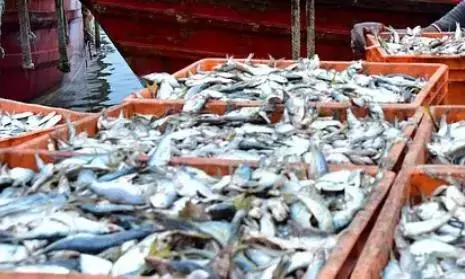
Visakhapatnam: Seafood exporters are anxious as the war involving Iran, Israel, and the United States has disrupted shipping and increased freight costs. While shipments to major destinations, such as the United States, Europe, China, and Japan remain unaffected for now, exporters are concerned that the situation may worsen.
Seafood Exporters Association of India (SEAI) president Pavan Kumar told Deccan Chronicle: “Most of our exports are directed to the US, Europe, and the Far East markets. So far, our operations to these destinations have not been impacted. However, rising fuel prices and freight surcharges are taking a toll. Container shipping rates have surged by about USD 1,000 per container, with further increases anticipated in the coming week.”
Pavan Kumar warned that these hikes would erode competitiveness and squeeze exporters operating in the highly price-sensitive markets.
India’s seafood trade with the UAE, valued at nearly USD 300 billion, is already experiencing the ripple effects of the crisis. Andhra Pradesh, which contributes nearly USD 2 billion annually in seafood exports, is especially vulnerable.
According to the Marine Products Export Development Authority (MPEDA), the state exported 366,182 metric tons of marine products in 2024–25, accounting for 21.56 per cent of India’s total export volume. In monetary terms, Andhra Pradesh contributed Rs 21,245.90 crore, representing 34.04 per cent of the national total.
Visakhapatnam has emerged as the state's export hub, handling nearly half of its shipments and generating Rs 10,808.28 crore in export value.
“For now, we are closely monitoring the situation as it unfolds. The increase in freight rates is beyond our control and is a concern for the industry,” Pavan Kumar stated.
The coming weeks are expected to be crucial. Exporters are adopting a cautious wait-and-see approach, but the trajectory of the geopolitical crisis will determine whether India’s seafood industry can continue to weather the storm or face deeper disruptions in global trade flows.
With Andhra Pradesh and Visakhapatnam at the heart of India’s seafood export performance, any prolonged instability could have significant economic implications for the sector and the state’s coastal economy.
The SEAI president said, “The unfolding situation highlights the delicate balance between geopolitics and global trade, where even distant conflicts can ripple through supply chains and reshape the economics of industries far from the frontlines.”
MPEDA data on seafood export infrastructure in Andhra Pradesh
Exporters (as on September 1, 2025)
Total exporters: 184
Manufacturer exporters: 89
Vijayawada – 26, Bhimavaram – 25, Visakhapatnam – 28, Kakinada – 10
Merchant exporters: 66
Vijayawada – 20, Bhimavaram – 26, Visakhapatnam – 14, Kakinada – 6
Route through merchant exporters: 29
Vijayawada – 10, Bhimavaram – 11, Visakhapatnam – 5, Kakinada – 3
Total exporters by city:
Bhimavaram – 62, Vijayawada – 56, Visakhapatnam – 47, Kakinada – 19
Processing Plants
Total plants in Andhra Pradesh: 125
Total capacity: 7,129.53 MT
City-wise: Vijayawada – 46 (2,705.26 MT), Bhimavaram – 36 (2,061.12 MT), Visakhapatnam – 20 (842.20 MT), Kakinada – 23 (1,520.95 MT)
Cold Storage Infrastructure
Total storage premises: 162
Total capacity: 193,165.7 MT
City-wise: Vijayawada – 56 (74,597.10 MT), Bhimavaram – 42 (42,902 MT), Visakhapatnam – 38 (34,255 MT), Kakinada – 26 (41,411.50 MT)
Seafood Exports (2024–25)
Andhra Pradesh Contribution to India
Export quantity – 366,182 MT
India total – 1,698,170 MT
Share – 21.56 per cent
Export value – Rs 21,245.90 crore
India total – Rs 62,408.45 crore
Share – Rs 34.04 per cent
