CM Seeks Irrigation Nods, Zero-Landfill Goal

Describing Polavaram as the lifeline project of Andhra Pradesh, the CM underlined the need for full reimbursement of the additional expenditure incurred due to the enhancement of the project’s right and left main canals.
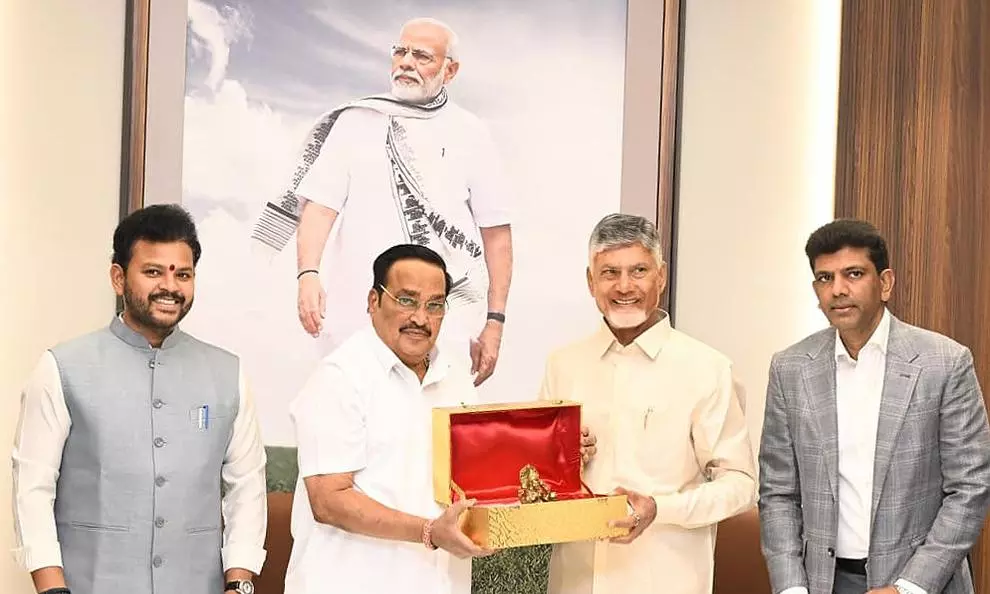
Vijayawada: Chief Minister N. Chandrababu Naidu on Tuesday stepped up his efforts to secure central clearances, funding and policy support for the state’s irrigation, agriculture, rail connectivity and water security projects.
In a series of high-level meetings held in New Delhi with Union ministers, Naidu made a strong pitch for early clearances and enhanced financial support for AP’s crucial irrigation, water security and urban sanitation initiatives. He asserted that timely intervention by the Centre was essential to safeguard the interests of the state, its farmers and the millions dependent on assured drinking water supply.
The Chief Minister flagged long-pending project approvals, unresolved inter-state river water disputes and AP’s ambitious plan to emerge as India’s first Zero Landfill state. He called for closer Centre–state coordination to translate policy intent into tangible outcomes.
In a meeting with Jal Shakti minister C.R. Patil, Naidu took up issues related to central assistance for irrigation projects and dispute resolution mechanisms that have a direct bearing on AP’s future growth.
He sought the permanent revocation of the stop-work order imposed on the Polavaram irrigation project, stating that its continuation was hampering the smooth execution of works.
Describing Polavaram as the lifeline project of Andhra Pradesh, the CM underlined the need for full reimbursement of the additional expenditure incurred due to the enhancement of the project’s right and left main canals.
He also pressed for comprehensive central funding for Polavaram Phase II, which covers land acquisition, rehabilitation and resettlement of displaced families, besides the construction of protective embankments.
Informing the Union minister that Phase II alone would require an estimated Rs.32,000 crore, Naidu stressed that sustained central support was critical to avoid further delays.
The CM also presented to the Jal Shakti minister some proposals for the Polavaram–Nallamala Sagar link project, aimed at diverting surplus floodwaters from the Godavari to drought-prone regions of AP. Terming it a transformative initiative, Naidu said the project would cater to the state’s drinking water, irrigation and industrial requirements. He sought technical and financial assistance from the Centre under the national river-linking policy.
Raising inter-state issues, Naidu urged the Centre to notify the final report of the Vamsadhara water disputes tribunal at the earliest to facilitate the construction of the Neradi barrage. He also called for the immediate constitution of the Godavari water disputes tribunal to resolve issues between Andhra Pradesh and Telangana over equitable sharing of river waters.
Expressing concern over Karnataka’s proposal to raise the height of the Almatti dam on the Upper Krishna, he cautioned that such a move would severely affect downstream water availability for Andhra Pradesh.
Later in the day, Naidu met housing and urban affairs minister Manohar Lal Khattar and sought the Centre’s support for AP’s flagship Swachh Andhra initiative under the Swachh Bharat Mission Urban 2.0. He briefed the central minister on the state’s roadmap to become a Zero Landfill state by strengthening waste management systems and promoting sustainable urban sanitation practices.
Naidu said a detailed action plan with an estimated outlay of Rs.276 crore had been prepared to achieve zero landfill status across urban local bodies. He sought approval of Rs.105 crore as the Centre’s share to support the initiative, emphasizing that the programme aligned closely with the national sanitation and sustainability goals.
The Chief Minister’s engagements underscored AP’s dual focus on strengthening water security and advancing environmentally responsible urban development, with Naidu reiterating that proactive central support would be a key to delivering long-term economic, social and environmental benefits.
