CM Promises ₹100-Crore Nobel Incentive From AP

The keynote address marked the beginning of AP’s ambitious push to build a future-ready quantum workforce and a full-stack Quantum Valley ecosystem in Amaravati: Reports
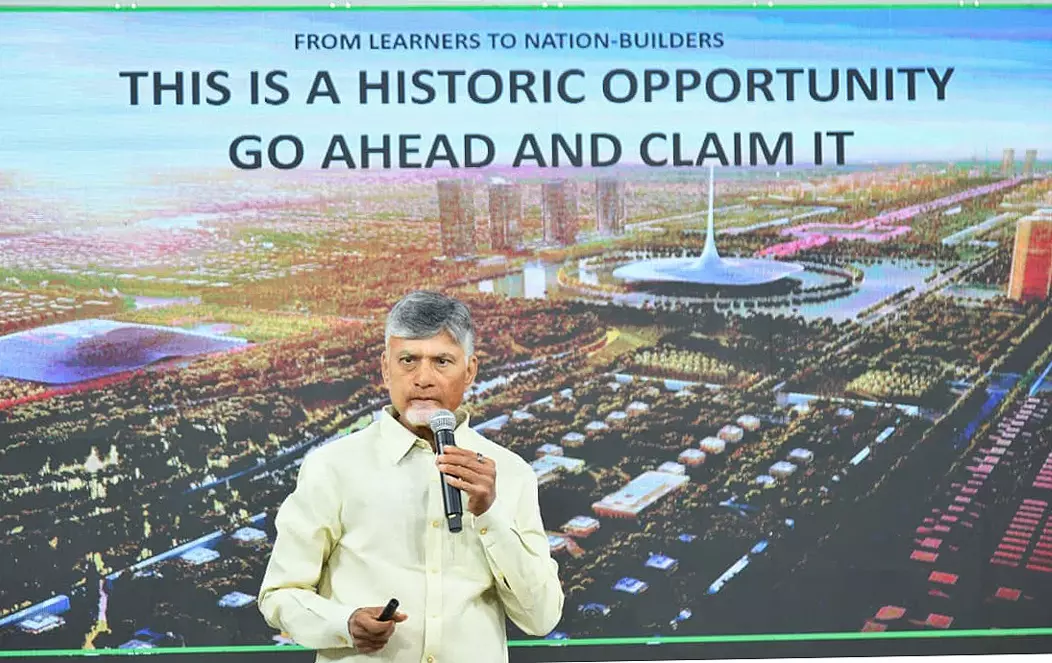
VIJAYAWADA: Announcing a ₹100-crore award for the first Nobel laureate in Quantum Science from Andhra Pradesh, Chief Minister N. Chandrababu Naidu on Monday declared, “Just as the digital age is anchored in Silicon Valley, the knowledge economy of the future will be anchored in Amaravati’s Quantum Valley.”
The high-profile statement set the tone for a vision-setting lecture by the chief minister, who formally launched what is billed as the world’s largest quantum skilling programme.
In a global first, a serving Chief minister personally delivered a structured lecture on quantum technologies, addressing more than 50,000 students and young professionals drawn from across the nation.
The keynote address marked the beginning of AP’s ambitious push to build a future-ready quantum workforce and a full-stack Quantum Valley ecosystem in Amaravati.
The programme is being rolled out through a strategic partnership led by WISER (The Washington Institute for STEM, Entrepreneurship and Research), with Qubitech as the India partner.
The response has been swift and enthusiastic, with over 50,000 registrations recorded in ten days. Women accounted for 51 per cent of the participants, underlining the inclusive character of the initiative.
Using a presentation titled “Silicon Valley to Quantum Valley”, the CM drew parallels between the IT revolution of the 1990s and the emerging quantum era. “Some 25 years ago, I presented a vision for IT. Today, I am presenting a vision for Quantum,” he said, recalling how initiatives such as HITEC City helped place Telugu youths at the heart of the global digital workforce.
Reflecting on India’s economic history, Naidu spoke about the missed opportunities during earlier global revolutions, the constraints of the License Raj, and the transformative impact of the 1991 financial reforms and telecom deregulation.
He cited the success of policy reforms, noting that 99.2 per cent of mobile phones are now manufactured in India, with one in five handsets produced in Andhra Pradesh.
Outlining India’s future strengths, Naidu listed four pillars — economic reforms, early IT adoption, the demographic dividend until 2047, and strong national leadership — and highlighted the complementary roles of the public and private sectors in driving technological change.
He cited the roles of global Indian leaders such as Satya Nadella and Sundar Pichai as inspirations for students.
The Chief Minister announced that Andhra Pradesh would begin producing quantum computers within two years and outlined applications of quantum technology in green energy, personalised medicine, agriculture and advanced manufacturing. “IT and AI have transformed our lives.
The next breakthrough will be quantum-driven speed and efficiency,” he said.
Calling on students to think big and focus on product innovation, Naidu reiterated his vision of Amaravati as a global quantum hub and a cornerstone of Viksit Bharat 2047.
The programme was attended by leading academicians and policymakers.
