CII-PS Sets Example For Organising Waste-Free Mega Events

19 Nov 2025 10:41 PM IST19 Nov 2025 10:41 PM IST
Over two days, almost 3,000 delegates from both India and abroad came together, generating just four tonnes of biodegradable and recyclable waste, all of which got carefully processed without going into landfills
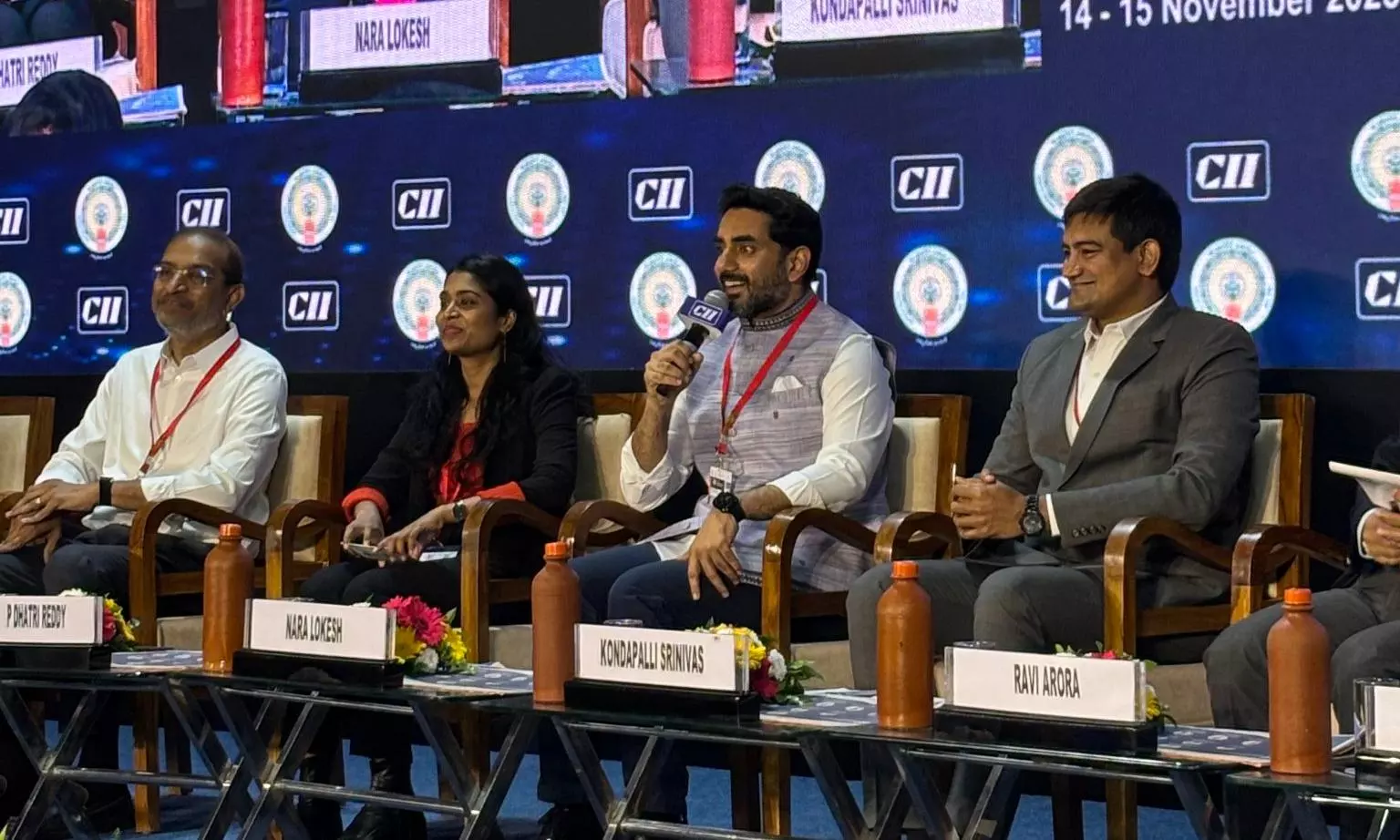
The summit set an example for being a near plastic-free, zero-waste event, a first of its kind in India.
Visakhapatnam: The two-day 30th CII Partnership Summit (CII-PS) held in Visakhapatnam from November 14 captured the nation’s attention not only for the remarkable scale of investments and numerous MoUs signed, but also for dealing with sustainability and waste management.
The summit set an example for being a near plastic-free, zero-waste event, a first of its kind in India. Over two days, almost 3,000 delegates from both India and abroad came together, generating just four tonnes of biodegradable and recyclable waste, all of which got carefully processed without going into landfills.
This became possible due to a network of support personnel who worked together to ensure that every bit that could lead to waste got directed towards recycling, reuse or energy recovery. The effort had been a joint effort of Greater Visakhapatnam Municipal Corporation (GVMC), Confederation of Indian Industry (CII) and Swachh Andhra Corporation.
At the venue, CII deployed 200 personnel each day in two shifts. Each shift comprising 100 sanitation team members maintained hygiene across all zones, 50 in hospitality and food services and 50 as kitchen-support personnel. Their responsibility extended beyond cleanliness: they ensured correct segregation of every category of waste and directed this waste to its designated processing stream.
Outside the venue, GVMC engaged 50 support personnel per shift, who worked round the clock to manage waste along the two major approach roads. Beyond the immediate summit area, another 1,000 volunteers had been stationed across 26 major stretches leading to the event site, hotels and tourist locations.
GVMC deliberately limited the use of its core workforce to avoid disrupting essential civic services elsewhere in the city, relying instead on volunteers and temporary staff for the event.
The event generated two tonnes of dry and two tonnes wet waste. Much of it came from kitchen operations, food leftovers, paper, cardboard, and water cups. Food waste got promptly transported to the bio-gas plant, ensuring complete organic recycling. Dry waste went to the Material Recovery Centre (MRC), where recyclable and non-recyclable materials got segregated. Only about 30 kilograms of non-recyclable dry waste got sent to the Waste-to-Energy Plant.
The glassware used at the summit followed a circular route. Bottles proceeded to an RO Bottle Unit for washing and UV-sterilisation, making them fit for reuse in future events. The sanitation and hospitality teams, along with volunteers spread across the city, played a critical role in maintaining the summit’s nearly plastic-free status. Their round-the-clock presence, particularly the sanitation teams working indoors and along the main roads, formed the backbone of the waste management effort.
At the end of the summit, Visakhapatnam not only delivered a successful investment platform, but also demonstrated how well-coordinated human effort, supported by structured waste-processing systems, can become a zero-waste urban event management in India.
Port city Vizag’s achievement is being positioned as a replicable model for staging large-scale zero waste events across the country.
( Source : Deccan Chronicle )

Next Story