Chola Era Monument Near Bay Of Bengal Getting A New Lease Of Life

Restoration of Eruru temple is unravelling layers of history spanning over a millennium: Reports
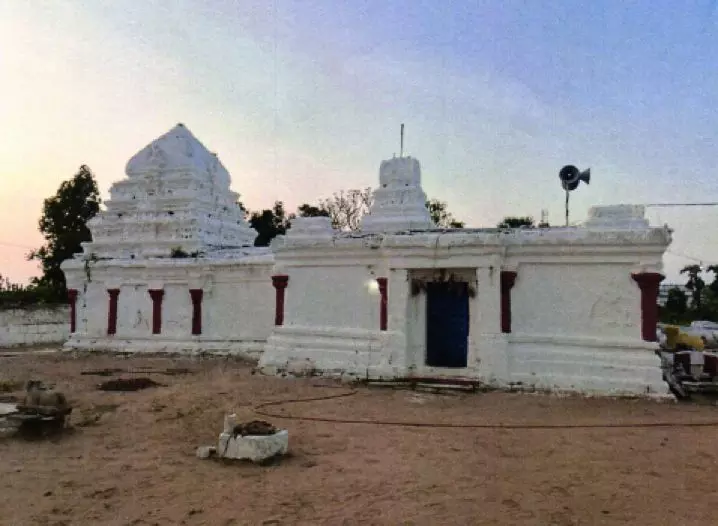
NELLORE: Tucked away in Eruru village of Chillakuru mandal, about 25 km from Gudur railway junction in SPSR Nellore district, just 12 km from the Bay of Bengal, stands the ancient Sri Gnana Prasunamba Sameta Kalahastiswara Temple—a lesser-known heritage gem that continues to quietly preserve centuries of South India's history.
Built in the Dravidian architectural style during the later Chola period, the temple is dedicated to Lord Siva and continues to remain a place of worship. Yet, beyond the spiritual significance, the shrine offers fascinating clues into the region's rich past.
A 13-line Tamil inscription dating back to the 12th–13th century CE records donations made to the temple, while shrines dedicated to Ganesa and Dakshinamurti add to its religious importance.
What makes the site intriguing is the presence of a Buddha idol dating back to the 7th–8th century CE within the temple premises.
Historians believe this suggests the area's religious and cultural significance predates the Chola-era structure by several centuries.
The temple's location near the coast adds to its historical value. Archaeological and historical records indicate that the surrounding region had been part of a thriving maritime trade network during the Satavahana period, with ancient port towns, such as Krishnapatnam, Kothapatnam, Middirevu, Srinivasa Satram, and Thamminapatnam, flourishing nearby.
Recognising the importance of the temple’s heritage, the Archaeological Survey of India (ASI), Amaravati Circle, has launched a comprehensive conservation project.
According to deputy superintending Archaeological engineer Sivakumar, restoration works include rebuilding damaged granite beams and roof slabs, strengthening the temple structure with traditional lime mortar, restoring vimanas, reconstructing the fallen prakara wall, replacing modern flooring with granite stone slabs, improving pathways, repairing the wooden structures inside the sanctum, and providing proper electrification.
The conservation effort is not only to preserve an active place of worship, but also safeguard a rare monument that reflects the region's architectural, religious, and maritime history.
Once completed, the restored temple is expected to emerge as an important heritage destination in the coastal belt of SPSR Nellore and Tirupati districts.
