Chandrayaan-2 Data Reveals Subsurface Ice in Moon’s South Polar Region

This makes them extremely cold and ideal for preserving water-ice over billions of years.
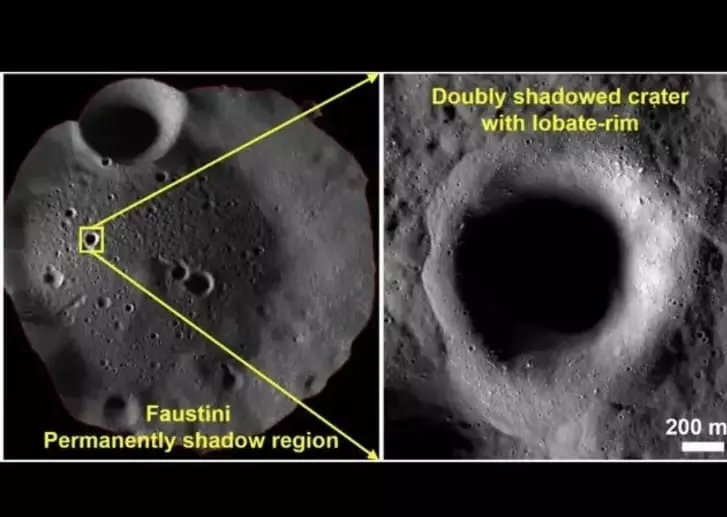
Nellore: Scientists from the physical research laboratory of the department of space have uncovered fresh evidence suggesting the presence of subsurface ice beneath permanently shadowed craters in the Moon’s south polar region.
The breakthrough study used data from Chandrayaan-2 captured using its on-board Dual Frequency Synthetic Aperture Radar (DFSAR), which focused on doubly shadowed craters — regions that remain shielded from sunlight and thermal radiation. This makes them extremely cold and ideal for preserving water-ice over billions of years.
Researchers identified radar signatures indicating possible subsurface ice beneath four such craters on the Moon. One crater within the Faustini region, measuring about 1.1 km in diametre, displayed strong evidence of buried ice deposits.
Scientists observed unusual radar reflections and crater features, suggesting that impact activity may have exposed hidden ice beneath the lunar surface.
These findings are considered significant for future lunar exploration missions, especially for identifying potential locations suitable for long-term human presence and in-situ resource utilisation (ISRU), including extracting water for life support and fuel generation.
The study, published in the journal npj Space Exploration, marks another major milestone in India’s lunar research programme. It strengthens global scientific interest in the Moon’s mysterious South Pole region.
