CESCT Submits Detailed Proposals to Ministry of Education

Centre in Nellore urges approval for new campus and freedom from Mysuru-based CIIL control
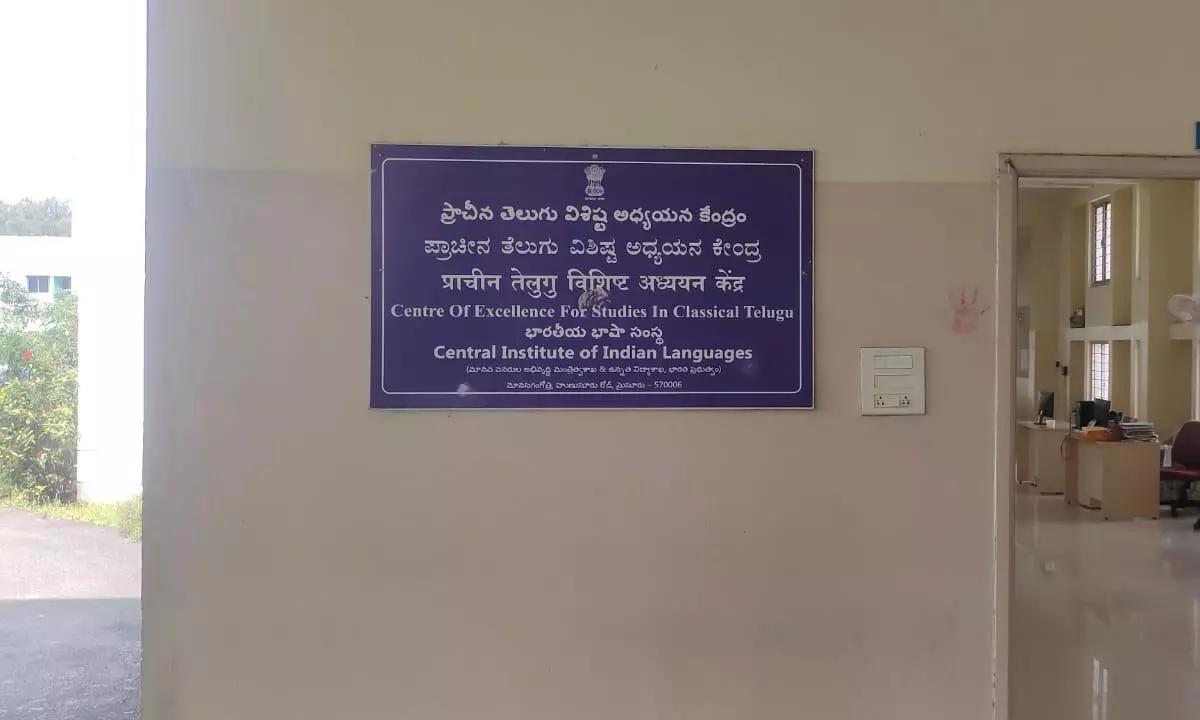
Nellore: The CESCT (Centre of Excellence for Studies in Classical Telugu) is currently operating from a temporary building in Nellore, with the lack of adequate infrastructure limiting its scope for expanding research and infrastructure.
The centre has submitted detailed proposals to the Ministry of Education, seeking approval for the construction of a permanent campus, equipped with research labs, archival facilities and digital infrastructure, on the 5.5 acres of land that the AP state government has allotted to CESCT.
Equally crucial is the centre’s request for autonomous status, which would empower it to independently undertake projects, organise conferences, and publish research. Currently, it requires financial and administrative clearances from the Central Institute of Indian Languages (CIIL) located at Mysuru in Karnataka.
Autonomy would not only streamline CESCT’s academic operations but also enhance collaboration with universities and international institutions.
The Centre of Excellence for Studies in Classical Telugu aims to transform into a world-class institution for research, translation, and preservation of Telugu’s ancient literary heritage.
“Establishing permanent infrastructure and autonomous status will not only ensure stability and academic freedom, but also reaffirm the centre’s role as a custodian of Telugu civilisation — ensuring that the timeless voice of Telugu continues to resonate across generations and geographies,” said popular poet Perugu Ramakrishna of Nellore.
Key Needs of CESCT
1. Permanent Infrastructure: Approval and funding for the proposed building to secure sustainability and scaling.
2. Adequate Financial Resources: To procure scanners, digital equipment and hire technical staff for documentation and digitisation work.
3. Web Portal Development: To provide access to the public to digitised Telugu manuscripts and research outputs.
4. Publication Support: To publish classical Telugu texts and commentaries in both print and digital formats.
5. Permanent Appointments: To regularise existing temporary staff and recruit new researchers under the UGC norms.
