CCI Chairperson Outlines Vision for Indian Industry

Ravneet Kaur urges trade bodies to follow law, backs settlements regime
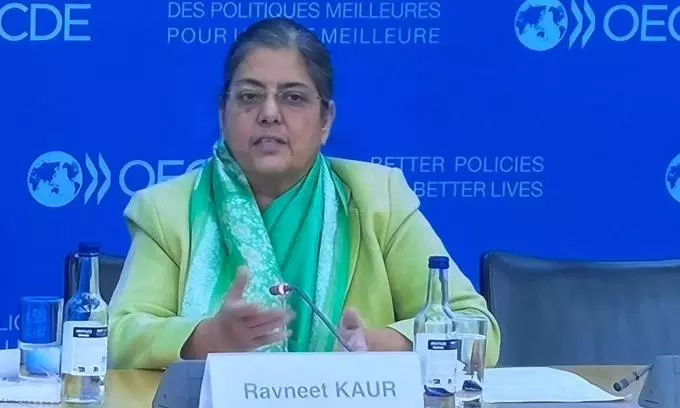
Visakhapatnam: Ravneet Kaur, chairperson of the Competition Commission of India, in her keynote address delivered at the workshop on competition law organised by Damodaram Sanjivayya National Law University in association with the Competition Commission of India, at Sabbavaram in Anakapalli district on Friday. She highlighted the instrumental role of trade and industry chambers in providing a platform for open dialogue and the exchange of ideas that drive the Indian economy forward while maintaining a level playing field.
At the same time, Ranveet Kaur urged the associations to operate within the framework of competition law. She further stressed that CCI remains committed to working proactively and collaboratively with universities to ensure compliance with competition laws.
Referring to the recent path-breaking reforms to the competition law regime, she pointed out that the regulatory landscape has evolved significantly with the introduction of the Competition Amendment Act, 2023, to address emerging challenges and strengthen the commitment to making India a global business hub. The CCI has implemented these transformative amendments.
Specifically, she highlighted that the introduction of the commitments and settlements regime is a game-changer in the enforcement of competition law. This mechanism enables businesses to voluntarily offer solutions that address competition concerns without undergoing lengthy legal proceedings. It allows for quicker market corrections, conserving regulatory resources, and provides businesses with an opportunity to avoid adversarial proceedings. She expressed that competition law continues to catalyze innovation, economic growth, and consumer welfare.
Vice Chancellor Prof. D. Suryaprakasa Rao focused on the background of the Competition Commission of India and its importance in the present scenario. He expressed confidence that the workshop will serve as a platform to foster meaningful discussions, enhance understanding, and build synergies between regulators and academic participants.
