Call for Joint Study To Identify Source of Pollution in Krishna River

Untreated industrial effluents suspected as green, foul-smelling water alarms locals
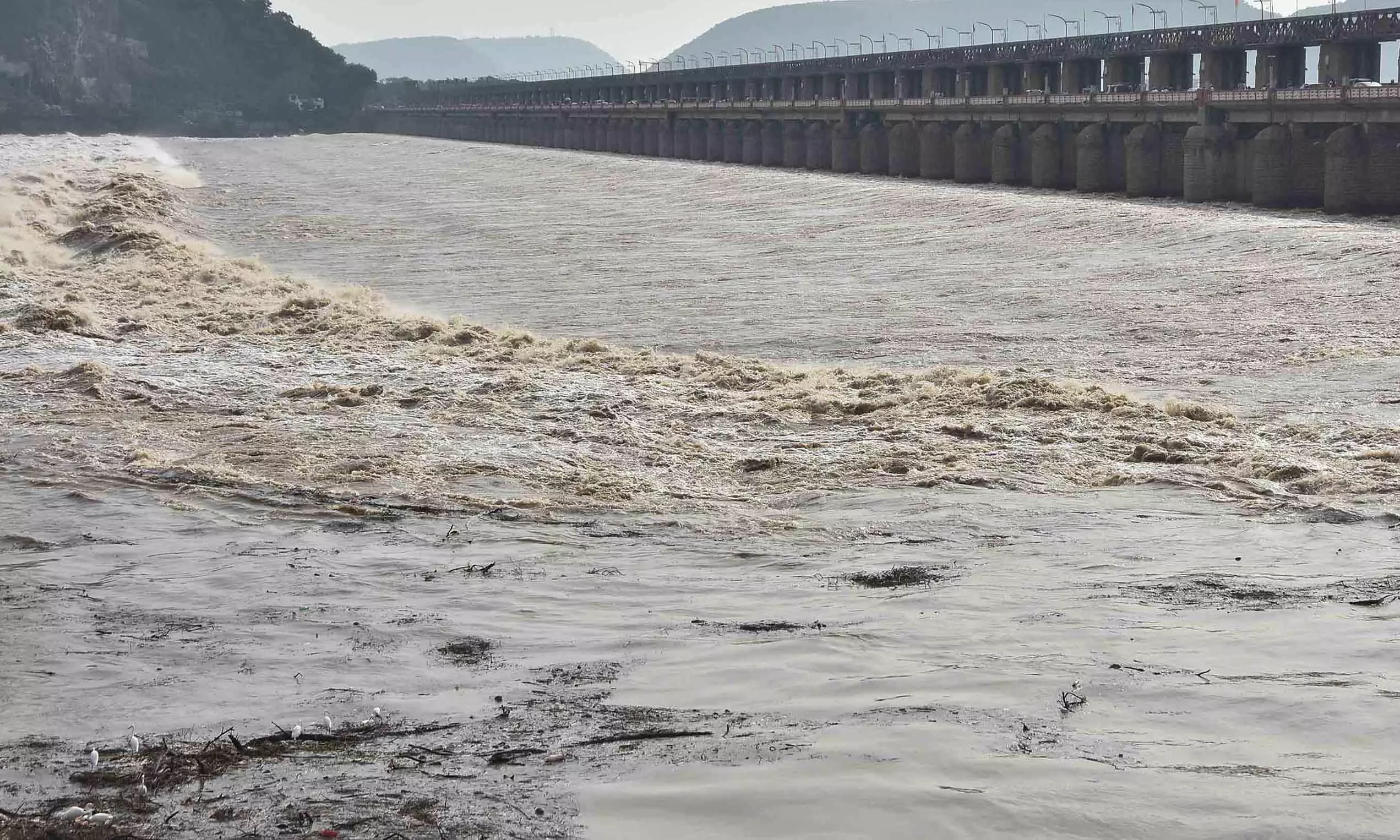
Vijayawada: In view of the pollution of Krishna River in parts of Andhra Pradesh and Telangana, a call has been made by a senior official for a joint study to identify the source of water contamination.
Release of untreated effluents by industrial units is suspected to be the main cause of the river’s pollution. Its control would benefit farmers and the people in general.
The pollution is being noticed in parts of Dachepalli and Machavaram mandals in Palnadu district. Formation of a thick layer of pollutants on surface water is seen in these areas, with the water colour turning greenish and releasing a pungent smell. This has been so for over a month, causing concern to the local residents.
The Pulichinthala project gets Krishna water from upstream Nagarjuna Sagar project in AP and also from parts of Telangana. This is making it difficult to identify the source of water pollution.
Telangana’s water resources authorities also cited instances of river water pollution at Mattampalli village of Suryapeta district recently.
Subsequently, the AP water resources authorities collected a few samples of polluted water and checked it at their hydrology lab in Rajamahendravaram recently, in relation to 22 parameters, and found these to be within permissible limits.
Plans were drawn to release all gates to discharge some water from the Pulichintala project towards the Prakasam barrage and empty this downstream into the sea. However, this was not proceeded with. It was felt that the formation of a thick layer of pollutants floating on the surface of the water may not be drained out through such a practice.
Local pollution control board authorities have also collected samples of water from the river.
The AP authorities maintain that the river water that gets released for farming is relatively good in terms of quality. There may not be any immediate trouble to farmers for cultivation of crops. The water that is supplied for drinking purposes would be treated thoroughly before supplying it to the people. This might not cause any major health hazard.
The Pulichintahala project executive engineer Gunakar Rao said, “We, along with Telangana, are also facing the common problem of pollution of Krishna water in some parts. We propose a joint study to find out the source of pollution. Based on this, we can initiate measures to control it and take the culprits to task as per the usual norms.”
