Bull-Taming Sport Marks ‘Pasuvula Panduga’ at A. Rangampeta

Several people suffered injuries during the event, though most were said to be minor
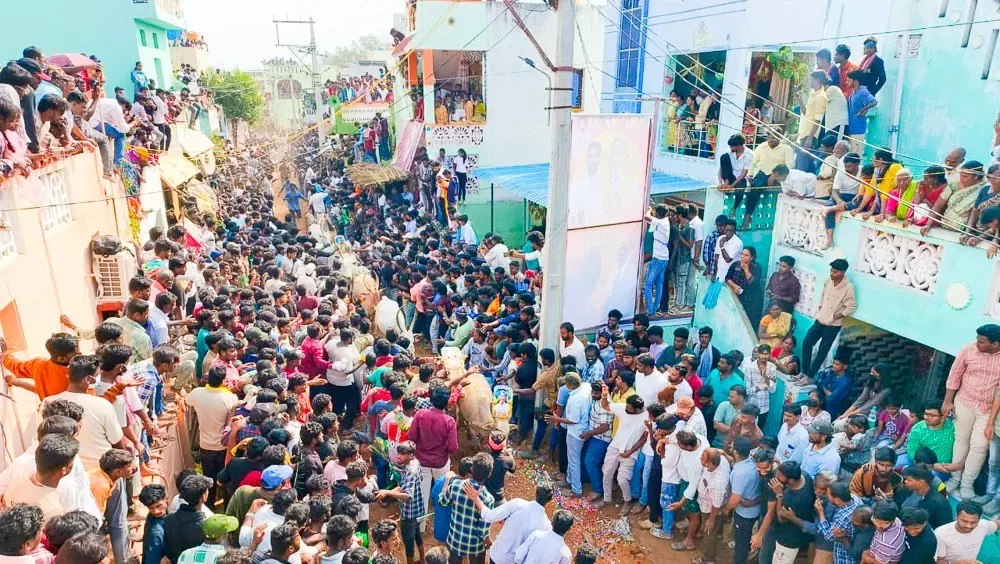
TIRUPATI: The annual cattle festival, Pasuvula Panduga, was celebrated on Wednesday at A. Rangampeta near Tirupati, attracting large crowds from surrounding villages and neighbouring states. The event, held as part of the Kanuma festivities, continues a rural tradition that has been followed in the region for more than a century.
From early morning, cattle owners assembled at village shrines to offer prayers to local deities, seeking good health and prosperity for their animals. Following the rituals, bulls kept in cattle sheds across the village were brought out, marking the start of the celebrations.
As drumbeats echoed through the streets, around 50 to 60 bulls were released one after another into the narrow village lanes. Thousands of spectators lined the roads to watch the runs, while young men from nearby villages, along with participants from Tamil Nadu, Karnataka and Telangana, took part in the bull-taming sport. Locals often compare the event to Tamil Nadu’s Jallikattu, though they describe Pasuvula Panduga as a simpler form shaped by local customs of the erstwhile Chittoor district.
One of the main attractions was the effort to grab wooden planks tied to the bulls’ horns. The planks, decorated with colourful cloth and images of film personalities and political leaders, were treated as prized tokens. Farmers painted their bulls in bright colours and fixed flags of political parties such as the Telugu Desam, Jana Sena, BJP and YSRC. Cash prizes announced by the organisers added to the excitement among participants.
Several people suffered injuries during the event, though most were said to be minor. On the other hand, animal rights activists again expressed concern over the treatment of the bulls, alleging that some animals were force-fed substances to provoke aggression, despite repeated awareness campaigns. However, police personnel, who were deployed at the venue, kept watch but did not intervene directly, citing the long-standing nature of the tradition and the need to maintain public order during the festivities.
