Bold Conservation Effort Set to Protect King Cobra in North Andhra

Saving King Cobra helps protect forests and wildlife in Andhra Pradesh’s Eastern Ghats.
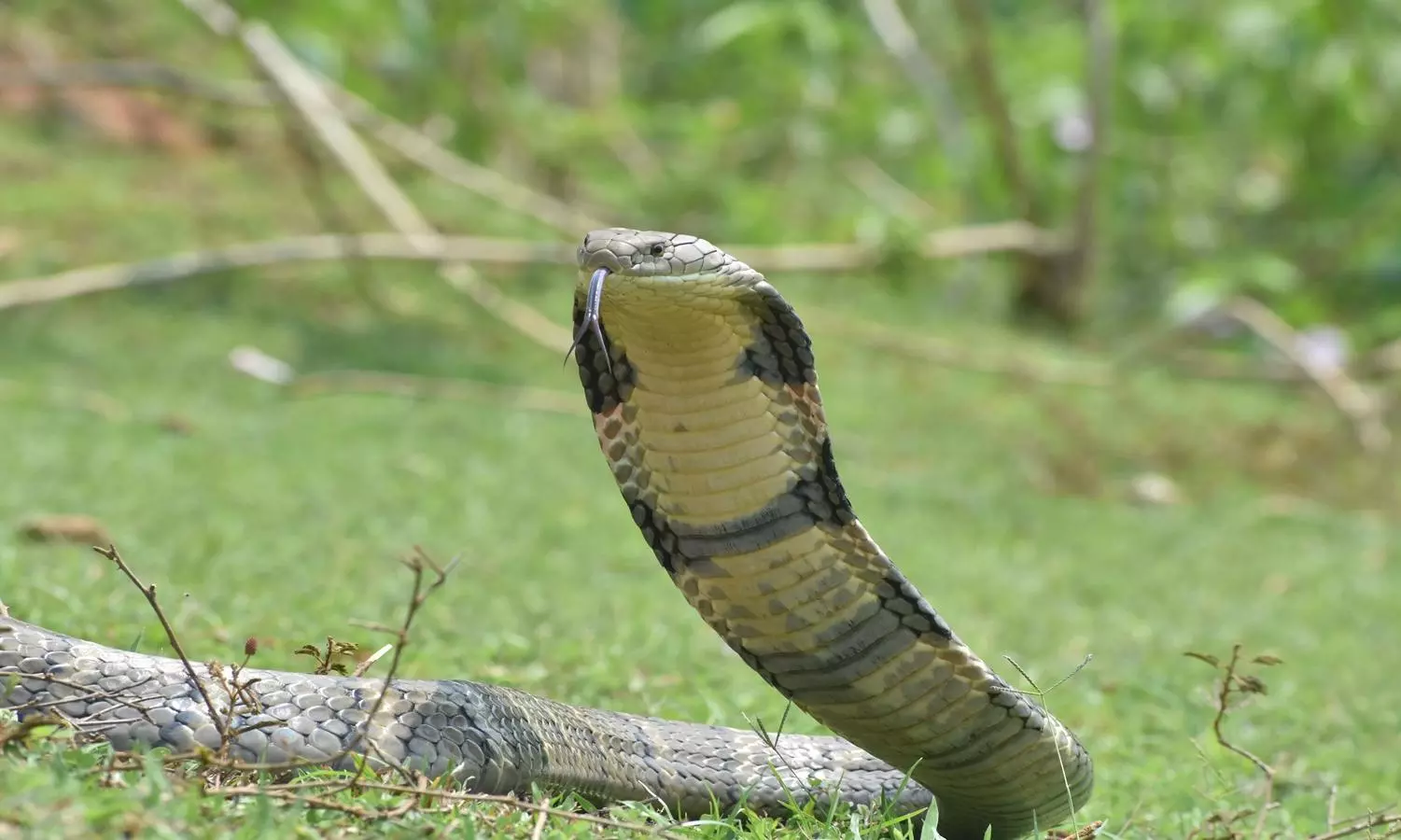
Visakhapatnam: A bold conservation project in North Coastal Andhra is setting its sights on protecting one of the world’s most iconic and misunderstood reptiles, the King Cobra, which is scientifically termed Ophiophagus Hannah.
From 2016, the Eastern Ghats Wildlife Society, working hand-in-hand with the Andhra Pradesh forest department, is spearheading this initiative with the support of institutions such as the Madras Crocodile Bank Trust, Agumbe Rainforest Research Station and Andhra University.
The project focuses on a dual mission. A set of researchers are conducting in-depth studies and educational programmes to uncover the ecology, habits and natural history of King Cobra. They plan to utilise King Cobra as an umbrella species to encourage the establishment and protection of forest areas and corridors throughout the Eastern Ghats.
These efforts are critical not only for ensuring the survival of King Cobra but also for preserving the broader biodiversity in one of India’s most varied landscapes, they say.
According to conservationist Murthy Kantimahanti, the Eastern Ghats are home to diverse habitats, including deciduous forests, wetlands, grasslands, sea coasts and rivers. Yet, the long stretch of mountainous landmass faces mounting threats from habitat destruction.
Rapid urbanisation and deforestation have led to the fragmentation of these ecosystems, while escalating human-snake conflicts, fuelled by fear and misinformation. These result in indiscriminate killings. Such pressures jeopardise the survival of King Cobra and raises the spectre of local extinction if immediate intervention is not taken, he notes.
The project outlines several research objectives to address these challenges. Field teams are tasked with assessing habitat suitability and mapping species distribution using advanced GIS technology. They also rigorously analyse the spatiotemporal diversity of snake populations in the region.
Critical habitat patches and nesting sites for King Cobra will be identified to prioritise conservation efforts. This scientific groundwork is vital for informing site-specific interventions and advising the state authorities on effective management practices.
Murthy says, “Rural communities, often operating with limited resources and literacy, are particularly vulnerable during snake encounters. The project acknowledges this human impact and is planning comprehensive educational outreach. Training in snake rescue, first aid and conflict resolution will be provided to help foster a peaceful coexistence between humans and these majestic reptiles.”
By positioning the charismatic King Cobra as a flagship species, much like tigers or elephants, the initiative promises to protect a key predator and preserve an entire ecosystem, ensuring that future generations inherit a rich, biodiverse landscape.
