Automated driving tests raise safety standards; pass rate falls

7 Feb 2025 9:41 PM IST7 Feb 2025 9:41 PM IST
The test tracks are equipped with 21 CCTV cameras, 12 signal lights, and 300 stand bullet sensors that track candidates’ movements, eliminating human leniency.
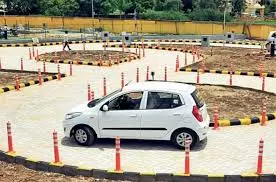
The test tracks are equipped with 21 CCTV cameras, 12 signal lights, and 300 stand bullet sensors that track candidates’ movements, eliminating human leniency.
Tirupati: Introduction of Automated Driving Test Tracks (ADTT) has transformed the driving test process, leaving no room for errors or irregularities. Automation has ensured transparency and accuracy, with only genuinely skilled drivers able to secure licenses.
As a result, aspiring drivers are struggling to meet the high standards set by technology, leading to a sharp decline in pass rates. After ADTT had been launched in Tirupati on January 10, pass rate dropped from 80 per cent to 46 per cent.
The test tracks are equipped with 21 CCTV cameras, 12 signal lights, and 300 stand bullet sensors that track candidates’ movements, eliminating human leniency.
Unlike earlier, when minor mistakes had often been overlooked, the sensor-based system is flagging even the smallest errors, leading to automatic disqualification.
Data from the first 20 days of implementation of ADTT in Tirupati reveals that 87 per cent of LMV applicants failed, with only 13 per cent passing. However, 64 per cent of two-wheeler candidates passed. In Nellore, where the system came into operation on February 1, LMV pass rate is zero. Only 20–25 per cent of two-wheeler riders passed.
Transport officials underline that the automated testing system eliminates irregular practices and ensures that only genuinely skilled drivers receive licenses. “The automated system is ensuring strict adherence to safety standards,” an official of the Transport department underlined.
A major challenge for applicants is discontinuation of trial runs on ADTT. Earlier, candidates could practice on the track by paying a nominal ₹50 fee, helping them adapt to the system. However, concerns over potential damage to sensors led to the discontinuation of these practice sessions.
Candidates have to navigate through eight specific track sections with an RFID tag. The test starts once the tag is scanned and the green signal appears. Failing to do so results in a “Jump Signal” error. Vehicles should not remain stationary for extended periods. On the “H” track, a vehicle must stay within the gradient until the green signal appears. While restarting, the vehicle should not roll back by more than 12 inches. Parallel parking and the ability to brake when a sudden obstacle appears are among the key evaluation criteria.
The system allows up to two mistakes. Exceeding this limit leads to failure in the test. Candidates need to reapply after a seven-day gap. Many applicants have voiced concerns over the strict evaluation process.
“I have been driving for years, yet I failed due to a minor mistake. The ‘8’ turn and reverse parking in the T-track are particularly challenging. Earlier, small errors were ignored, but now, sensors detect everything,” said D. Ramesh, a failed candidate.
However, those who have succeeded viewed the system positively. “It is tough, but it ensures only skilled drivers get licenses. I practiced at a driving school before appearing for the test. Though the absence of a trial run is a drawback, proper preparation helped me clear the test,” said Rajesh Reddy, a driver.
Those applying for the driving test say they must be allowed to practise before taking the test to improve their chances of succeeding.
Transport authorities believe that despite initial difficulties, ADTT will improve road safety. “This initiative ensures that only competent drivers can take to the roads. We are considering collaborations with driving schools to establish practice tracks, so that applicants can adapt to the system,” said an official.
Transport officials underline that the automated testing system eliminates irregular practices and ensures that only genuinely skilled drivers receive licenses. “The automated system is ensuring strict adherence to safety standards,” an official of the Transport department underlined.
A major challenge for applicants is discontinuation of trial runs on ADTT. Earlier, candidates could practice on the track by paying a nominal ₹50 fee, helping them adapt to the system. However, concerns over potential damage to sensors led to the discontinuation of these practice sessions.
Candidates have to navigate through eight specific track sections with an RFID tag. The test starts once the tag is scanned and the green signal appears. Failing to do so results in a “Jump Signal” error. Vehicles should not remain stationary for extended periods. On the “H” track, a vehicle must stay within the gradient until the green signal appears. While restarting, the vehicle should not roll back by more than 12 inches. Parallel parking and the ability to brake when a sudden obstacle appears are among the key evaluation criteria.
The system allows up to two mistakes. Exceeding this limit leads to failure in the test. Candidates need to reapply after a seven-day gap. Many applicants have voiced concerns over the strict evaluation process.
“I have been driving for years, yet I failed due to a minor mistake. The ‘8’ turn and reverse parking in the T-track are particularly challenging. Earlier, small errors were ignored, but now, sensors detect everything,” said D. Ramesh, a failed candidate.
However, those who have succeeded viewed the system positively. “It is tough, but it ensures only skilled drivers get licenses. I practiced at a driving school before appearing for the test. Though the absence of a trial run is a drawback, proper preparation helped me clear the test,” said Rajesh Reddy, a driver.
Those applying for the driving test say they must be allowed to practise before taking the test to improve their chances of succeeding.
Transport authorities believe that despite initial difficulties, ADTT will improve road safety. “This initiative ensures that only competent drivers can take to the roads. We are considering collaborations with driving schools to establish practice tracks, so that applicants can adapt to the system,” said an official.
( Source : Deccan Chronicle )

Next Story