ASI Discovers Link Between AP and Gujarat During 2nd Century

ASI authorities said this identification opens new areas of research to trace the cultural interaction the people of Dharanikota had, especially the royal elite, with the people of Gujarat during the 2nd Century Common Era (CE).
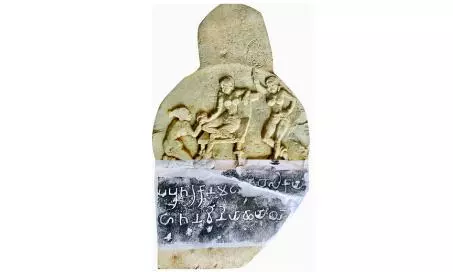
Vijayawada: Archaeological Survey of India (ASI) has found a two-line inscription engraved in Prakrit language and Brahmi characters on a memorial pillar at Dharanikota, a part of capital city Amaravati in Andhra Pradesh.
The inscription recorded the erection of a memorial “‘chhayathabho” in honour of a woman named Hatanavini, the daughter of Maharathi, chief of a place called Saputara, identical to the one known by the same name in the present day Dang district of Gujarat.
ASI authorities said this identification opens new areas of research to trace the cultural interaction the people of Dharanikota had, especially the royal elite, with the people of Gujarat during the 2nd Century Common Era (CE).
From a stylistic point of view, the sculptural panel could be regarded as one of the finest specimens of the Amaravati School of Art. It may be mentioned that even in the fourth century BCE, some ladies from Nandapura in Punjab came to AP when Raja Kubiraka consecrated the holy relics of Lord Buddha at Bhattiprolu.
ASI director (Epigraphy) K. Munirathnam Reddy said in the light of cultural and political interaction between the ancient regions of current day Andhra Pradesh and Gujarat, it might not be out of context to mention the recent visit of Prime Minister Narendra Modi to Amaravati for setting the foundation stone for Amaravati and dedicate to the nation multiple developmental projects in the capital.
