Coffee board plans new initiative to encourage tribal farmers.
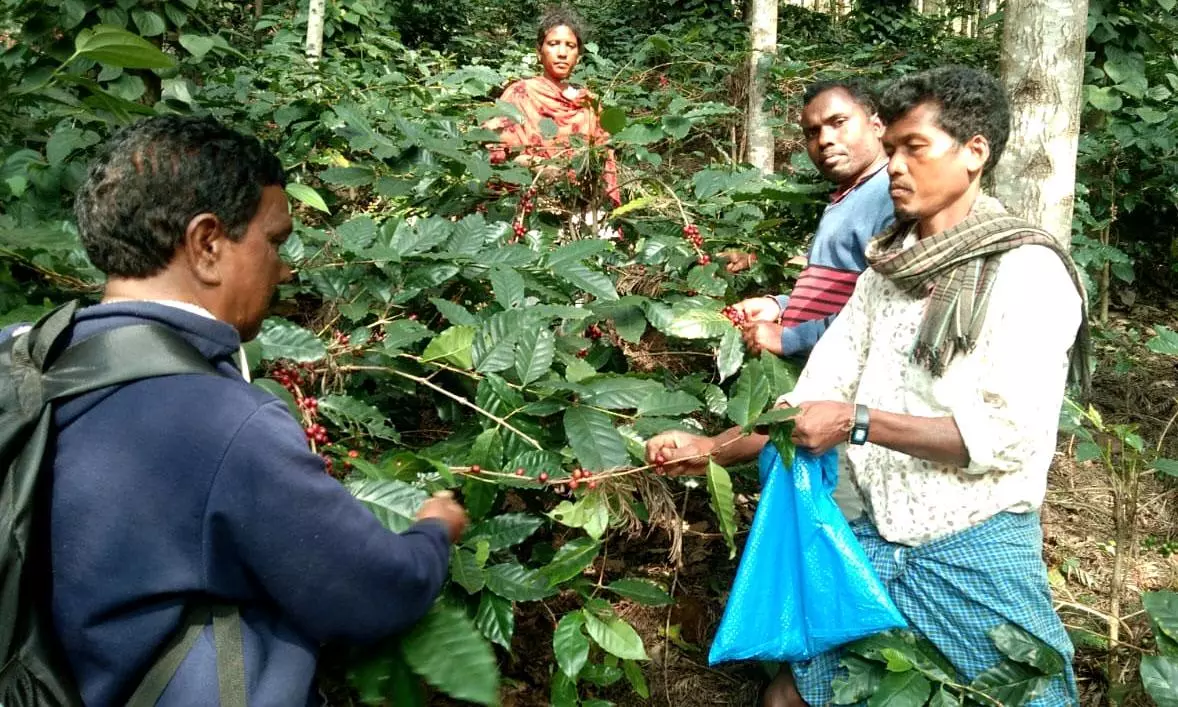
Visakhapatnam: Efforts to expand coffee cultivation in Andhra Pradesh in recent years have met with only modest success.
According to the Coffee Board’s data for 2023–24, India produced approximately 374,200 metric tonnes of coffee, comprising 113,000mt of Arabica and 261,200mt of Robusta. Of this, Andhra Pradesh, a non-traditional coffee-growing region, contributed only 15,380mt. Karnataka continues to dominate national output with over 266,885mt, followed by Kerala (72,825mt) and Tamil Nadu (18,435mt).
To understand the underlying challenges, coffee board chairman MJ Dinesh visited the agency areas of AP four months ago.
Speaking to Deccan Chronicle on Wednesday, he noted that farmers in the region grew coffee organically but faced limitations. “Farmers here are unable to provide adequate nutrients to the coffee plants. They lack a comprehensive understanding of coffee cultivation,” he said.
“We plan to initiate research focused on the unique challenges faced by organic coffee growers,” he said.
The Coffee Board’s ongoing research aims to develop a tailored "package of practices" for organic coffee farmers in AP. This intervention is expected to improve both yield and cup quality. However, implementation will take time, as it requires widespread adoption and spread of awareness among farmers.
Dinesh said, “In the interim, we plan to pursue bulk certification for organic coffee, which will unlock up to 70 per cent in subsidies and help position Araku coffee in global markets.”
State government support: In parallel, the state government has approved a `202.193 crore coffee project targeting tribal communities in the ITDA Paderu region of Alluri Seetharama Raju district. Spanning a decade from 2025–26 to 2034–35, the initiative aims to expand coffee cultivation across one lakh acres and rejuvenate 75,000 acres of existing plantations.
The project is designed to transform coffee into a sustainable income-generating crop for tribal farmers, many of whom currently depend on minor forest produce for their livelihood. With intercropping of pepper, farmers are projected to earn between Rs.1 lakh and Rs.1.5 lakh per acre annually.
The coffee board would supply quality seeds, provide technical guidance, and conduct training at research stations in Minumuluru and RV Nagar. ITDA Paderu and TRICOR would oversee the management, while the director of tribal welfare would submit annual funding proposals to ensure sustained support.

