AP To Roll Out Land, Slum Reforms Inspired By Mumbai Model

The delegation was led by S Suresh Kumar, principal secretary to Municipal Administration & Urban Development, and included senior officials from the Visakhapatnam Metropolitan Region Development Authority, Directorate of Town & Country Planning and the state project management unit.
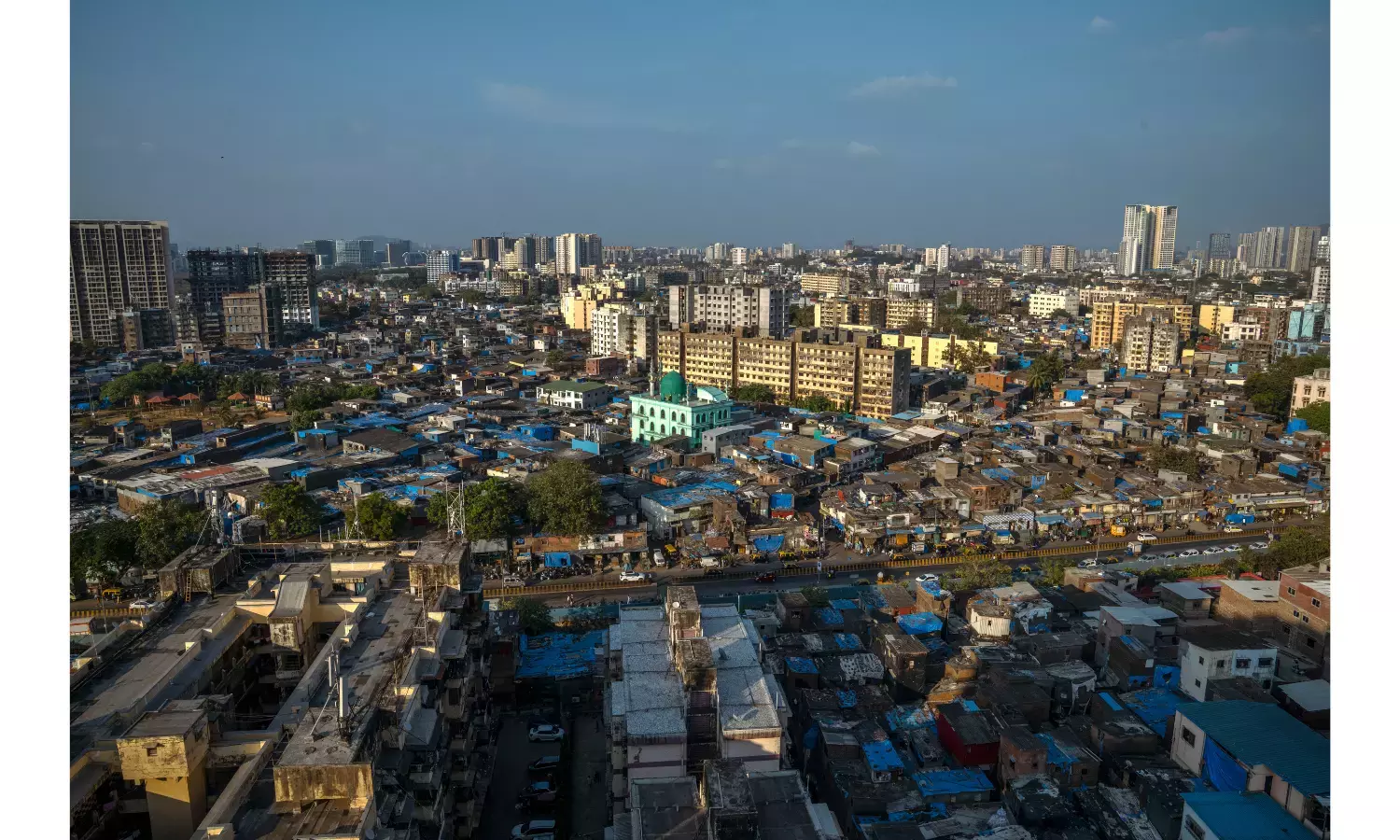
VIJAYAWADA: Andhra Pradesh is finalising two landmark reforms, a Land Value Capture and Land Monetisation Policy, including sub-policies for planned industrial and service city creation, and a New Slum Rehabilitation and Cluster Redevelopment Policy.
This is part of the state government’s efforts to accelerate its next phase of urban and economic transformation.
The policy push follows an extensive two-day study visit by a high-level AP delegation to the Mumbai Metropolitan Region on January 12 and 13 to examine India’s most advanced practices in regional governance, land-based financing, transit-oriented development (TOD), slum redevelopment and large-scale city building.
The delegation was led by S Suresh Kumar, principal secretary to Municipal Administration & Urban Development, and included senior officials from the Visakhapatnam Metropolitan Region Development Authority, Directorate of Town & Country Planning and the state project management unit.
The visit focused on drawing actionable lessons for the Vizag Economic Region, envisioned as a new-generation metropolitan growth engine.
The AP team held detailed discussions with senior officials of the state government, including leaders of the Mumbai metropolitan region development authority, the city and industrial development corporation (CIDCO) and the slum rehabilitation authority.
The interactions provided insights into how Mumbai has financed infrastructure and urban expansion through land, floor space index (FSI) premiums and development rights, rather than relying heavily on budgetary grants.
Officials studied how strict master planning and architectural controls enabled the development of the Bandra-Kurla Complex into a globally competitive financial district, illustrating how planning quality directly translates into land value, investor confidence and sustained public revenues.
A key highlight was the functioning of CIDCO and MMRDA as financially self-sufficient institutions. CIDCO, with an annual budget of about `14,000 crore, largely generated through land and real-estate monetisation, and MMRDA’s financing of Metro corridors through FSI premiums, impact fees and land-based revenues, offered a compelling blueprint for AP.
The delegation also examined CIDCO’s Navi Mumbai and NAINA models, including land pooling, higher FSI and master-planned growth centres, as benchmarks for projects such as Bhogapuram Aerocity and Vizag 2.0, besides large-scale PMAY housing developments delivering over 67,000 EWS and LIG homes.
Suresh Kumar said, “Mumbai offers Andhra Pradesh a clear, working model for building cities through land, planning and empowered institutions rather than budgets alone. VMRDA Metropolitan Commissioner Tej Bharath said VER is now being designed on similar principles to enable the region emerge as a self-sustaining metropolitan economy.
