AP to convert Mahila Marts into livelihood hubs

Strengthen urban livelihoods and foster women-led entrepreneurship
Vijayawada: The Andhra Pradesh government has decided to repurpose select Mahila Mart infrastructure into integrated livelihood hubs across the state.
The idea is to strengthen urban livelihoods and foster women-led entrepreneurship, an official release said here on Friday.
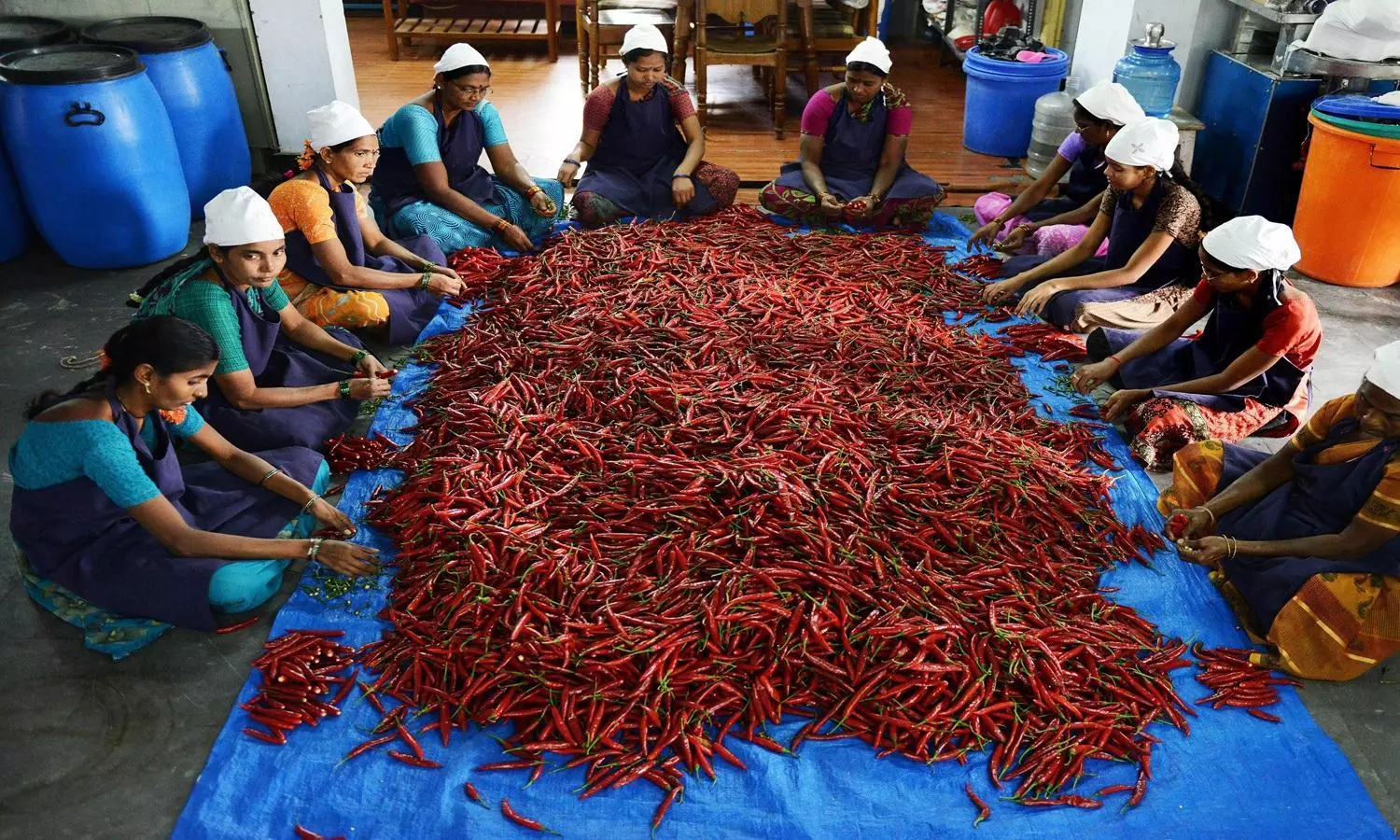
The proposed TIDCO livelihood centres would function as multi-purpose economic hubs within housing colonies, hosting micro-enterprises, food processing units, garment manufacturing, and service-based ventures. Designed around a “walk-to-work” model, the centres are expected to generate local employment, particularly for women, boost household incomes, and reduce migration pressures.
Under this initiative, the municipal administration and urban development department has granted permission to convert seven grounded Mahila Mart units into TIDCO Livelihood Centres. The plan is to ensure optimal utilisation of public assets while sustaining livelihood opportunities for the urban poor.
The Mahila Mart initiative, implemented by APTIDCO in convergence with MEPMA under the PMAY-HFA scheme, was originally conceived as a cooperative retail model managed by women self-help groups. It sought to generate sustainable income by enabling SHG members to run retail outlets, procure goods competitively, and market both FMCG products and locally made items.
However, a review revealed uneven progress across locations. Some projects stalled at early stages due to financial constraints. Hence, adopting a pragmatic approach, the government has decided to convert seven completed structures into livelihood centres, while cancelling non-grounded units.
Urban development minister Ponguru Narayana said the initiative reflected the government’s commitment to outcome-oriented governance and women’s empowerment. “Every rupee spent must translate into sustainable economic opportunities. These centres will act as engines of grassroots economic activity, enabling SHGs to evolve into entrepreneurs,” he said.
Principal secretary Suresh Kumar described the move as a step towards dynamic, impact-driven governance. Aligning infrastructure with ground realities would enhance asset utilisation, accelerate implementation, and create scalable livelihood models within urban ecosystems, he said.
He said the initiative complements flagship programmes such as DAY-NULM and the “One Family One Entrepreneur” scheme, and aims to transform TIDCO housing colonies into vibrant socio-economic clusters.
