AP Emerges as Ocean Technology Hub With Two National Firsts

Both national assets are expected to strengthen marine conservation, shipping safety and the country's blue economy.
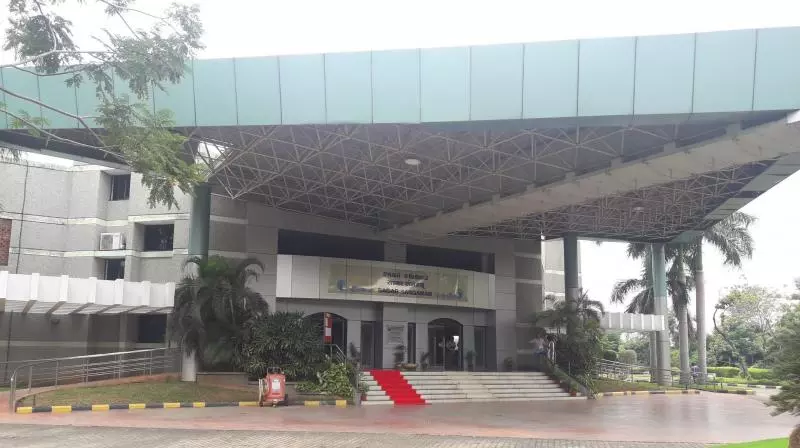
Nellore:Andhra Pradesh has quietly emerged as the hub of two groundbreaking marine science facilities that place India at the forefront of ocean technology and deep-sea research.
The national institute of ocean technology (NIOT), under the Union ministry earth sciences, has established the nation’s first deep sea microbial repository and Asia's first ballast water treatment technologies test facility (BWTT-TF) in Tirupati district. Both national assets are expected to strengthen marine conservation, shipping safety and the country's blue economy.
According to Prof Balaji Ramakrishnan, director NIOT, the ballast water treatment technologies test facility, at the institute’s Pamanji seafront campus is the first facility of its kind in Asia, enabling scientific testing and certification of ballast water treatment systems in accordance with the international maritime organisation ‘s Ballast Water Management Convention.
Developed at a cost of `37 crore, the facility is equipped with seawater intake systems, specialized test tanks and standard test organism culture facility capable of maintaining internationally prescribed marine organisms for rigorous performance evaluation.
The facility plays a crucial role in preventing the spread of invasive aquatic species carried by ships through ballast water, thereby helping protect India's 11098.81-km coastline and fragile marine ecosystems. It also positions India among a select group of countries capable of independently validating ballast water treatment technologies for global shipping.
Complementing this achievement is the nation’s first deep sea microbial repository (DSMR) coming up at NIOT's Chittedu campus. Being developed under the Deep Ocean Mission, the state-of-the-art facility is envisioned as the country's premier centre for preserving and studying microorganisms collected from the deep ocean.
With an estimated Rs 75 crore infrastructure investment and nearly `100 crore worth of advanced scientific instrumentation, the repository will house microbial cultures, environmental DNA, metagenomic libraries, and genomic databases. It will also feature cutting-edge laboratories for genomics, bioinformatics, molecular biology, microscopy and a high-pressure fermentation facility capable of cultivating deep-sea microbes under deep sea conditions.
Scientists expect the repository to accelerate discoveries of novel enzymes, pharmaceuticals, bioactive compounds, and other high-value marine products while supporting biodiversity conservation and fostering marine biotechnology start-ups.
Together, these two first-of-their-kind facilities underscore India's growing ambitions in ocean science and technology.
While the BWTT-TF strengthens the country's maritime environmental compliance and shipping infrastructure, the DSMR is expected to become a cornerstone of deep-sea biological research and bioresource development, reinforcing India's strategic vision under the Deep Ocean Mission and expanding its leadership in the global blue economy.
