AP Asks Telangana to Stop Power Generation From Srisailam Reservoir

Authorities cite insufficient storage in the dam to meet drinking water needs
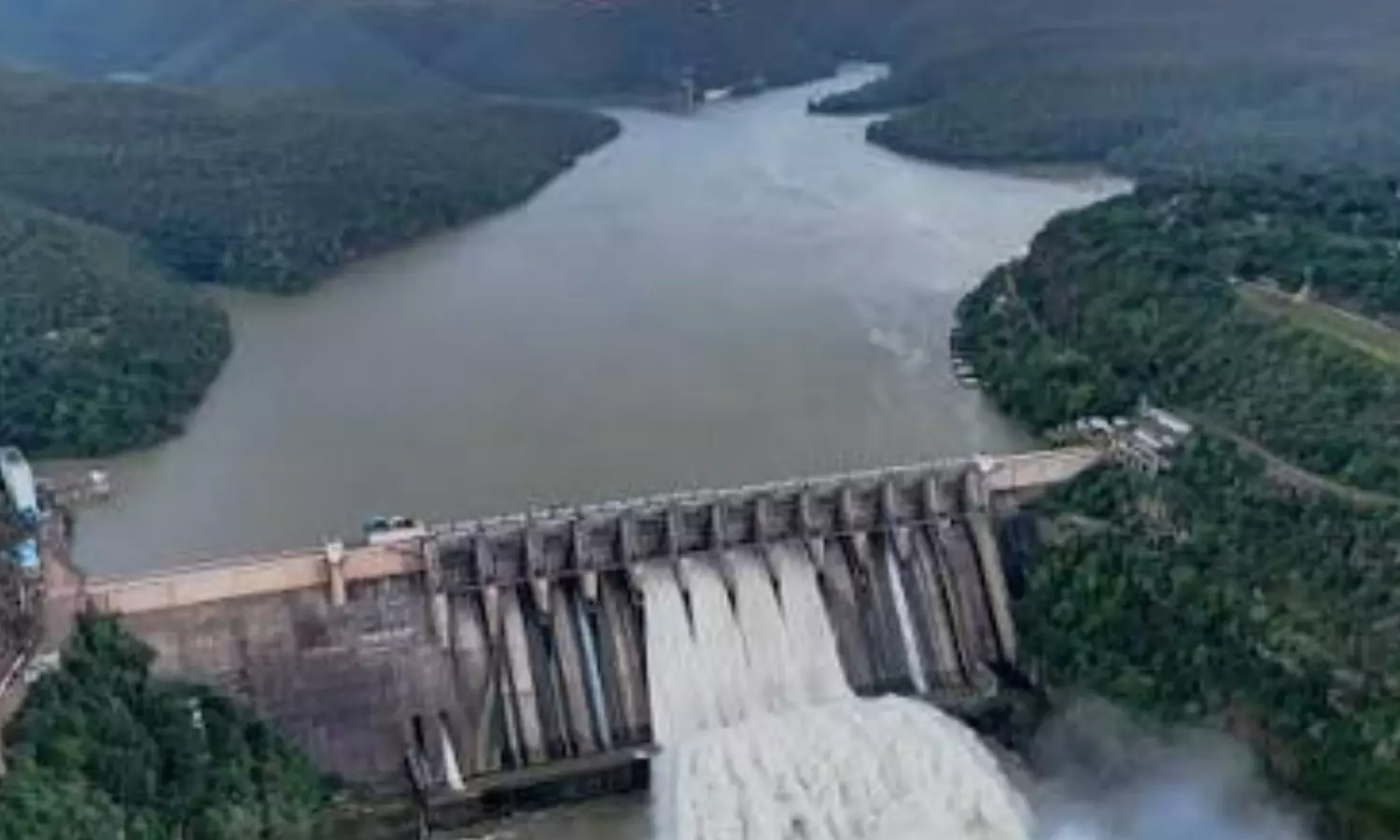
KURNOOL: Andhra Pradesh Irrigation authorities have requested Telangana to stop power generation from the Srisailam reservoir, citing AP’s growing drinking water needs and declining water availability in the reservoir.
The state’s Srisailam Irrigation superintending engineer S. Kabir has written to the Telangana Irrigation department’s engineer-in-chief (ENC), suggesting that available water be conserved primarily for drinking purposes, instead of using it to generate power.
AP has sent a similar communication to the Krishna River Management Board (KRMB), officials said.
Kabir underlined that Telangana is currently using more than 35,000 cusecs of water daily for power generation from Srisailam. This is happening when there is no inflow into Srisailam now. If water continues to be released for power generation at this rate, the available storage could decline rapidly, creating severe difficulties for drinking water supply. The situation is serious,” the AP superintending engineer warned.
Andhra Pradesh Irrigation minister Nimmala Ramanaidu had spoken to Telangana officials over the issue, according to the AP Irrigation authorities.
The contrast with last year is stark. At this time last year, Srisailam had been receiving an inflow of around 3.73 lakh cusecs, with the reservoir holding nearly 197.46 TMC. At present, there is virtually no inflow and the reservoir has around 165.92 TMC of water.
Of the available storage, Telangana is drawing over 35,000 cusecs a day for hydel generation, while Andhra Pradesh is releasing around 8,000 cusecs through the Pothireddypadu head regulator, primarily to meet drinking water requirements.
The impact of water shortage is being felt in the Rayalaseema region, particularly in Kurnool and Nandyal districts. The Handri-Neeva canal runs for nearly 135 km through the two districts. Not a drop is currently being supplied for irrigation. Officials are allowing water only for drinking purposes and have deployed vigilance teams along the canal to prevent unauthorised diversion of water for agriculture.
AP officials said even though water is being released for drinking purposes, not even 20 per cent of the tanks in the region have been filled so far. Groundwater levels have not improved. AP Groundwater Resources department has reported the water table receding to around 14 metres in several areas.
Srisailam water level is a major concern. The full reservoir level is 875.50 feet. Release of water for irrigation through canals becomes difficult once the water level falls below 854 feet.
Though inflows to Srisailam from the upper reaches have already stopped, some water is being released downstream following hydroelectric power generation at the Jurala project.