Animal Rights Activists Object to Relocating Stray Dogs From Their Places of Origin

Activists point out that stray dogs are territorial in nature. They live in their own localities, without allowing dogs from other areas to enter their territory.
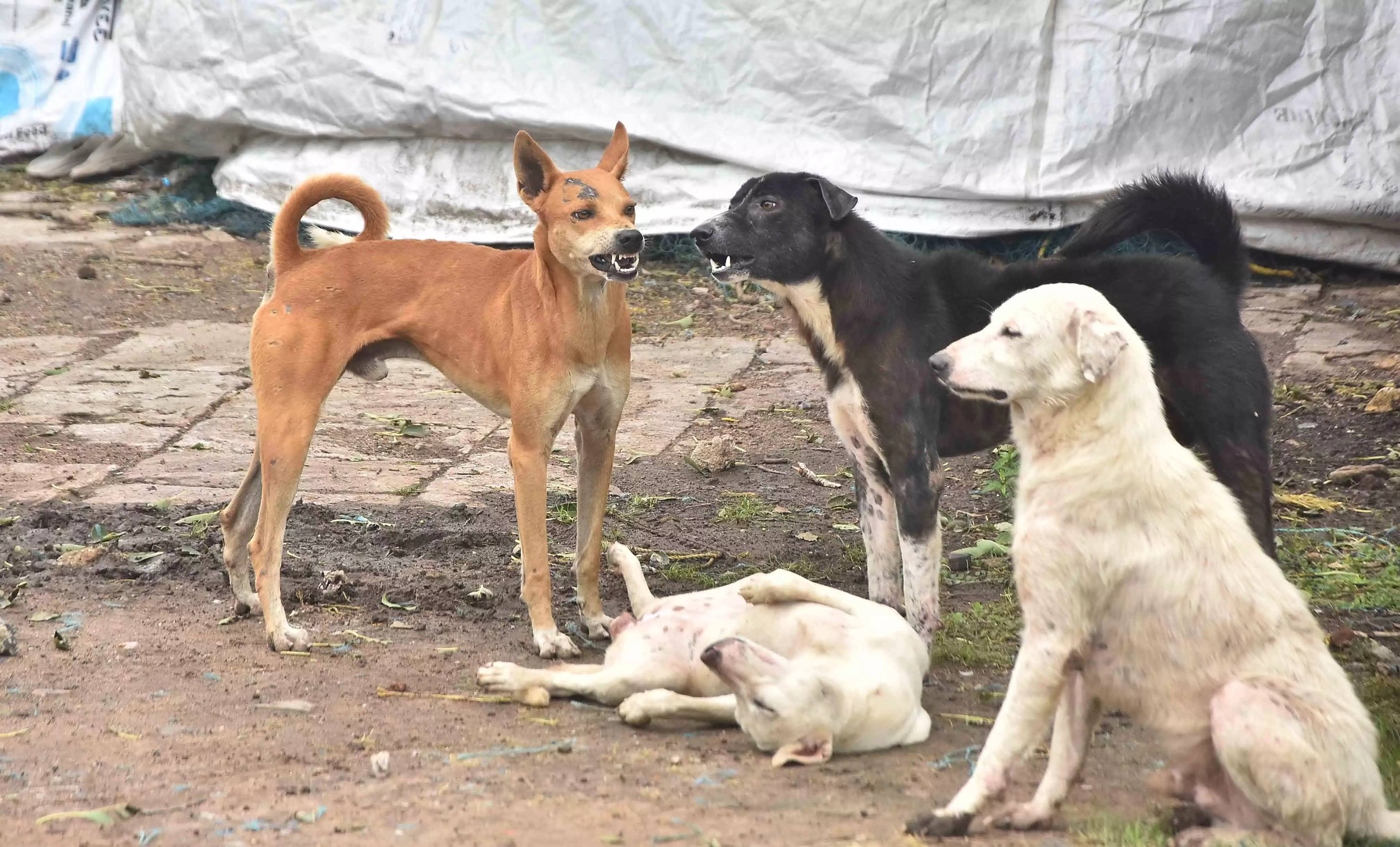
Vijayawada:Welcoming Supreme Court’s directives following people’s concern over the alarming increase in dog bites throughout the country, animal rights’ activists have, at the same time, raised their apprehensions. The activists maintain that if stray dogs, after going through birth control operation and administration of anti-rabies vaccine, are not released back into their places of origin, they may get irritated and resort to biting people again, leading to other ill-effects.
Activists point out that stray dogs are territorial in nature. They live in their own localities, without allowing dogs from other areas to enter their territory. While not allowing other dogs, they also keep an eye on strangers entering their locality.
Though the apex court has given two weeks’ time to identify institutions, initiate protective measures and submit an affidavit on action to be taken on its directions in eight weeks, the ground reality appears to be different.
Prominently, there is no register being maintained at any level for recording the population of stray dogs and even pet dogs in real terms. Whatever the size of the population getting projected is a rough estimate. So is the case with ABC and ARV operations, for which no accurate data is available except for an estimate.
Funds crunch is another major problem with both urban and rural local bodies to arrange dog shelters and perform ABC / ARV operations or set up dog feeding spots. Shortage of veterinary doctors is another problem to tackle the stray dog population.
Moreover, making arrangements in a hurried manner just for submission of compliance reports to the government or courts is another major problem.
Animal rights activist Jagu Suresh said, “Though a committee with all stakeholders has to be constituted to discuss and take a decision on arranging dog feeding spots, such a hurried and unilateral decision will defeat the very purpose of setting them up.”
Interestingly, there is no proper record of dog bites and vaccinations thereafter. An NGO in Rajamahendravaram pointed out that 60–70 per cent of dog bites are due to pet dogs. Victims are vendors who visit the houses for selling milk, vegetables and so on. Domestic helps are also part of the victims.
Global Alliance for Rabies Control certified community coordinator Harsh Kishore Bhatnagar said, “The apex court directions appear to be challenging under current circumstances. Creating dog free zones in sensitive areas like schools and hospitals may inadvertently create “dog bite prone” zones if not managed scientifically. The ABC and ARV are largely non-participatory with minimal community engagement,” he pointed out.
It is thus high time that the state government, which is the main stakeholder, comes up with a holistic approach to tackle dog menace in Andhra Pradesh.
Infographics:
AP has 2.3 lakh stray dogs, according to an estimate.
ABC and ARV have been performed on about 65 of these dogs so far.
Four NGOs are involved in conducting ABC / ARV.
AP government targets to complete ABC / ARV by end of February 2026.
Animal rights activists suggest involving international agencies like WHO, Global Alliance for Rabies Control and others in this operation.
