Andhra Pradesh Plans World-Class University Townships

Sashidhar said the government is also working to bring all universities under a single unified Act, replacing the existing system where each university functions under a separate law.
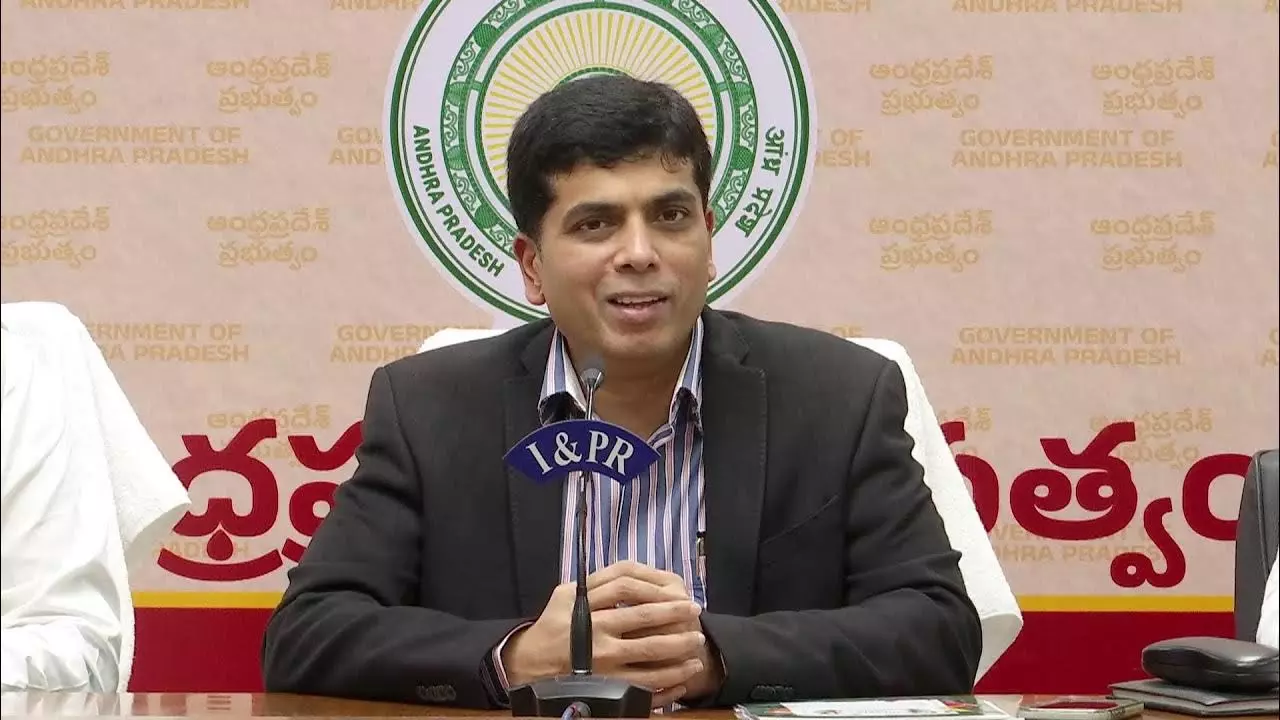
Vijayawada: The Andhra Pradesh government plans to establish world-class university townships to strengthen higher education in the state, education secretary Kona Sashidhar said during the second day of the state-level collectors’ conference on Thursday.
The conference reviewed key sectors including education reforms, rural drinking water management, housing, transport revenues and mining sector performance, with officials outlining targets to improve governance and public services.
Sashidhar said the government is also working to bring all universities under a single unified Act, replacing the existing system where each university functions under a separate law.
Highlighting school education reforms over the past 18 months, he said 11,000 anganwadi centres have been linked with schools, while another 30,000 institutions will soon be integrated to strengthen early childhood education. In addition, 779 upper primary schools have been upgraded and a community-based student tracking system introduced to ensure every school-age child attends school.
Under the initiative, 50,000 dropouts have been brought back to classrooms. Through the LEAP app, data on school-age children is recorded and alerts are sent to headmasters, enabling teachers to coordinate with parents and ensure enrolment. The department is also setting up 125 autism centres across the state and plans to launch a donor app to mobilise community support for school development. Facial recognition-based attendance will also be introduced for teachers and students in higher education institutions.
Panchayat Raj and rural development principal secretary Shashibhushan Kumar presented the RWS Summer Action Plan to prevent drinking water shortages in villages during April and May. Collectors were asked to ensure that no habitation faces water scarcity, maintain storage levels in rural water supply tanks and carry out flushing and deepening of borewells likely to dry up.
Where groundwater becomes scarce, alternative arrangements such as hiring agricultural borewells or tanker supply were suggested. Water testing kits used in Palnadu district will be extended to all districts, along with chlorination of tanks and coordination between health and RWS officials.
Reviewing housing programmes, special chief secretary Ajay Jain said 17,94,996 houses have been sanctioned under PMAY and other schemes since 2015-16. Of these, 5,39,841 houses were completed during the current government’s tenure, while ₹19,512.28 crore has been spent on housing works since June 1, 2024. At present, 5,27,479 houses are under construction.
Officials were asked to complete 2.5 lakh houses by March 2026, 2.7 lakh by June and 1.62 lakh by September. Beneficiary lists will be displayed at Swarna Gramam and Swarna Ward secretariats, and collectors have been asked to conduct fortnightly field visits.
Transport, roads and buildings special chief secretary M.T. Krishnababu said the transport department has achieved ₹4,501 crore, or 76 per cent, of its ₹5,930 crore revenue target for 2025–26 through vehicle taxes. Vehicle sales recorded a 12.5 per cent growth, with over 2.64 crore registrations, while Chittoor district achieved 100 per cent of its revenue target.
Mining secretary Mukesh Kumar Meena said the sector’s GVA grew by 15.74 per cent to ₹33,956 crore, while revenue collections reached ₹2,654 crore — 92 per cent of the ₹3,320 crore target — by February. He urged collectors to expedite NOC clearances for mineral leases, noting that 1,125 of 1,788 applications remain pending, and said a deemed NOC system may be introduced to prevent delays.
