AP Plans India's First Human-Carrier Drone Ambulance

The project is being guided by former DRDO chairman and AP’s aero defence adviser G. Satheesh Reddy. HIs vast expertise in defence technology and aviation safety is helping make the project a grand success.
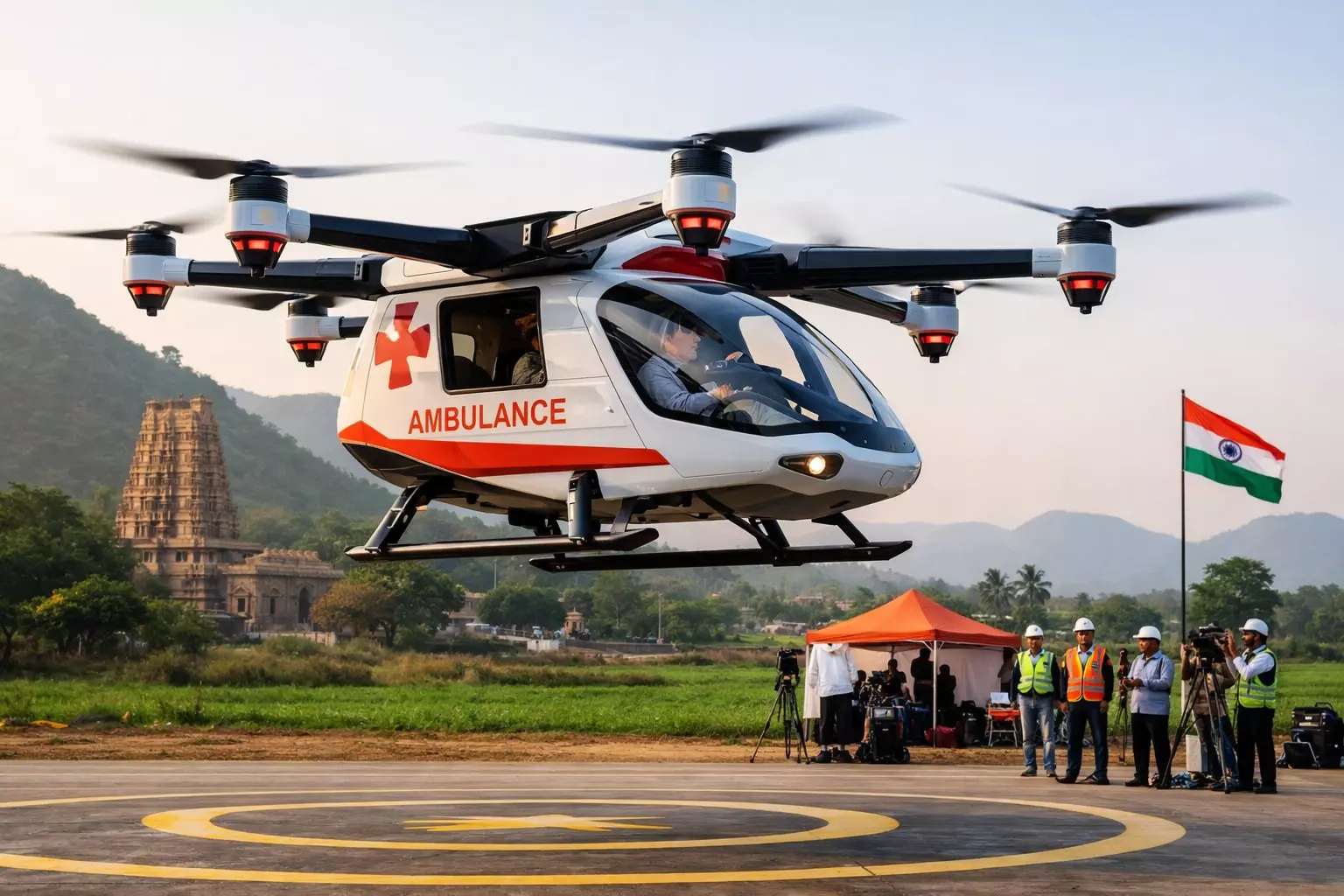
Nellore: Andhra Pradesh would create history with the launch of India’s first human-carrier drone ambulance, a pioneering initiative that promises to revolutionize emergency medical services.
The aim is to ensure rapid medical response in critical situations by overcoming challenges such as traffic congestion, rivers and difficult terrain, where every second matters for those caught in the fight between life and death.
The flying ambulance concept is the brainchild of chief minister Chandrababu Naidu. As part of his vision to establish AP as a global hub for drone and aerospace innovation, Naidu has emphasized that technology must serve humanity in more ways and save lives.
The project is being guided by former DRDO chairman and AP’s aero defence adviser G. Satheesh Reddy. HIs vast expertise in defence technology and aviation safety is helping make the project a grand success.
The drone’s design and certification are being developed in collaboration with the Kalam Advanced UAV Research Centre (CASR) at Anna University, Chennai, led by Prof K Senthil Kumar and his team. Advanced features such as the Beyond Visual Line of Sight (BVLOS) operations and robotic assistance are being integrated to ensure high safety and operational standards.
During the Sankranti festival, Naidu held an extensive review meeting with Satheesh Reddy, Prof Senthil Kumar, and IIT Tirupati director KN Satyanarayana, paving the way for such an ambulance service.
According to Satheesh Reddy, the drone is designed to operate at an altitude of around 1,200 feet, carry a payload of up to 150kg and cruise at 50–60 kmph.
This would enable swift evacuation of patients from accident sites, rural regions, and hard-to-access locations to hospitals. This reduces the response time in critical situations.
Dedicated emergency air corridors are also being planned to ensure safe and uninterrupted drone operations.
The chief minister has suggested enhancing the drone’s capacity to allow a paramedic to accompany the patient, enabling life-saving care during transit. The drone ambulances will be monitored through an advanced unmanned traffic management (UTM) system.
The first prototype demonstration is expected in the first week of May.
Simultaneously, AP plans to establish a major drone port and operational hub in Vijayawada, strengthening the state’s leadership in next-generation aviation and healthcare infrastructure.
The next phase would progress after the formulation of drone regulations and policies by the central government, Satheesh Reddy said.
