Visakhapatnam: Flower Prices Surge Ahead of Karthika Somavaram

2 Nov 2025 5:44 PM IST2 Nov 2025 5:44 PM IST
Middlemen, citing quality concerns, are buying flowers at throwaway prices but selling them high in city markets, exploiting the festive rush.
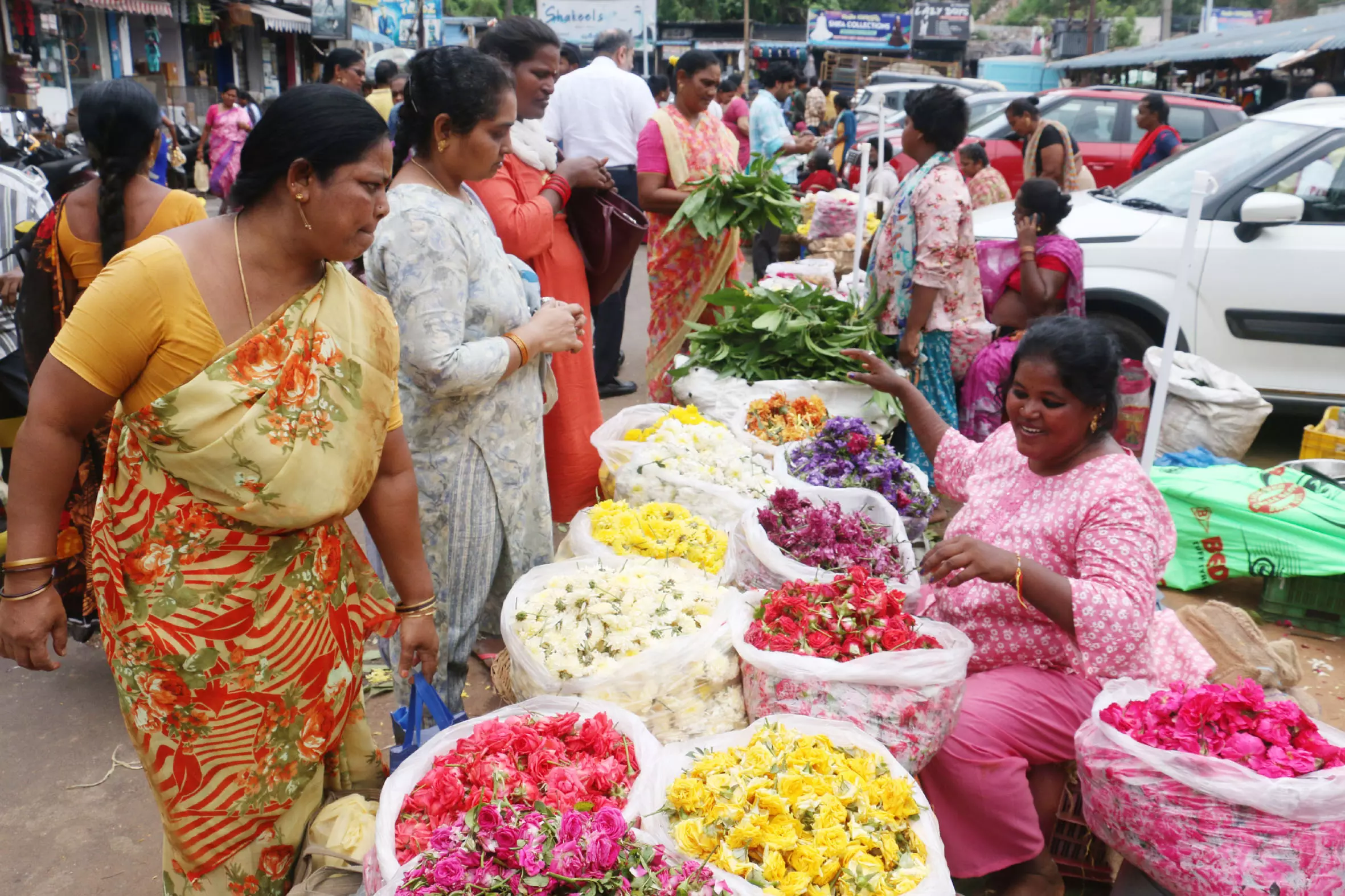
Women are busy purchasing the flowers, which were in high demand on the eve of Karteeka Somavaaram at a market in Visakhapatnam on Sunday. (Photo: K Murali Krishna)
Visakhapatnam: As the auspicious Monday of the Kartik month approaches, flower prices in Visakhapatnam’s Rythu Bazaars have surged sharply, driven by heightened religious demand and disrupted supply chains.
On October 30, chrysanthemum hybrids were sold between Rs 300 and Rs 350 per kilogram, while desi varieties ranged between Rs 30 and Rs 80, depending on colour and form. Jasmine garlands, a staple for temple offerings, were priced between Rs 20 and Rs 100, and rose baskets, particularly premium assortments, touched Rs 1,000.
By November 2, the eve of Kartik Somavaram, prices had climbed further. Chrysanthemum hybrids rose to Rs 400–₹450 per kilogram, and desi varieties steadied at around `350. White garlands were priced at `50, and yard-length strands at `30. Rose garlands and baskets showed mixed trends, with some retaining earlier rates and others rising modestly. Jasmine garlands remained in high demand, with thread and yard variants continuing to sell between Rs 20 and Rs 100.
However, behind this festive spike lies a story of farmer distress. Growers report heavy losses due to Cyclone Montha, which battered marigold and other flower crops with incessant rains. Once fetching Rs 150–Rs 200 per basket during Diwali, marigolds now sell for barely Rs 50 at the farm gate.
Middlemen, citing quality concerns, are buying flowers at throwaway prices but selling them high in city markets, exploiting the festive rush. The disparity has left farmers frustrated, particularly those who invested heavily in seasonal cultivation.
“The flowers look fine, but they say the petals are ruined because of the rain,” said P. Narasayya, a farmer from Sabbavaram. “We are forced to sell at throwaway prices while they make profits in the city,” he added.
The Kartika month, traditionally associated with spiritual offerings and temple visits, has led to soaring demand for white and fragrant flowers. Yet, a combination of cyclone damage and market manipulation has created an uneven bloom economy—where prices rise for consumers, but farmers continue to wilt under losses.
( Source : Deccan Chronicle )

Next Story