Alarm Over Olive Ridley Carcasses Surfacing Along Vizag Coast

Fishing net entanglement kills turtles ahead of nesting season
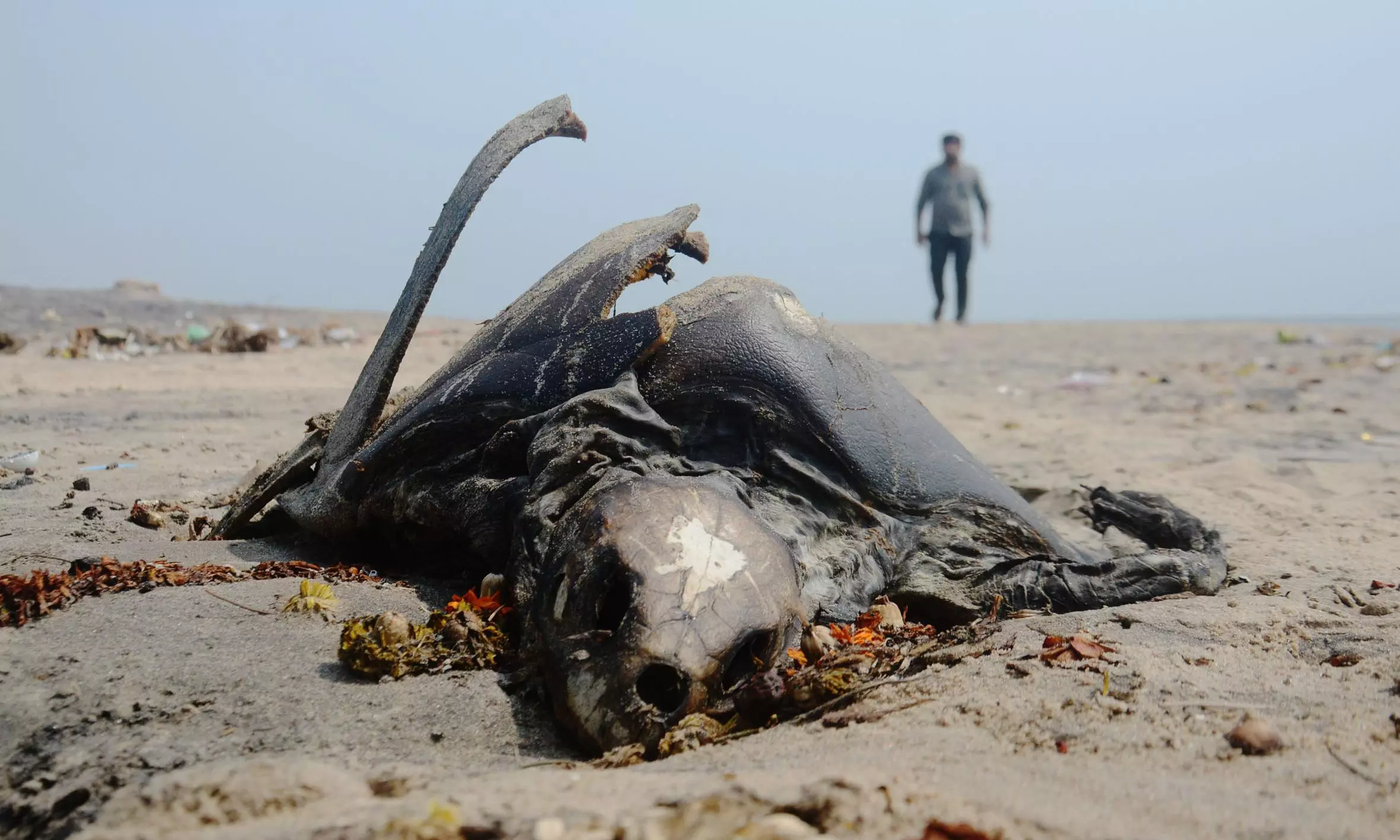
Visakhapatnam: Conservationists have raised an alarm after finding numerous carcasses of Olive Ridley turtles washed ashore along the Vizag’s shoreline even before their nesting season has started.
Wildlife enthusiasts and forest officials have in recent weeks found the dead turtles along the stretch from Coastal Battery to Bheemunipatnam, prompting concerns of marine safety and regulatory enforcement.
Examination of dead turtles reveals they drowned after becoming entangled in fishing nets. Forest officials said most of the recovered carcasses are those of males, probably trapped while migrating offshore. In accordance with protocol, Forest department is burying the carcasses in the sand.
Marine biologists point out that turtles need to surface every 40 to 45 minutes for oxygen. When they are caught in nets during such times, they get stressed, leading to suffocation and drowning. There are growing calls for stricter enforcement of the Andhra Pradesh Marine Fisheries Regulation Act, including mandatory monitoring of vessels, restrictions on illegal fishing within eight kilometres of the shore, and seasonal bans on high-risk nets.
Visakhapatnam district forest officer (DFO) Ravindra Dhama, told Deccan Chronicle that they have started monitoring the beaches as the nesting season is approaching. “We are in constant contact with fishermen, who are among the first to notice when turtles begin mating in offshore waters,” he stated.
The DFO said the forest department is once again collaborating with The Tree Foundation for opening hatcheries along the Visakhapatnam coast. Initially, four hatcheries will be started in January, with close monitoring.
They will take special precautions in view of the Visakha Utsav 2025 along the beachfront from January 23 to January 31 to ensure that the festivities do not disturb turtles. “Forest guards will be stationed to protect the nesting sites. Additional vigilance will be maintained throughout the event,” Ravindra Dhama assured.
Olive Ridley turtles (Lepidochelys olivacea) are classified as ‘Vulnerable’ by the International Union for Conservation of Nature (IUCN). The coastline along Andhra Pradesh and Odisha is a vital ground for breeding and nesting, which occurs mainly between December and April.
Mass nesting takes place along the Odisha coast. In Andhra Pradesh, beaches stretching from Nellore to Srikakulam, including Visakhapatnam, are crucial for hatching.
Conservationists say the nesting patterns are influenced by lunar cycles and tides, with females often travelling long distances before laying eggs.
Artificial lighting along the Vizag coast, particularly near RK Beach, is posing a threat to turtles and hatchlings by disorienting them. Experts recommend reducing night-time illumination in sensitive areas to create safer nesting conditions.
