2025 Marks a Defining Year for India’s Space Ambitions

he mission also carried out experiments through the PSLV Orbital Experimental Module (POEM-04), which completed more than 1,000 orbits and tested a robotic arm and seed germination in microgravity.
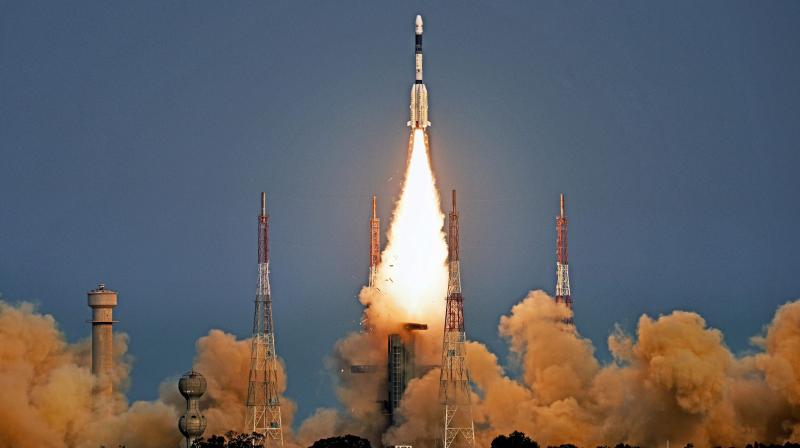
Nellore: India’s space programme scaled new heights in 2025, registering a series of landmark missions, technological breakthroughs and global firsts that firmly positioned the country among the world’s leading space powers.
According to a statement issued by Isro, the Department of Space recorded 231 major achievements during the year, covering launch missions, ground tests, technology demonstrations and space-based applications with direct societal impact.
One of the standout missions was SPADEX, which successfully demonstrated autonomous docking and undocking of satellites along with in-orbit power transfer, making India the fourth country globally to achieve space docking. The mission also carried out experiments through the PSLV Orbital Experimental Module (POEM-04), which completed more than 1,000 orbits and tested a robotic arm and seed germination in microgravity.
January 2025 marked another milestone with the 100th launch from Sriharikota, as GSLV-F15 precisely placed the NVS-02 satellite into orbit. The year also witnessed the launch of NISAR, the first joint mission of Isro and NASA. Equipped with advanced radar payloads from both agencies, the satellite is now fully operational and ranks among the most advanced Earth observation missions in the world.
India’s heavy-lift capability was further strengthened with LVM3 missions that launched the heaviest satellites ever from Indian soil. Upgrades such as high-performance electric actuators and lighter composite structures significantly enhanced payload capacity.
On the technology front, Isro achieved key breakthroughs in indigenous semi-cryogenic engines, restartable cryogenic stages, high-thrust electric propulsion systems and lighter solid rocket motors, all vital for future reusable and flexible missions.
Human spaceflight preparations gained momentum under the Gaganyaan programme, which moved closer to its first uncrewed mission. Over 8,000 ground tests were completed, parachute systems were validated, and Indian astronaut Group Captain Shubhanshu Shukla’s flight to the International Space Station on the Axiom-4 mission provided valuable operational experience.
Beyond launches, space applications expanded rapidly, with satellite data supporting disaster management, flood mapping, lightning tracking, forest monitoring and digital address systems nationwide. Infrastructure development also progressed, including approval for a Rs 4,000-crore Third Launch Pad and the commissioning of advanced testing and manufacturing facilities.
The year also highlighted India’s push for self-reliance, with indigenous space processors, semiconductor technologies and increased private-sector participation gaining momentum. International cooperation expanded significantly, while Isro and the department of space received 23 national and international awards during the year.
