Former Bangladesh Prime Minister Sheikh Hasina said the strained relations between India and Bangladesh are entirely the result of actions taken by the interim government led by Mohammad Yunus.
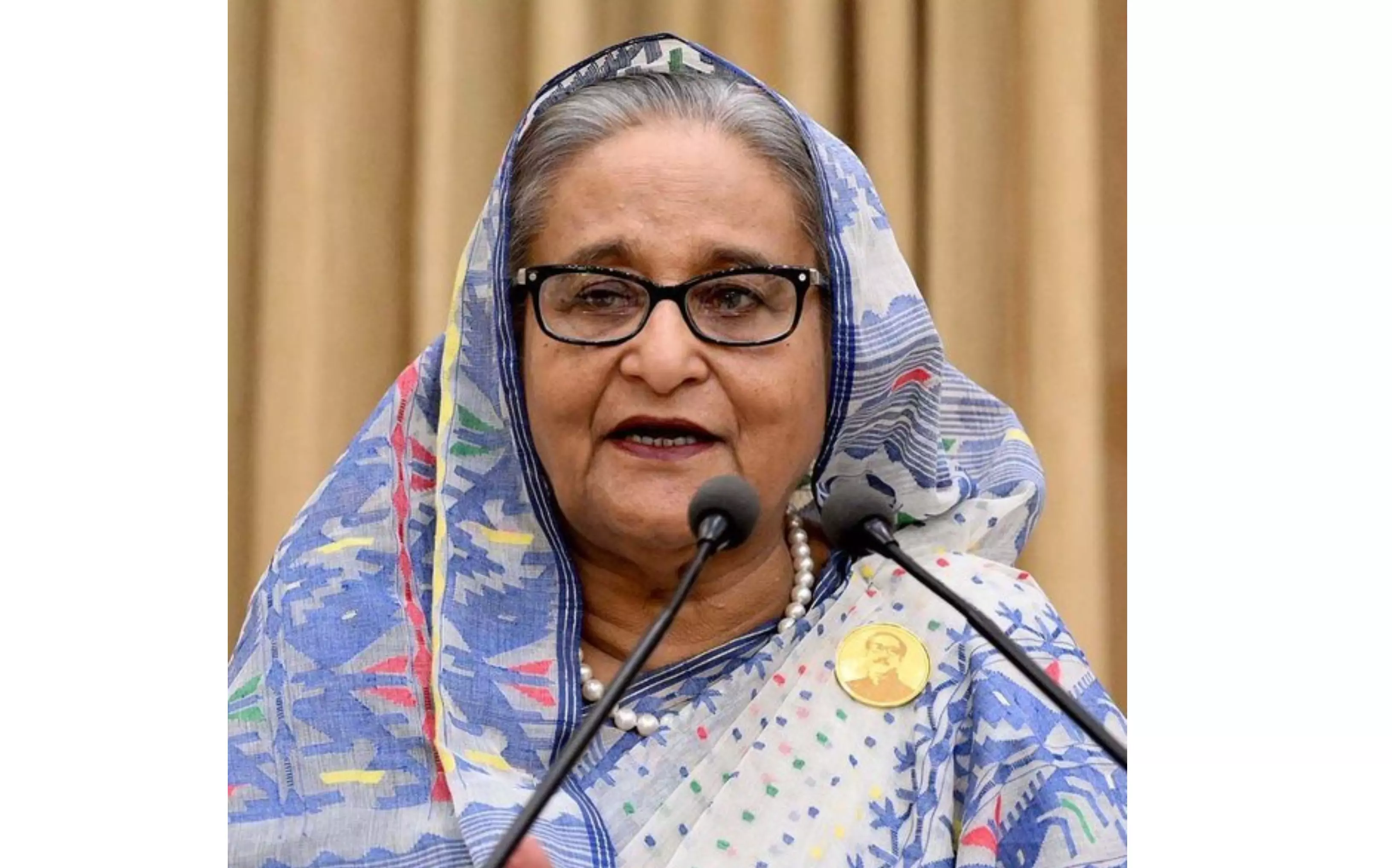
The spiral of violence in Bangladesh, including the lynching of a Hindu man, has raised serious concerns in India, particularly amid recent threats by radical groups to Indian diplomatic missions in the country.
Former Bangladesh Prime Minister Sheikh Hasina said the strained relations between India and Bangladesh are entirely the result of actions taken by the interim government led by Mohammad Yunus.
Accusing the Yunus administration of issuing hostile statements against India and failing to protect religious minorities, Hasina said the government has allowed extremist forces to shape foreign policy. She stressed that India has long been Bangladesh’s most steadfast partner and that bilateral ties would endure beyond any temporary government.
“The strain you are witnessing is entirely of Yunus’ making. His government issues hostile statements against India, fails to protect religious minorities, and allows extremists to dictate foreign policy, then expresses surprise when tensions rise,” she said, expressing confidence that ties would normalise once legitimate governance is restored.
Hasina also alleged that extremists emboldened by the interim regime were responsible for attacks on minorities, Indian diplomatic missions and media offices. She accused the Yunus government of placing such elements in positions of power and releasing convicted terrorists from prison.
“These are the same actors who marched on the Indian embassy and attacked our media offices, who attack minorities with impunity, and who forced me and my family to flee for our lives,” she added, calling India’s security concerns justified.
Her remarks came days after India’s Ministry of External Affairs summoned the Bangladeshi envoy in New Delhi over security concerns related to protests outside Indian High Commissions in Bangladesh. Dhaka had earlier summoned India’s High Commissioner to object to what it termed “anti-election activities” by Bangladeshi political figures staying in India.
Hasina, who has been residing in India since her government was ousted last year following mass protests, reiterated New Delhi’s long-standing support for Bangladesh and defended the depth of bilateral ties forged during her 15-year tenure.
Diplomatic tensions escalated further on December 14, when Bangladesh summoned India’s High Commissioner Pranay Verma, alleging that “fugitive political figures,” including Hasina, were influencing Bangladesh’s upcoming parliamentary elections from Indian soil. India rejected the allegation, reiterating that it does not allow its territory to be used for activities harmful to Bangladesh.
The situation worsened following the killing of Inqilab Moncho leader Sharif Osman Hadi, who was shot in Dhaka on December 12 and later died in Singapore on December 18. His death triggered widespread protests across Bangladesh, including demonstrations outside Indian diplomatic missions.
Following reports of threats to the Indian High Commission and inflammatory anti-India statements during the protests, India again summoned the Bangladeshi envoy in New Delhi.
Commenting on Hadi’s killing, Hasina alleged that lawlessness in Bangladesh has intensified under Chief Advisor Muhammad Yunus, warning that continued violence would further destabilise the country and damage its international credibility.
“This tragic killing reflects the lawlessness that uprooted my government and has multiplied under Yunus. Violence has become the norm while the interim government either denies it or is powerless to stop it,” she said, adding that India and other neighbours are watching the situation with growing alarm.

