Stage Set For The Launch Of India’s Next Generation Navigation Satellite

The NVS-03 satellite will carry an indigenous atomic clock system and transmit in the L1 navigation signal, making NavIC available to common users using wearables.
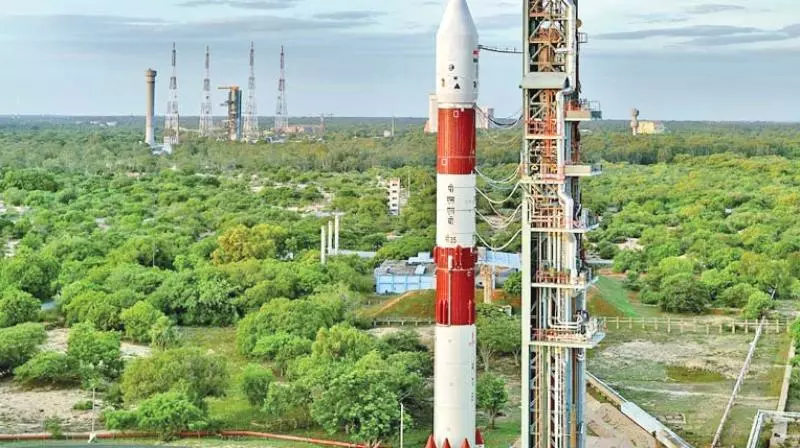
Nellore: The stage is set for the launch of the 2,250-kg navigation satellite, NVS-03, aboard GSLV-F18 on Friday to boost NavIC, India's home-grown autonomous satellite navigation system.
The Indian Space Research Organisation (ISRO) said the launch has been scheduled for 11.51 pm on Friday, and the countdown will commence 24 hours earlier on Thursday.
The NVS-03, the third of the next-generation satellites, will carry an indigenous atomic clock system, which will function alongside procured systems.
The satellite will also transmit in the L1 navigation signal, known as the civilian frequency band, making it available to common users using wearables.
This will be in addition to the existing L5 and S-band signals for commercial applications.
It is designed to provide accurate position, navigation and timing (PNT) services.
NavIC covers India and a region extending approximately 1,500 km beyond the Indian mainland.
The rocket, in its 20th mission, will place the satellite into a geosynchronous transfer orbit (GTO), from where it will be manoeuvred towards its operational orbit about 35,800 km above the Earth.
The GTO is usually highly elliptical, about 250 km at its nearest point to Earth (perigee) and about 35,600 km at its farthest point (apogee).
The satellite will then reach its space home using its own fuel, making a precise launch all the more crucial to extend its life.
The rocket will be launched from the Second Launch Pad (SLP) at Satish Dhawan Space Centre, SHAR, Sriharikota.
ISRO Chairman Dr V. Narayanan, accompanied by teams of scientists, offered prayers at the Sri Venkateswara temple in Tirumala on Thursday, as is the practice ahead of every launch.
Pujas were performed for the successful launch of the NVS-03, with models of the rocket and the satellite placed at the feet of the deity.
He also offered prayers at the Sri Kalahasteeswara Temple in Srikalahasti and the Sri Changala Parameswari Temple in Sullurpeta.
Speaking to the media at Sullurpeta, Dr Narayanan said ISRO planned to launch a technical demonstration satellite (TDS-1) aboard PSLV-C63 in November, followed by the Gaganyaan uncrewed mission G-1 before the end of December.
Two more satellite launches were planned before the 2026–27 financial year ended on March 31.
