Discovery Of A Rare Caecilian From The Northern Western Ghats Of Maharashtra

New species of the genus Gegeneophis discovered after ten years.
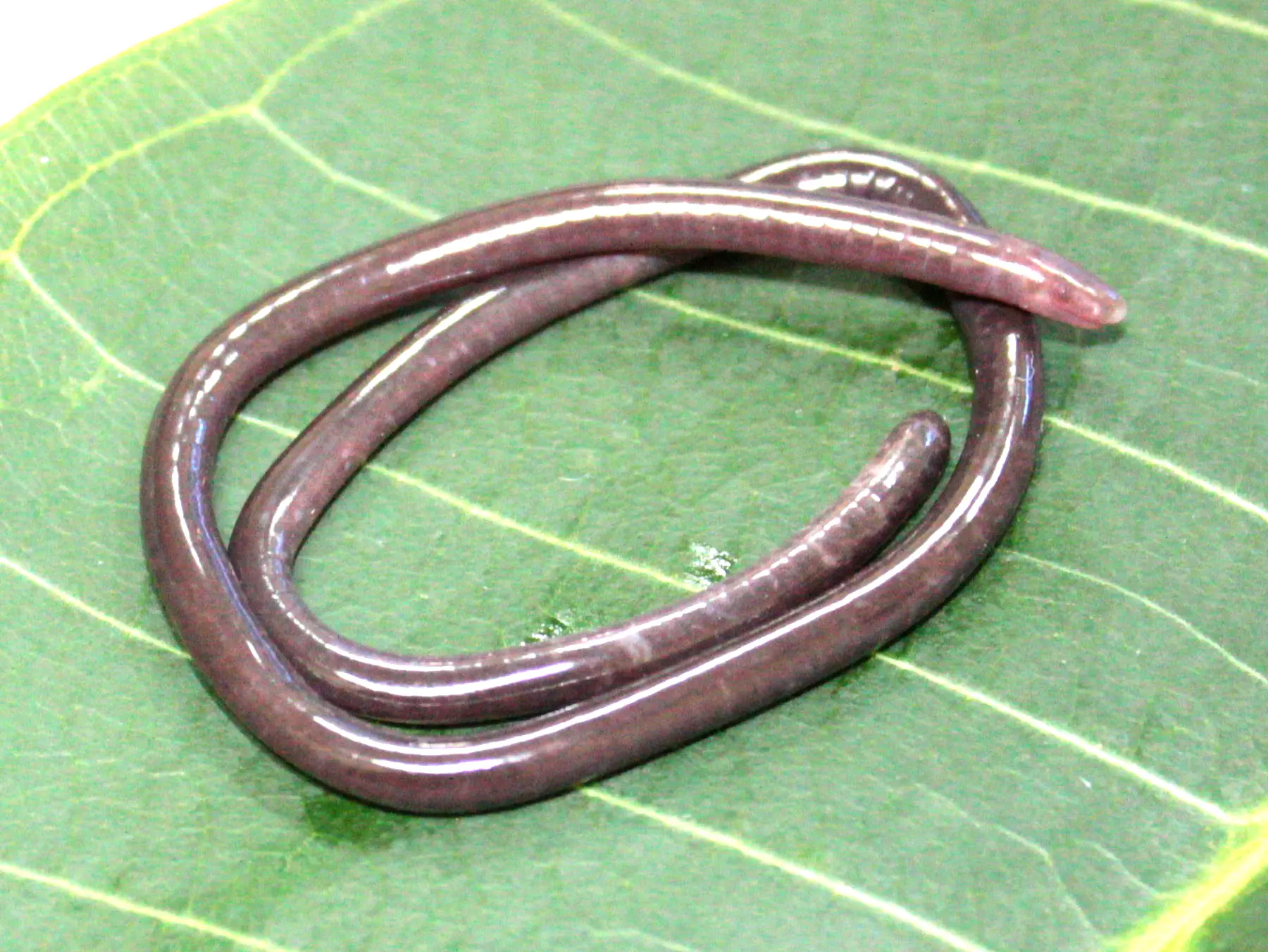
A team of scientists has uncovered a new species of worm-like caecilian from the northern Western Ghats. The new species, Gegeneophis valmiki, is named after the historic Maharshi Valmiki Mandir, located on the Valmiki Plateau at Paneri, Palashi, Patan, Satara district, Maharashtra, where the species was first discovered.
The scientific publication is jointly published by K. P. Dinesh and Sahil Shikalgar of the Zoological Survey of India, Western Regional Centre, Pune, Maharashtra; Pranjal Adhav of the Department of Zoology, Savitribai Phule Pune University, Pune, Maharashtra; Bapurao Vishnu Jadhav, retired Professor of the Department of Zoology, Balasaheb Desai College, Satara, Maharashtra; and Nirmal U. Kulkarni of the Mhadei Research Centre, Goa.
The findings of this discovery have been published in a recent issue of the internationally reputed journal Phyllomedusa.
The new species was first collected in 2017 by K. P. Dinesh, Senior Scientist at the Zoological Survey of India (ZSI), from the Valmiki Plateau of Patan, Satara district, Maharashtra.
Caecilians are limbless, subterranean amphibians that live below the soil and humus-rich organic matter, and encounters with them in the field are mostly accidental, as they do not produce vocal calls like frogs. Hence, the discovery of caecilians is far more challenging than that of frogs species discovery in India.
Notably, no new species of the genus Gegeneophis had been discovered in the past ten years.
The Western Ghats is known for 26 species of caecilians (all are endemic), wherein the group Gegeneophis is known for 11 species in the Ghats.
Caecilians are often regarded as beneficial to agricultural ecosystems, as their burrowing activity helps aerate the soil and enhance soil structure while they feed primarily on soil invertebrates, thereby contributing indirectly to soil health and fertility.
The Director, Zoological Survey of India Dr. Dhriti Banerjee said as per recent assessments, nearly 41% of the world’s amphibians are threatened with extinction, and the situation is equally grave for species in India. In this era of mass vertebrate extinction, the timely discovery and documentation of new caecilian species from the Western Ghats represents a significant step forward in conservation, as it helps prevent the silent and nameless extinction of the species in the wild.
Dr. Dinesh emphasized that the Western Ghats harbour remarkable yet largely hidden caecilian diversity. He noted that scientific recognition and formal validation of these species are crucial, as they bring national and global attention to one of the most elusive and poorly known groups of subterranean amphibians.
Herpetologist Nirmal U Kulkarni- another author in the species discovery highlighted that the Northern Western Ghats support a rich but still poorly documented diversity of caecilians. He opined that continued discoveries from the region significantly strengthen our understanding of its unique biodiversity and play a crucial role in guiding site-specific conservation actions and long-term habitat management, bringing these hidden amphibians into the conservation mainstream.
