Remarks Against Army: SC Raps Rahul Gandhi

A bench of Justices Dipankar Datta and Augustine George Masih issued notice to the Uttar Pradesh government and the complainant in the case
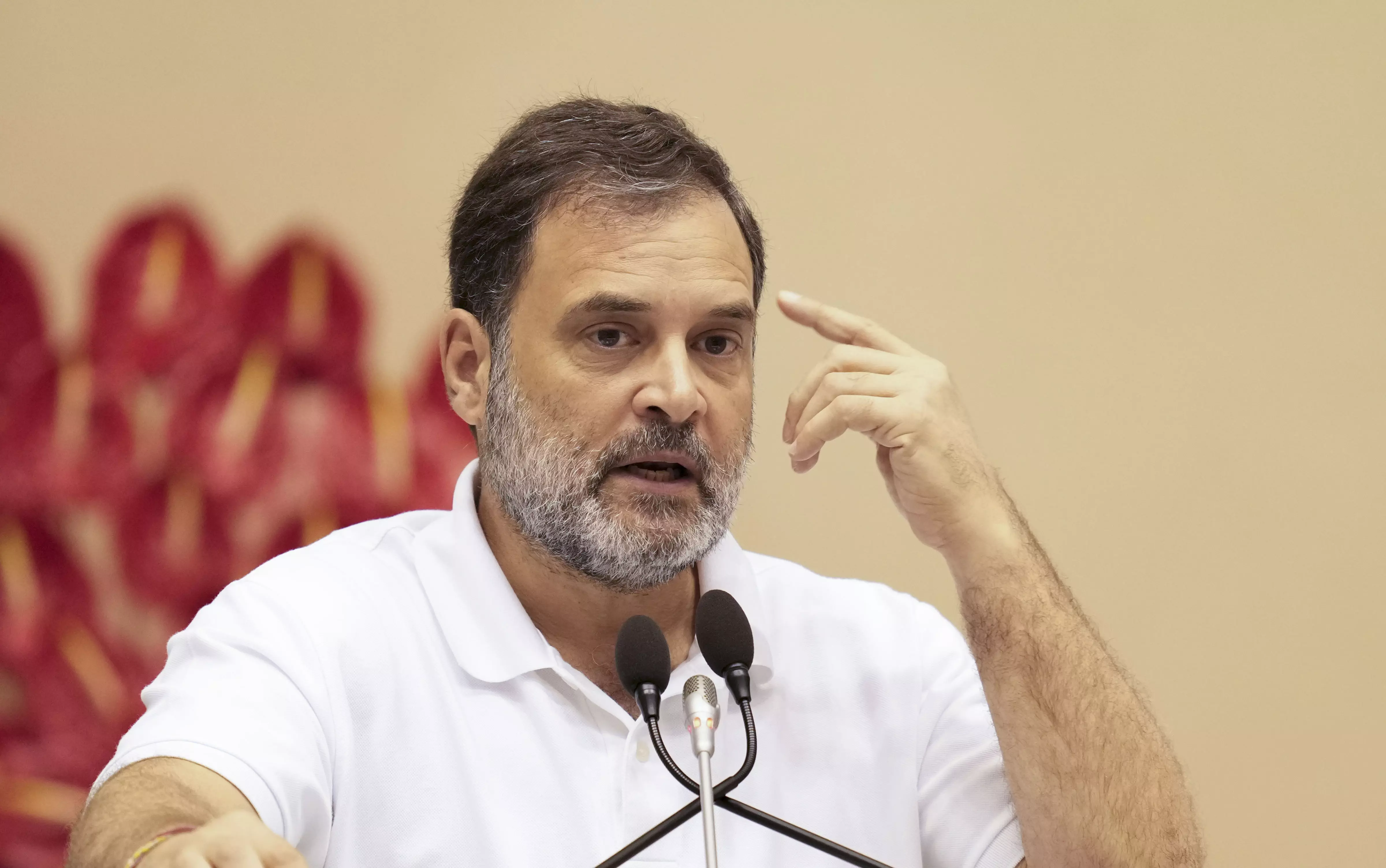
New Delhi: The Supreme Court on Monday pulled up senior Congress leader Rahul Gandhi for his alleged derogatory remarks against the Indian Army during his Bharat Jodo Yatra over two years ago, but stayed proceedings against him in a Lucknow court. Censuring the senior Congress leader, the apex court said: “If you are a true Indian, you wouldn’t say such a thing.”
Staying the proceedings initiated in the matter against Mr Gandhi before a Lucknow subordinate court, a bench of Justices Dipankar Datta and Augustine George Masih issued notice to the Uttar Pradesh government and the complainant in the case, seeking their response in three weeks.
The top court asked Mr Gandhi’s counsel: “You are the Leader of the Opposition. Why don’t you say things in Parliament, why do you have to say it on the social media? How do you get to know that 2,000 sq km of Indian territory has been occupied by the Chinese? Were you there? Do you have any credible material? Why do you make these statements without having any material? If you are a true Indian, you won’t say such a thing.”
The defamation proceedings stem from Mr Gandhi’s December 2022 comment during the Bharat Jodo Yatra where he alleged that the Chinese Army had “captured 2,000 sq km of Indian territory”, had “killed 20 Indian soldiers”, and “thrashed our jawans in Arunachal Pradesh”.
Appearing for Mr Gandhi, senior advocate Abhishek Singhvi said: “If he can’t say these things which are published in the press, then he can’t be Leader of the Opposition.” If the Leader of the Opposition can’t raise issues, it will be an unfortunate situation, the senior counsel submitted.
On the “true Indian” remark by the top court, Mr Singhvi said: “It is also possible that a true Indian will say that our 20 Indian soldiers were beaten up and killed.”
The top court then said: “When there is a conflict across the border, is it unusual to have casualties on either side?”
Mr Singhvi said Mr Gandhi was only on the point of proper disclosure and raising concerns about the suppression of information.
Justice Datta said being a responsible Leader of the Opposition, Mr Gandhi ought not have done it as there was a proper forum to raise such questions. Concurring with the bench on the point, Mr Singhvi submitted that Mr Gandhi could have made the comments in a better manner.
The counsel asserted that the complaint was nothing but an attempt to harass the petitioner. He referred to Section 223 of Bharatiya Nagarik Suraksha Sanhita and said a prior hearing of the accused was mandatory before the court took cognisance of a criminal complaint, which was not done in this case.
The bench agreed to examine the key legal issues raised by Mr Gandhi, including his claim that the trial court’s summons was issued without giving him a hearing. This point, Mr Singhvi said, was also not considered by the high court.
The top court also took note of Mr Singhvi’s objection that the
complainant could not be considered an “aggrieved” person under the defamation law, as required for maintainability of the defamation complaint.
The complainant’s counsel, senior advocate Gaurav Bhatia, opposed the stay on proceedings against Mr Gandhi and defended the trial court’s decision.
The top court, however, said it would hear all objections after three weeks.
On May 29, the Allahabad high court dismissed Mr Gandhi’s plea challenging the summoning order and the complaint, arguing that it was motivated and lodged in a mala fide manner.
In his petition before the Lucknow trial court, complainant Udai Shanker Srivastava alleged during the December 2022 yatra, Mr Gandhi made several derogatory remarks about the Indian Army in the context of the conflict with Chinese soldiers.
Mr Srivastava, a retired director of the Border Roads Organisation, accused Mr Gandhi of defaming the Indian Army and attempting to demoralise soldiers through “false and baseless” claims. He had based his complaint on the statement made by Mr Gandhi during a press interaction on December 9, 2022. The subordinate court then summoned Mr Gandhi as an accused to face trial.
During the hearing before the trial court, Mr Gandhi’s counsel had argued that the allegations appeared to be fabricated just by reading the complaint. The lawyer also argued that Mr Gandhi was not a resident of Lucknow, so before summoning him on this complaint, the subordinate court should have investigated the veracity of the allegations and he should have been summoned only if the allegations were prima facie found fit for trial.
