The MPC meets every two months to decide on key interest rates and outline the direction of the country's monetary policy
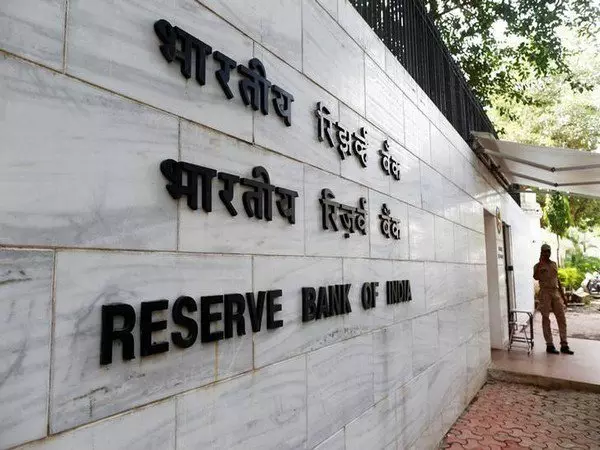
Mumbai: The Reserve Bank of India’s Monetary Policy Committee, led by Governor Sanjay Malhotra on Thursday kept the benchmark repo rate unchanged at 5.5 per cent citing concerns that inflation is projected to go up from the last quarter of this financial year. The stance also remained unchanged at neutral.
Repo rate is the rate at which the central bank lends short-term money to commercial banks.
"The current macroeconomic conditions, outlook and uncertainties call for continuation of the policy repo rate of 5.5 per cent and wait for further transmission of the front-loaded rate cuts to the credit markets and the broader economy," said the RBI governor Malhotra in his statement.
"Accordingly, the MPC unanimously voted to keep the repo rate unchanged. The MPC further resolved to maintain a close vigil on the incoming data and the evolving domestic growth-inflation dynamics to chart out the appropriate monetary policy path. Accordingly, all members decided to continue with the neutral stance," he added
The central bank's status quo on rates and stance follows a 100 bps cut since February. The RBI retained its FY26 GDP growth forecast at 6.5 per cent despite US tariffs on Indian imports. Inflation for FY26 is projected at 3.1 percent, lower than June’s 3.7 per cent estimate, though CPI is expected to reach 4.9 per cent in FY27.
However some economists argued that the RBI's decision to hold rates taking into account inflation projection one year ahead was misplaced.
Says Madhavi Arora, lead economist at Emkay, "Despite sharply lowering its inflation forecast to 3.1% from 3.7% earlier, RBI’s decision to keep rates steady emanates from their focus on one-year-ahead expected inflation that’s looking comfortably above 4%, while growth in their view has held up well, despite global uncertainty."
"However, focusing on one-year-ahead expected inflation appears increasingly misplaced in an evolving world – particularly as the global landscape continues to shift toward a disinflationary bias in Asia. We think going ahead downside risks to growth would be increasingly evident with new global resets and could still open up space for easing in remainder of the year, even though the Governor seems to have raised the bar higher for further easing," added Arora.
However other economists were of the view that the central bank's decision was not merely an exercise in prudence but it was a calibrated pause at the intersection of global fragility and domestic resilience
Arsh Mogre, Economist, PL Capital said, "While headline inflation remains benign and June’s front-loaded 50 bps cut still transmits through the system, the MPC appears acutely aware that downside risks to growth from tariff spillovers are not yet fully priced in. Maintaining a ‘neutral’ stance signals optionality rather than indecision as the central bank is keeping policy nimble in case trade shocks escalate or if financial conditions tighten globally."
"Any fresh easing will now hinge not just on data but on the balance of risks between global trade retrenchment, domestic demand softening, and the rupee’s trajectory. In this context, today’s decision preserves both credibility and flexibility while acknowledging that we are in an uncertain world where macro policy must avoid both premature celebration and pre-emptive exhaustion," added Mogre.
Markets reacted negatively with India's benchmark 10-year bond yield rising 4 bps to 6.37 per cent, while the rupee was little changed at 87.7350. The benchmark equity indexes were down around 0.2 per cenr each.

