Ranjona Banerji | Dharali Paid Price of our ‘Progress’, Mumbai Next?

From Mumbai’s floods to Uttarakhand’s landslides, climate change and reckless construction are turning natural safeguards into disaster zones, exposing the cost of greed and apathy
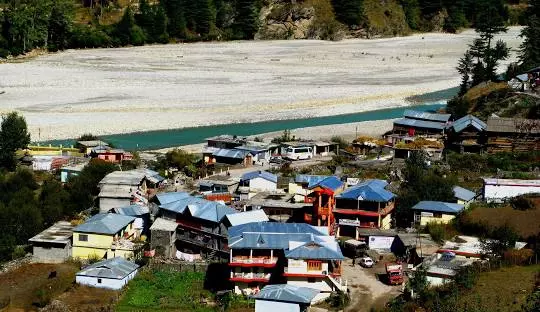
The sun is shining as I write this, a rare occurrence through most of this July and August, too, here in Dehradun. The news is of Mumbai reeling under massive amounts of rainfall in short periods of time and heavy rainfall warnings for Maharashtra. A short while ago, we were dealing with catastrophe in Uttarakhand. Experts are still grappling with the consequences of cloudbursts, glacier bursts, new glacial lakes, landslides, debris, destruction and death. In the neighbouring state of Himachal Pradesh and Jammu and Kashmir to the north, the Himalayas have seen devastating landslides and dam collapses.
There are two threads which underlie what is easy to pass off as normal monsoon theory. The first is irresponsible construction on fragile and vital natural areas. And the other is the effects of climate change. And what the two have in common is human greed and shortsightedness.
We have known about the effects of climate change for years now. We celebrated when the IPCC (Intergovernmental Panel on Climate Change) and former US vice-president Al Gore shared a Nobel for their work on climate change in 2007. Especially since the IPCC was headed by Indian scientist Dr Rajendra Pachauri. (The allegations of sexual harassment came later.)
The cause of the current signs of climate change is human behaviour. The excessive use of fossil fuels, the heat islands caused by construction and the destruction of forests have led to rises in the Earth’s temperature, which will soon be beyond our ability to withstand. One of the effects of climate change is intense weather situations: Excessive heatwaves, droughts, extreme rainfall, massive flooding, melting polar ice, rising sea levels, loss of biodiversity.
And this is what we’re seeing across the planet. Not just in India but across the world. And the ferocity, intensity and frequency of these extreme weather events is unprecedented.
Make no mistake. The planet will survive until the sun becomes a red giant and the solar system eventually dies. It will readjust because it follows the laws of physics, not human biology or carbon-based life. It is us, life on the planet in our current form, which will suffer. Must as us humans think we are superior, we are also extremely dependent on everything around us. For food, the air we breathe, the spaces in which we live, the manners in which we survive. It is all symbiotic, and perhaps even parasitic.
What we learn is another issue completely. Pollution we cannot control. Garbage we cannot control. Waste disposal we cannot control. Construction we cannot control. Destruction of natural resources we cannot control. In fact, nothing which is within our capability can we actually manage to control. We are so tied to our habits, customs, traditions, innate selfishness and laziness, that we are helpless in the face of our own mass stupidity.
The result is absolute chaos whenever anything goes wrong. As we have seen this monsoon across the country.
Consider Dharali, a “picturesque hamlet nestled on the tranquil banks of the river Ganges” says the official tourist website of Uttarakhand. Dharali is about 2,000 feet above sea level, and known for its apple orchards and rajma cultivation. Given its scenic beauty and proximity to the Gangotri yatra route, it is a popular tourist destination.
And here lay its downfall. Because the tranquil tributary of the mighty Ganga which flows through the village became a mighty torrent on August 5. As water burst through the village, it took down buildings, homes, orchards, lives and livelihoods. At least five confirmed deaths, and about 65 people are missing. The amount of debris has made search and rescue almost impossible.
To take advantage of the tourist boom, construction took place too close to the banks of the Kheer Ganga stream. The market was built on a fan-shaped area of years of sediment deposit. And it is this area which was destroyed by the water. Earlier reports of a cloudburst have been dismissed, although a glacier burst has not been ruled out.
What is known is that cataclysmic events such as these are now the norm. In spite of knowing that settlements like Dharali are in dangerous zones, construction is encouraged by government. We have seen it with Rishikesh, with Chamoli, all in the recent past.
It is hard to blame the locals when government itself is the main destroyer in these regions. Hundreds of thousands of trees, especially the majestic deodar, one of the true cedars of the world, are cut with glee for new roads and where there are new roads, there are new buildings.
The roads are a personal favourite of our Prime Minister, to help tourists complete an important Hindu pilgrimage. The consequences of ravaging the Himalayas to make these roads was pointed out over and over again by scientists and environmentalists. But their views were dismissed and ignored. Some were dubbed anti-national and anti-development. Not a word of apology has come from anyone in power for the devastation that they have caused by their wilful obstinacy.
Mumbai is in a similar plight. Greed and incompetence now rule what was once called “urbs prima in Indis”, India’s premier city. More roads and highways and buildings are what Mumbai has received. But they have not made life easier when disaster strikes. An area prone to heavy rainfall, as the monsoon makes early landing here for that section of the peninsula, Mumbai has seen its flood plains and its salt pans being turned into buildings. Mangroves have been destroyed to make roads. And thus, all natural safeguards against destruction were happily removed.
The city by the sea was where I grew up, and later became my stomping ground, and the mountains are now my source of beauty and joy. The destruction of both I feel almost personally. It is painful to watch imminent collapse through intentional stupidity and shortsightedness.
It’s not too late to stop and recalibrate. But that seems unlikely. We have chosen our path. Or it has been chosen for us because of our collective apathy which is like a mammoth sediment deposit on individual angst.
