People are discussing it as a "mother of all deals", and this agreement has brought a lot of opportunities for 140 crore Indians and crores of Europeans, PM said
New Delhi: In a “landmark and historic” step, India and the European Union on Tuesday announced the conclusion of negotiations for the Free Trade Agreement, under which 93 per cent of Indian exports will enjoy duty-free access to the 27-nation bloc, while the import of luxury cars and wines from the EU will become less expensive.
The FTA will be formally signed later this year after “legal scrubbing” of the document on a “fast-track” basis and efforts are on to enable it to come into force by the end of this year.
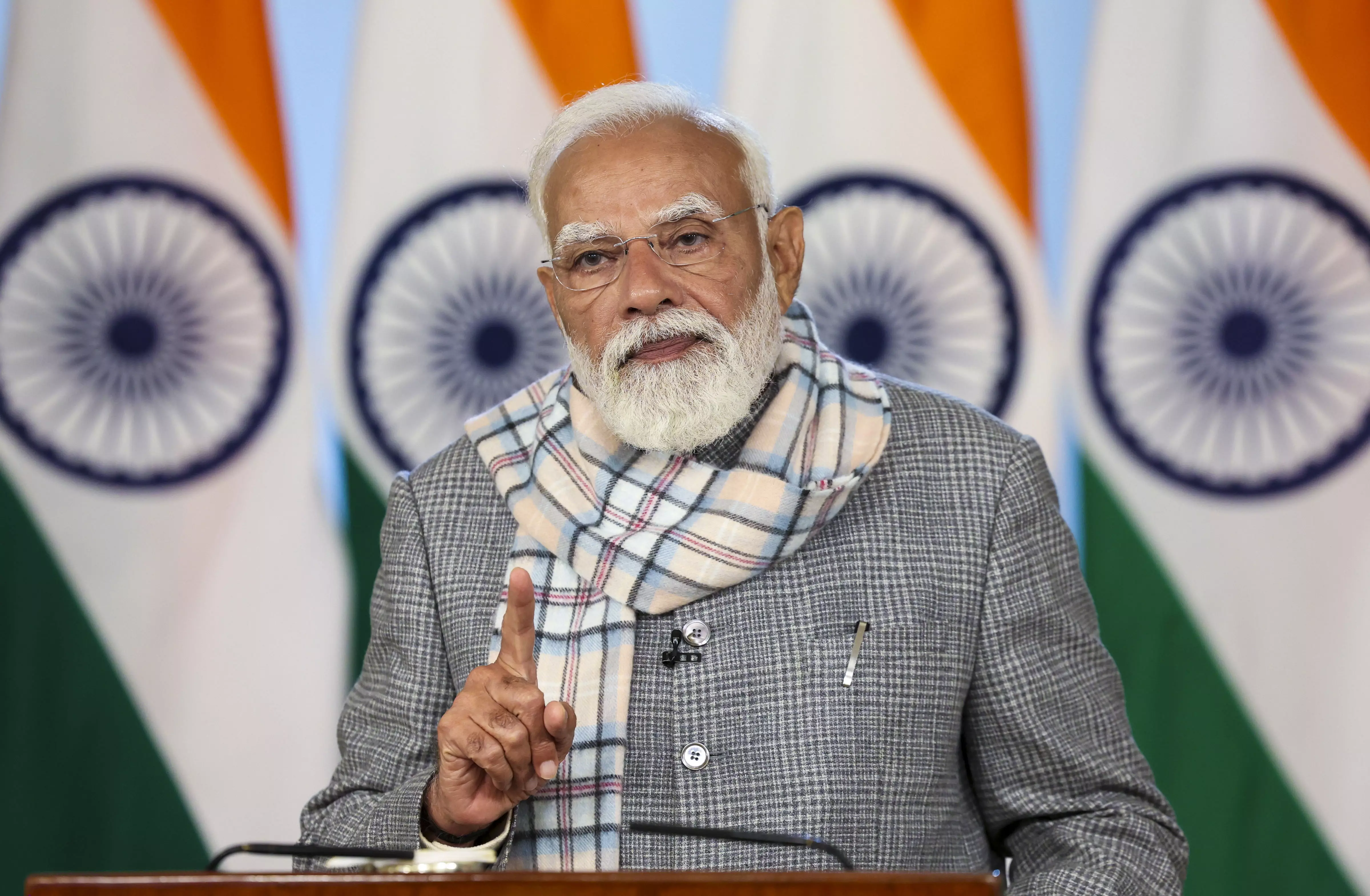
Prime Minister Narendra Modi described the FTA as “the largest Free Trade Agreement in India’s history, a new blueprint for shared prosperity” and the “start of a new era”, while terming bilateral ties as a “partnership for global good”.
Following the 16th India-EU Summit here, co-chaired by Modi along with European Commission president Ursula von der Leyen and European Council president Antonio Costa in New Delhi, both sides also inked a Security and Defence Partnership (SDP) that will create new opportunities for co-development and co-production of defence platforms and boost maritime defence cooperation in the Indo-Pacific region, with an obvious eye on China.
The two sides also unveiled a “Towards 2030: A Joint India-European Union Comprehensive Strategic Agenda”, which is a roadmap for bilateral strategic ties covering all aspects. Another major pact was an MoU on “Comprehensive Framework for Cooperation on Mobility” that will facilitate the movement of students, researchers, workers and highly skilled professionals.
Von der Leyen also announced an India-EU partnership in the innovation and start-up sector for science and research with a European “funding firepower” of 100 billion euros, amid the announcement of “launch of exploratory talks for India entering into an association agreement with Horizon Europe Programme”, which is the “largest global public research programme”.
Both the sides announced the “launch of negotiations for an India-EU Security of Information Agreement that will facilitate the exchange of classified information and pave the way for a stronger cooperation in areas related to security and defence”, setting up of an EU Legal Gateway Office in India aimed to enhance skill mobility, and “Constitution of a Green Hydrogen Task Force”.
Addressing Modi in her media remarks, von der Leyen exclaimed on the FTA: “We did it. We delivered the mother of all deals.”
Pointing out that “India has risen” and referring to both the EU and India as “giants”, she said the FTA between the world’s second-largest economy (taking into account the 27-nation EU as a bloc) and India, the world’s fourth-largest economy, would bring together Indian “skills, services and scale” and European “capital, technology and innovation” in a “win-win” situation. In a thinly-veiled dig at the United States for its trade tariffs, she said the FTA would also “reduce strategic dependencies when trade is being increasingly weaponised”.
At a media briefing later, commerce minister Piyush Goyal, who is credited with the successful negotiations from the Indian side, said other labour-intensive sectors to benefit from the Indian side also include marine products, chemicals, plastic and rubber goods, furniture, sports goods and toys.
On job creation, the commerce minister said about 6-7 million jobs would be created in the textile sector alone due to the FTA and that the value of Indian textile exports to the EU could surge now from the current $7 billion to $30-40 billion “very quickly”. He said the European side would benefit from reduction in duties in sectors, including automobiles as well as wines and spirits as well as innovation, technology and precision-engineering.
The commerce ministry said “India has gained preferential access to the European markets across 97 per cent of tariff lines, covering 99.5 per cent of trade value, while India is offering 92.1 per cent of its tariff lines which covers 97.5 per cent of EU exports.
So far as Indian exports are concerned, 70.4 per cent tariff lines covering 90.7 per cent of India’s exports will have immediate duty elimination for important labour-intensive sectors such as textiles, leather and footwear, tea, coffee, spices, sports goods, toys, gems and jewellery and certain marine products, while 20.3 per cent tariff lines covering 2.9 per cent of India’s exports will have zero duty access over 3 and 5 years for certain marine products, processed food items, arms and ammunition.
Further, “Preferential Market Access” for Indian agricultural products like tea, coffee, spices, grapes, gherkins and cucumbers, dried onion, fresh vegetables and fruits as well as for processed food products will make them more competitive in the EU, the ministry said.
It added that “India has prudently safeguarded sensitive sectors, including dairy, cereals, poultry, soymeal, certain fruits and vegetables, etc, balancing export growth with domestic priorities”.