As far as budgets go, it is a passable budget as it seeks to balance political and fiscal balance.
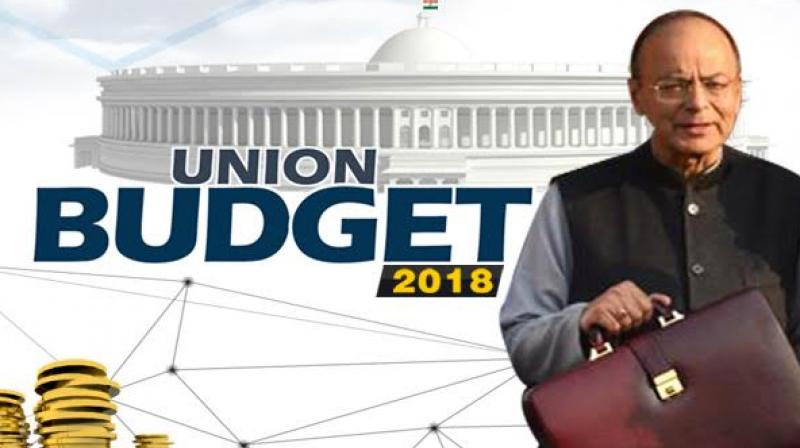
This budget is the last full budget by the BJP before the polls. It is, like all budgets, a statement of political intent. This time, the focus is to clearly do something for the farm sector and the economically weaker section of the population.
There is a renewed big bag announcement to provide health cover for up to Rs 5 lakh per family, that would cover more than 10 crore families. The second big intent is to provide better income to the farmer by providing a “minimum support price” that is related to the cost of production. Thus, the biggest segments are sought to be addressed by these two big announcements.
As far as budgets go, it is a passable budget as it seeks to balance political and fiscal balance. The mathematics of the budget seem to be driven by an intent to be fiscally prudent. The projected fiscal deficit is not a big number and should not bother us. Everything seems to balance (I have not read the fine print at the point of writing this). However, one thing that bothers me is the long term fiscal impact of providing universal health cover as well as farm produce price supports. One thing that is clear is that the government is exhausting all sources to raise revenue.
Clearly too much money is needed and there is not enough revenue generation. There is no relief to the white collar salaried. There is a tax relief for the MSME, as the lower tax rate of 25% is now extended to companies with turnover of up to Rs 250 crore, as against the earlier limit of Rs 50 crore. Big business is disappointed. In fact the education ‘cess’ on income tax has been raised from three to four per cent, pushing the effective marginal rate to 34%.
The government now is a partner in the money we make from stocks. They already taxed short term gains, now their reach extends to long term gains also. Governments are supposed to hold on to their promises. STT was introduced as an alternate to all types of capital gains. The government seems to be desperate to tax us more and more. There is some tokenism to senior citizens.
Infrastructure spend is big like in earlier budgets. Big announcements of new airports (56 of them), food processing parks, more roads, ambitious targets for houses for poor, concessions for women etc also flashed. Clearly, trying to address every segment. Budget making is a political exercise. Trying to please all constituents is not possible.
Revenues are far below what is spent. Unfortunately, asset sales (disinvestment, auction of natural resources etc) are like selling family silver to put a meal on the table. No one seems to mind. One day all the silver will be gone. But then, that is the problem that will be inherited by the future generation.
However, no economist or anyone seems to be bothered. Clearly this is unaccountable accounting. Each succeeding government tries to win votes by giving away more and more things. And this also establishes a sense of ‘entitlement’ among the public that they have a right to get things free.
R. Balakrishnan, Founding member, Crisil