DC Edit | Maha Govt Buys Peace on Maratha Quota, for Now

While the concerns are genuine and deserve attention, whether the Maratha community qualifies for caste-based reservation remains contentious. Even if the government yields to political pressure, such a move may not stand up to judicial scrutiny.
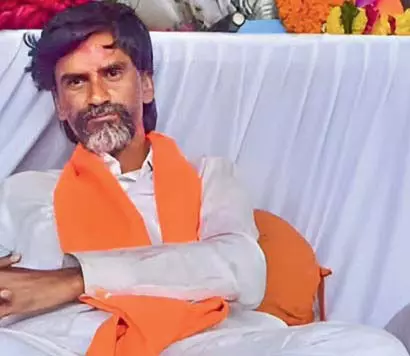
Mumbai heaved a sigh of relief after Maratha quota activist Manoj Jarange declared “victory” and called off his “peaceful” protest — one that the Bombay high court rightly noted was far from peaceful. Mr Jarange leveraged the numerical strength of the Maratha community to pressure the Devendra Fadnavis-led government into accepting most of his demands.
However, neither the government’s assurances nor Mr Jarange’s victory claims mean the Marathas will immediately receive reservation under the Other Backward Classes category. What has been accepted is Mr Jarange’s demand for implementing the Hyderabad Gazetteer, a move that could allow Marathas from the Marathwada region to establish their Kunbi credentials — a step toward potential OBC inclusion.
With this, chief minister Devendra Fadnavis has managed to calm the situation for now. But there is no guarantee that protesters won’t feel betrayed and return to the streets in a few months. Besides, the backlash from OBC groups is looming large. Many within the OBC community view the inclusion of Marathas as a dilution of their rights.
The Maratha reservation movement dates to the early 1980s. Although traditionally regarded as a dominant group in Maharashtra, many Marathas — especially in rural areas — have faced increasing economic hardship due to agricultural distress, unemployment, and limited access to modern opportunities. While politically influential, the poorer subgroups of the community often feel excluded from the benefits of development, particularly in education and government employment. These grievances have fuelled calls for affirmative action as the solution to their problems.
While the concerns are genuine and deserve attention, whether the Maratha community qualifies for caste-based reservation remains contentious. Even if the government yields to political pressure, such a move may not stand up to judicial scrutiny.
In 2021, the Supreme Court struck down the previous attempt to grant reservation to Marathas under the Socially and Educationally Backward Communities (SEBC) Act, 2018. The court ruled not only that it breached the 50 per cent cap on reservations but also that there was insufficient evidence to prove the community’s social and educational backwardness.
A more constructive approach would involve conducting thorough, data-driven surveys to determine if certain Maratha subgroups genuinely meet the criteria for OBC inclusion. However, political parties and protest leaders avoid this path, fearing it might not yield the desired outcome.
There is also a concern that granting reservations to Marathas could open the floodgates to similar demands from other dominant communities, such as the Patels in Gujarat, Jats in Haryana, Gujjars in Rajasthan and Kapus in Andhra Pradesh. If governments start awarding reservations to numerically dominant communities based solely on political expediency or economic grievances, it undermines the very foundation of reservation, which is meant to address social and educational backwardness, not economic distress.
Reservation was introduced with the noble aim of uplifting historically marginalised communities. It was never intended as a blanket solution for poverty. Political leaders — especially those in power — have a duty to clarify this to people rather than weaponising their quota demands for electoral gain.
As elections approach, it is common for politicians to promise reservations to influential groups without fully assessing whether they meet constitutional criteria. These pledges, often unsupported by solid data, are frequently struck down by the courts — leading to more protests, social unrest and polarisation.
Unjustified, unconstitutional reservation can also deepen social divides. Communities excluded from quotas may feel resentment, further entrenching caste-based politics. The fight for justice must not turn into a race for quotas. Affirmative action should be based on evidence of backwardness, not sheer numbers or pressure tactics.
