DC Edit | Youth Power Triumphs, In Ranchi As At Jantar Mantar

A movement that amalgamated around a march to Parliament may not end with Jantar Mantar and Jharkhand. Both protests, which ran in the face of government reluctance to hold parleys early with the protesters to find out their grievances only to bend when there was no alternative to conceding justifiable demands may be just the beginning of a display of the power of young people who are riddled with anxieties and doubts over their future
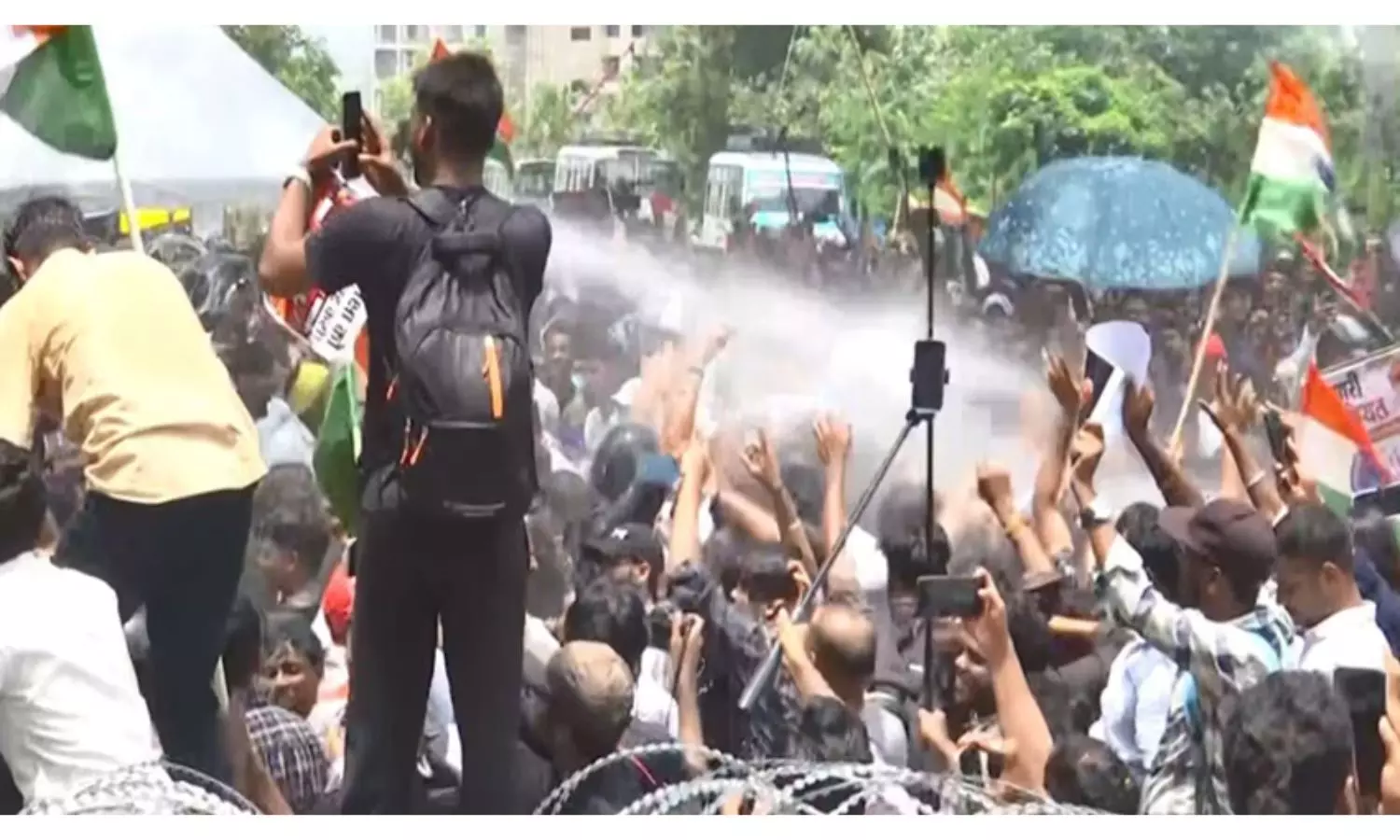
The power of youth as exhibited in their right to protest — under Article 19 of the Constitution as the Supreme Court reminded the authorities — has prevailed in spectacular fashion. From Jantar Mantar to Jharkhand, the protesters, be they students, job aspirants or a collective of young people gathering under the banner of the Cockroach Janta Party, achieved their aims in bringing about the resignation of the Union education minister and the cancellation of the JSSV-CGL and TDPL-conducted recruitment examinations in Jharkhand.
The students and youth braved the power of the state that manifested in brutal methods of crowd control like lathi charges, baton strikes, pellet guns, water cannons and iron barricades, protesters’ names mentioned in FIRs following the use of surveillance methods like facial recognition, etc. With fasting leaders and fearless frontliners in protest action they drove home their point about the fecklessness of governments in handling subjects that hold great significance for young people like entrance exams and recruitment tests.
A movement that amalgamated around a march to Parliament may not end with Jantar Mantar and Jharkhand. Both protests, which ran in the face of government reluctance to hold parleys early with the protesters to find out their grievances only to bend when there was no alternative to conceding justifiable demands may be just the beginning of a display of the power of young people who are riddled with anxieties and doubts over their future.
The history of youth struggles goes back a long way in India too, beginning with youth participation in the freedom struggle and the ringing in of a change of guard in Tamil Nadu with the anti-Hindi agitation in the 1960s. The CJP and student union-led protests in Delhi and Ranchi will go down in history as an inflection point in which the young people found their voice to protest blatant injustice as in exam paper leaks and state-driven recruitment processes for government jobs in which politicians also meddle.
It is the life of students, which is at stake, top court judges said. It is not as if political leaders were unaware of this when so many instances of shoddy conduct of examinations, paper leaks and corruption by mafia had popped up periodically to remind them that the system was sporting gaping holes and that not enough was being done by government agencies that have taken over centralised tests that are supposed to determine merit among millions of aspirational young Indians.
The fundamental error of the state was in tackling the protests as a law and order problem rather than the outpouring of genuine student grievances. Exam reforms are being talked about now and enquiry panels being formed to probe the excesses of the Delhi police – not that the Jharkhand police were any less in demonstrating brutality or registering cases against protesters — after the demonstrators had withstood nearly a whole month of privation just to register their angst over an uncaring system.
A stubborn Union ministry that refused to see quickly enough the reason behind the unrest and a vacillating state chief minister who trotted out pedantic excuses for not cancelling the exams earlier were symptomatic of the response of authority to the expression of dissent. The political implications for governments that get elected for five-year terms should not matter here so much as the establishment of a renewed force in India of a youth empowered in its awakening from a slumber of decades.
