DC Edit | Why Modi Wants Corporate India To Share Its Prosperity

Mr Modi’s speech touched upon a fundamental contradiction in modern capitalism: Governments extend concessions to businesses expecting economic growth, while companies remain accountable to their shareholders
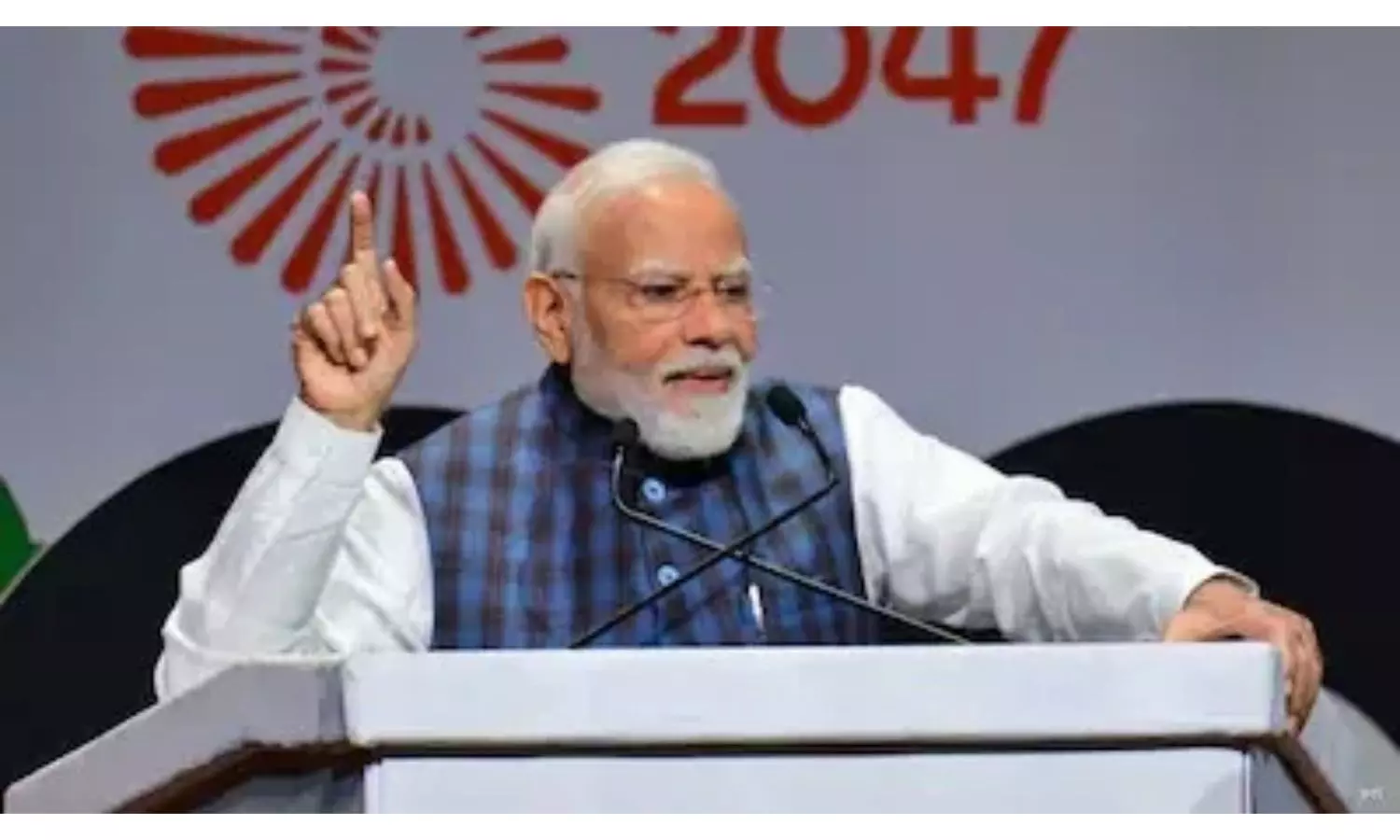
Prime Minister Narendra Modi, widely regarded as business-friendly, delivered one of his sharpest public reprimands to corporate India on Thursday. His criticism was not about the failure of businesses to generate wealth, but about their reluctance to share the benefits of economic reforms with employees and society.
Referring to his government’s decisions to improve Ease of Doing Business, and lowering of tax incidence, Mr Modi asked industrialists whether they had increased employees’ salaries or expanded their workforce. His also bluntly pointed observation that businesses remained perpetually hungry for more profit was unusually candid.
Mr Modi’s speech touched upon a fundamental contradiction in modern capitalism: Governments extend concessions to businesses expecting economic growth, while companies remain accountable to their shareholders.
In capitalism, businesses do not recruit employees as an act of corporate social responsibility. They hire when additional manpower is necessary to expand production, deliver services or sustain operations. Similarly, salaries rise when employers face competition for talent or productivity pressures.
India witnessed substantial salary increases during the influx of foreign investment and expansion of multinational operations before the 2008 global financial crisis. The information technology sector experienced another extraordinary wage cycle during the pandemic, when intense demand for digital services created fierce competition for skilled professionals.
Conversely, when labour is abundant and employment opportunities are scarce, companies have little commercial incentive to raise salaries substantially. While tax concessions alone cannot overturn these market dynamics, businesses, too, must understand this.
Over the past decade, corporate India has benefited from significant policy changes. The reduction in the standard corporate tax rate for eligible domestic companies to 22 per cent. The introduction of GST replaced multiple indirect taxes, reduced cascading taxation through input tax credits and accelerated formalisation of the economy.
Large organised businesses also benefited from the gradual shift of economic activity towards formal channels. These reforms were not intended to merely improve corporate balance sheets but to strengthen the economy as a whole.
The combined profits of companies that the Reserve Bank of India tracks increased over five times, while employment cost increased 1.7 times between 2014 and 2026. Of this, the IT sector has a predominant share. This metric proves what Mr Modi was complaining about.
There is also a larger warning here. Capitalism derives its legitimacy not merely from creating private wealth, but from generating opportunities and prosperity across society. When businesses repeatedly seek concessions while the benefits remain concentrated among shareholders and senior executives, public resentment can grow.
Such resentment could eventually strengthen anti-capitalist sentiment and demands for greater state intervention. A return to the restrictive economic environment associated with the Licence Raj would serve neither businesses nor workers nor the country.
Corporate India must recognise that sharing prosperity is not charity and it is essential to sustaining the economic system that enables businesses to prosper. If you don’t water a tree, you won’t get to enjoy its fruits.
This does not mean that companies must hire unnecessary workers or offer unsustainable salary increases. But it requires a longer-term commitment to fair compensation, workforce development, productive investment and responsible distribution of economic gains.
