DC Edit | Supreme Court Must Rule Firmly On SIR, EC & CEC

The SIR process was fundamentally flawed as it followed algorithms that seem to have been slanted in certain ways to exclude voters and not to serve the principle that no eligible voter should be denied his/her right to cast his/her vote
In an act of contrition, the Election Commission headed by chief election commissioner Gyanesh Kumar, has directed that in states and UTs where the SIR has been completed, a special drive will be undertaken for the enrolment of voters left out and of young and first-time eligible voters. Significantly, the Declaration Form 6 that placed so many obstacles in the path of voters to prove their eligibility through ‘mapping’ will not be used.
The process of updating might be fairer and more inclusive than aiming to exclude eligible voters as it proceeds, but there is no taking away from the fact that the SIR was conducted in states and UTs that went to the polls in 2026 in an abominable way making apparent that the commission was hell bent on keeping out certain sections of voters, groups, communities, migrants, etc. ostensibly to please the masters of the ruling dispensation.
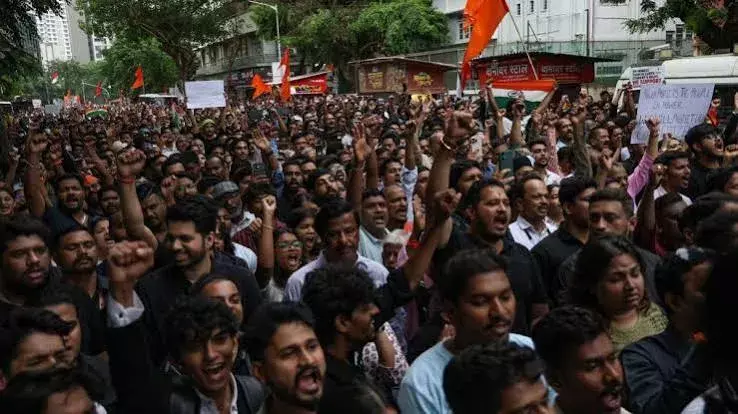
As the agitation by a collective of Opposition parties to remove the CEC picks up momentum after beginning on Mahatma Gandhi’s birth anniversary, it is still the Supreme Court that must sit to ponder on what went on during SIR despite its interventions at various points, especially before the West Bengal polls, and decide on how to call out the various illegalities that have been pointed out in the updating of the poll rolls.
There is no arguing against the principle of periodically flushing the rolls to purge the names of the deceased and the non-resident and including all those who may have become eligible by age or residence to vote. But how the exercise was carried out raised far too many questions and it is incumbent on the part of one important constitutional arm of Indian democracy, which is the Supreme Court, to pass judgment on and correct the ways of another.
As on date, the misgivings of the voters and the Opposition parties which gathered their voices in protest and the way in which the CEC appears to have overridden the objections of his fellow commissioners appear to have cast serious doubts on the veracity of recent state polls. While reservations over the use of EVMs have run out of steam given the genuinely mixed results that state polls have thrown up, the SIR process has not been attacked without genuine grievances and impropriety in procedural matters which have been widely highlighted.
To say 14 crore voters, or around 15 per cent of India’s voting population have been left out may be an exaggeration considering some 2.8 crores of voters may have passed on and nearly twice that number may have been unavailable at the place of their marked residence. However, the SIR process was fundamentally flawed as it followed algorithms that seem to have been slanted in certain ways to exclude voters and not to serve the principle that no eligible voter should be denied his/her right to cast his/her vote.
The Supreme Court has a lot to rule on, including the significant question of whether the immunity granted to the EC itself is legal. Credibility of the polling process thanks to the ability of the EC to withstand most attacks on its sanctity has been a feature of Indian democracy. This is not to be compromised by the depredations of officials who are entrusted with the task of preserving the inviolability of the polling process. The sooner the Supreme Court rules on the path to follow the better for Indian democracy since the polls of 2027 onwards should be clean and above board.
