DC Edit | Pakistani Attack on Afghan Hospital Has No Justification

Deadly bombing raises concerns over military strategy and regional stability
With the world focused on the Iran war and its global fallout, Pakistan carried out an attack on Afghanistan, bombing what turned out to be a drug rehabilitation centre and killing patients staying there in hundreds. The barbaric attack, which took a death toll above 400, is several times greater than the deaths in a dozen Gulf nations and among the US armed forces put together in Iran’s retaliatory strikes.
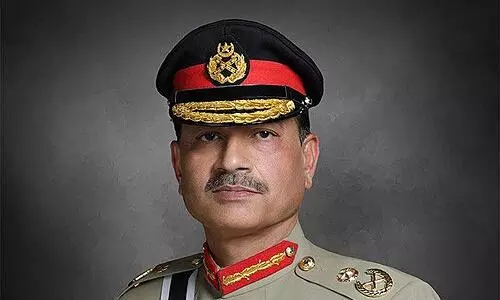
Monday’s barbaric bombing of a civilian institution near Kabul from a Pakistan air force jet, the deadliest since February when Pakistan declared war on its neighbor and launched strikes at 20 locations and killing 274 people, is part of a Gen. Asim Munir gambit that may have been meant to carry several pointed messages to Afghanistan.
With all eyes on Iran for over two weeks now, the Field Marshal may have timed the heavy attack to convey to the Taliban authorities not to use the Tehreek-i-Taliban to attack Pakistan in cross-border raids and also not to cozy up to India by sending ministers, diplomats and even delegations to New Delhi after India was prepared for a thaw in relations with Kabul just as ties between Pakistan and Taliban were beginning to sour.
Pakistan has a right to defend itself is the argument being used to justify the escalation of the conflict in which several Pakistan Army personnel have also lost their lives in Afghan guerilla-type raids across the 2,600-km border. No one buys the theory that the rehab centre was previously an ammunition dump nor its history earlier when US troops were stationed there. A Pakistani minister claimed this was one of several precision strikes carried out on the Afghans.
Officials of both countries had been meeting regularly last year until the two militaries clashed with each other last October. The ties had gone rapidly downhill since then, with the Pakistan armed forces, several times more powerful than that of the Taliban regime, inflicting damage, including on civilian places, with its firepower from the air being used to demonstrate the military superiority.
So long as the Pakistan army, under a general feted by the American leadership in Washington, runs a state within a state, waging war will remain a hobby to be carried out periodically to keep the forces busy, be it inside Pakistan or in engaging neighbouring nations. It matters little to the armed forces that the country itself is suffering the effects of the Iran war and scrambling to make fuel available at a price that is climbing by the day. The administration has put a cap on the number of vehicles that the establishment can use, and yet economic pain is most visible at the petrol pumps.
Given Pakistan’s troubled history with martial law and generals as dictators, it should come as no surprise to the Afghans that peace with that nation is an ideal impossible to attain. It is in the brazenness of attacking Afghanistan with the air force that boggles the imagination, which is why the use of the word “barbaric” in India’s description of the attack on a centre for treating drug addiction is apt.
In Pakistan’s melting pot are also militant nationalist movements run by the Balochis in the south and by the Pashtuns in the north. However, there is no denying that the Pakistan army’s dalliance with sponsored terrorism has also brought trouble in unintended ways as the Pakistani Taliban, at the centre of the conflict, was also patronised by the ISI. There are no easy answers for Pakistan, but bombing Afghanistan is not the solution.
