DC Edit | Lip Service Not Enough, Give Science More Funds

The ISC, which predated Indian independence and is considered one of the finest assemblies of scientific minds all over the world, had earned notoriety for professing pseudo-science, much to the chagrin of the community, immediately before it was shut down
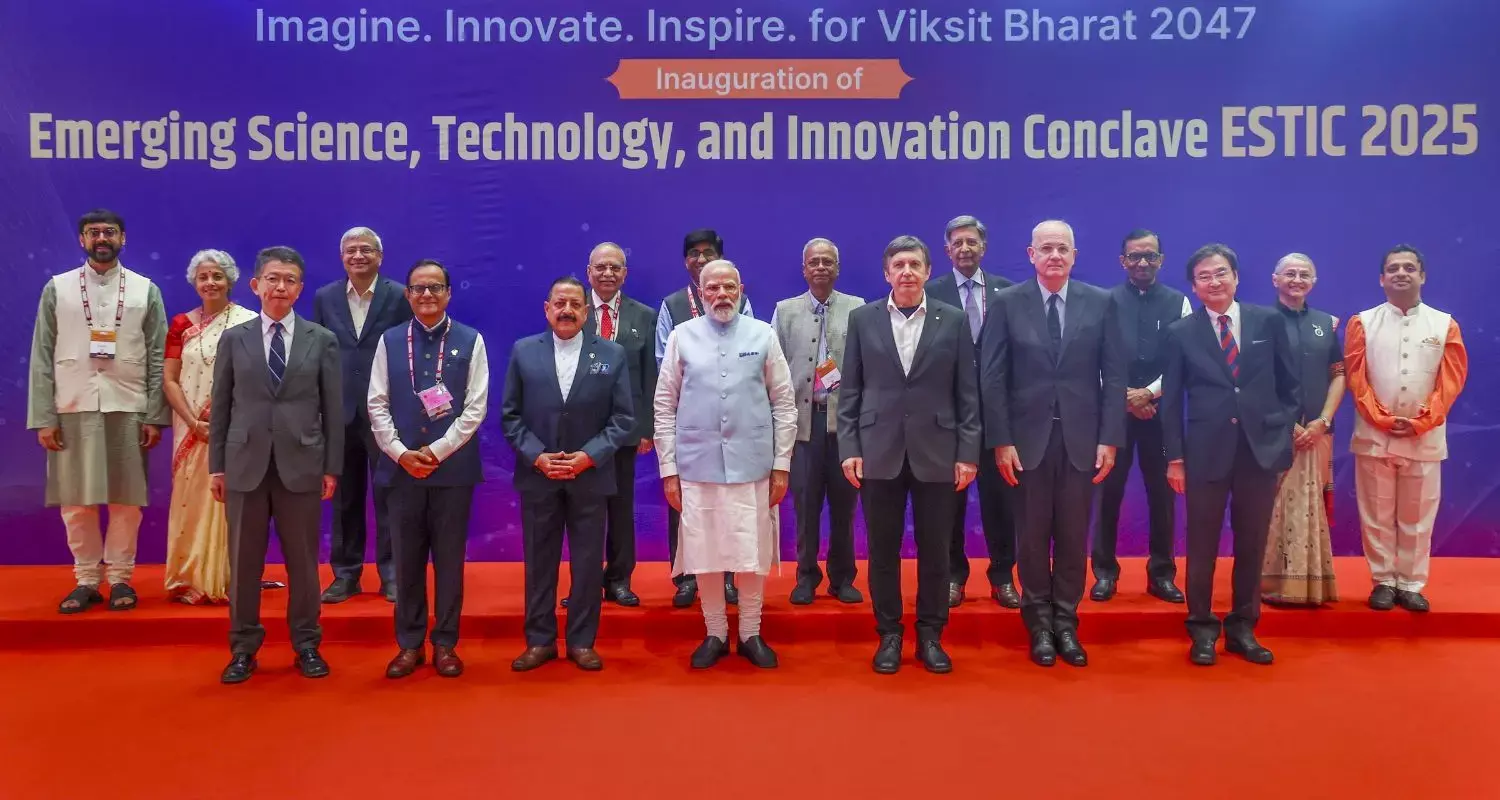
Prime Minister Narendra Modi’s announcement that India is working to build a modern innovation ecosystem and is focusing on improving ease of doing research in the country as well as his exhortation that the focus of research should be shifted to addressing the emerging challenges faced by humanity are welcome but how the government he heads has conducted itself in facilitating these noble aims in the last one decade is a bit uncertain.
Interestingly, the Prime Minister was speaking at the first edition of the Emerging Science, Technology and Innovation Conclave (ESTIC) 2025. The new event is expected to replace the Indian Science Congress (ISC) which died a slow death in 2023. The ISC, which predated Indian independence and is considered one of the finest assemblies of scientific minds all over the world, had earned notoriety for professing pseudo-science, much to the chagrin of the community, immediately before it was shut down.
The Prime Minister said India was backing high-risk and high-impact research and development projects and is fostering private investments to emerge as a science and technology powerhouse. The Prime Minister, who also launched a Rs 1-lakh-crore investment fund for the purpose, placed before the scientific community the need to shift the focus from food security to nutrition security. Next-generation biofortified crops can help combat malnutrition globally, he asserted. Mr Modi also drew the attention of the scientific community to some other pressing demands of the country and the world, such as low-cost soil health enhancers and bio-fertilisers, the mapping of genomic diversity to advance personalised medicine and disease prediction and new and affordable innovations in clean energy storage.
It is the responsibility of the political leadership to place the demands of society before the scientific community. Mr Modi was also right in pointing out that change is not linear but exponential as research can come up with products and processes that can bypass its own protocols and processes and offer breakthrough solutions. Nutrition security is indeed a laudable goal but the reality on the ground is that India as a country is yet to achieve food security — about 60 per cent of its people are being provided food-grains for free. It is important that the country’s thought leaders have their ear to the ground to set realistic goals and achieve them.
Mr Modi claimed that the government has undertaken several reforms in financial rules and procurement policies and pointed out that India’s R&D expenditure has doubled in the last decade when the number of registered patents increased 17 times so that India is now the world’s third-largest start-up ecosystem. It may, however, be noted that the increase in funds availability in the government sector in this period has not been commensurate with the growth of the economy. As per available government data, the total R&D expenditure measured in terms of gross expenditure on research and development (GERD) as a percentage of GDP has in fact come down from 0.66 per cent in 2018-19 to 0.64 in 2022-23 even while this number is significantly high in China, varying from 3.4 to four. India’s share in global R&D has grown from three per cent in 2000 to five per cent in 2023 whereas it grew from four per cent to 26 per cent in China.
If India were to reach the leading position it aims for in research and innovation, it must set realistic goals and spend money as per their requirements. There is no gainsaying that basic research world over is funded by the governments. Mr Modi must prod his government to change its approach towards research if he is serious about his scientific dream that is to use knowledge as a tool to solve the nation’s problems.
