DC Edit | Jharkhand Stir Reveals Real Issues Far Deeper Than NEET

Behind the demonstrativeness at Jantar Mantar, which then spread to Ranchi in a restrained and peaceful manner under the leadership of students, is something that is genuine. The frustrations and discontent among the youth over a broken examination system which carries enormous implications for their careers and jobs and their very future have found a path to put governments on notice about the dire and urgent need for cleaning up the exam and recruitment systems
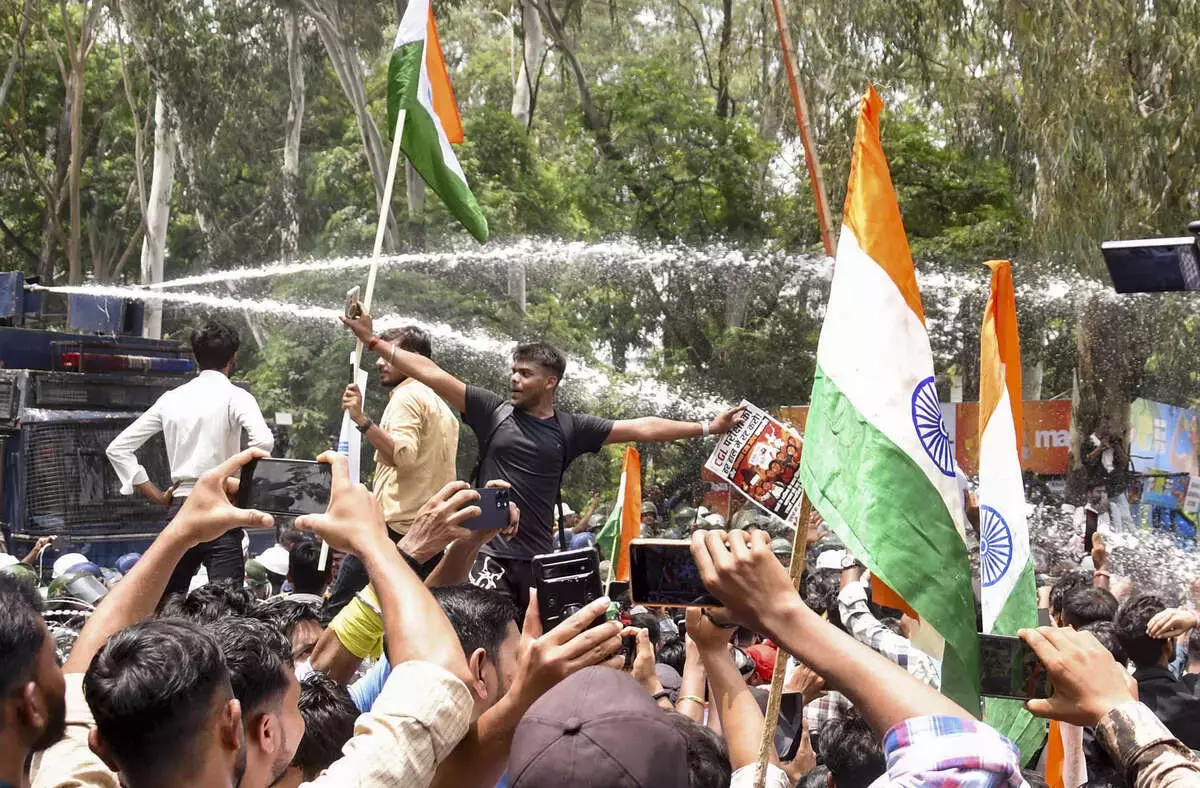
As the protests by Jharkhand job aspirants snowballed into open defiance of restrictions placed around the new Vidhan Sabha in Ranchi with protesters sticking to their demand for accountability over exam paper leaks and breaches in the integrity of the JPSC-JSSC tests, the realisation may have dawned on all political leaders that Jantar Mantar may have been just a trailer.
Behind the demonstrativeness at Jantar Mantar, which then spread to Ranchi in a restrained and peaceful manner under the leadership of students, is something that is genuine. The frustrations and discontent among the youth over a broken examination system which carries enormous implications for their careers and jobs and their very future have found a path to put governments on notice about the dire and urgent need for cleaning up the exam and recruitment systems.
The same pattern of police brutality, discernible in the use of force as in water cannons, baton charges and firing of tear gas shells, was to be seen in Ranchi, capital of an Opposition-ruled state as well. An opportunistic Opposition that saw an opening to be more relevant in national affairs and jumped on the explosive Jantar Mantar situation may now have to persuade one of its own leaders to be reasonable and assuage the Jharkhand protesters.
Not only is the problem the same as happened to the prestigious medicine gateway that is Neet but also that state governments which conduct their own civil service entrance tests for jobs — seen as tickets to a secure life and so are in disproportionately high demand — can be equally callous about trying to ensure the preservation of the integrity of the exam system, which has had huge holes punched into it by the greed of question paper setters and the paper-leak mafia.
The initial response of governments that have had to deal with the gathering student protests was to treat it as a law and order situation which had to be controlled to prove that the establishment is in control. What was invariably missing at the start was the desired empathy backed by a timely recognition of the need to sit down and talk to student leaders and convince them that the government has woken up to the reality of the situation and that, going forward, its efforts to retrieve the system’s fairness will be real.
No one expects that an ideal meritocracy can be put in place in a country that has such a huge, decades-old commitment to affirmative action. But the least those who run competitive exams can do is to ensure that the question papers are not leaked and that a level playing field is offered to all those who endeavour to ace the tests and get their favoured stream of study or land government jobs.
Governments have the money to hire the expertise to foolproof question papers and the exam process. It is a lack of will to address the issue as vital to Gen Z aspirations and study it thoroughly to find solutions to stop the irregularities and the leaks until protests exploded that showed up the character of political leaders. If they cannot heed the level of protests as seen in New Delhi and Ranchi, they will be doomed in their avocation as career politicians.
