DC Edit | Involve Pilots In AI Probe Amid Row On Fuel Switches

For one, while that conclusion is credible, the conjectures have bordered on the incredible. And then again, the pilots have been left out of the probe
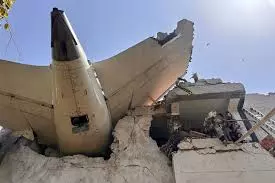
The preliminary report of the probe into the Air India crash at Ahmedabad fixed the transitioning of the fuel switches to the “cutoff” position as the reason for the engines shutting down and causing the airplane to come down. This led to conjectures way beyond that simple statement of fact with experts weighing in on human intervention as the only possible cause. But pilots do not agree that one of their kind throwing both switches to “cutoff” in a few seconds could be the only explanation.
For one, while that conclusion is credible, the conjectures have bordered on the incredible. And then again, the pilots have been left out of the probe. Their representatives not being given even observer status is a reason why it appears the probe seems to have taken a direction leading away from possible mechanical or electronic or software failure so that the manufacturer Boeing emerges unscathed. The fuller probe may not be as kind if the investigation is fair and not “fixed” in favour of the aviation industry.
It is in the interest of fairness that expert pilots also be involved in the probe. But whether that would be acceptable to the industry is in question as the manufacturer, the airline and regulatory bodies seem content with how the initial findings have taken the conjectures on a certain path, with the Airline Pilots’ Association of India (ALPA) stating, not without logic, that the tone and direction of the investigation suggest a bias towards pilot error.
Flying is still safe enough for passengers to sleep like babies at 35,000 feet and the statistical chance of being in an air crash is still very long, in fact a million to one. There should be no need then for bias in favour of a cosseted aviation manufacturing industry where a duopoly is dominated by Boeing and Airbus, both with a near equal crash record when adjusted for number of flights, but both having been through several image crises thanks to manoeuvres in the boardroom as well as events in the cockpit.
The speed with which airline regulators are acting now on getting air carriers to have the same fuel switches inspected in many Boeing models is a clear indication that there are doubts about whether they can move without being deliberately moved. In fact, airlines had been warned in 2018 by the US FAA that the switches could be moved between the two positions without being lifted when the locking feature is disengaged in some Boeing 737s. And most recently, the British regulator pointed to the same defect just weeks before the Air India crash.
If there is the slightest possibility that the switches could move between positions without human intervention, there is a need for the probe to be very open about this. Investigators must dig deep to find out if the engines were cut off by any other kind of event than a pilot, accidentally or deliberately, cutting engines when the big aircraft was just taking off.
Passenger safety trumps all other commercial considerations, whether they pertain to aircraft of any make and carrier of any brand. What should be established in a fact-based inquiry is why this Air India did plane crash and then it should be conveyed publicly in order to assure people that safety is not being compromised in cost cutting or sheer complacency. But casting aspersions on dead pilots will get us nowhere.
