DC Edit | India’s Space Hopes Rise As Shukla Makes History

26 Jun 2025 10:04 PM IST26 Jun 2025 10:04 PM IST
Indian Air Force’s Group Captain Shubhanshu Shukla has made history by becoming the first Indian astronaut to dock at the International Space Station (ISS), a global collaborative space lab, over 40 years after Wing Commander Rakesh Sharma travelled to the Soviet Union’s Salyut space station.
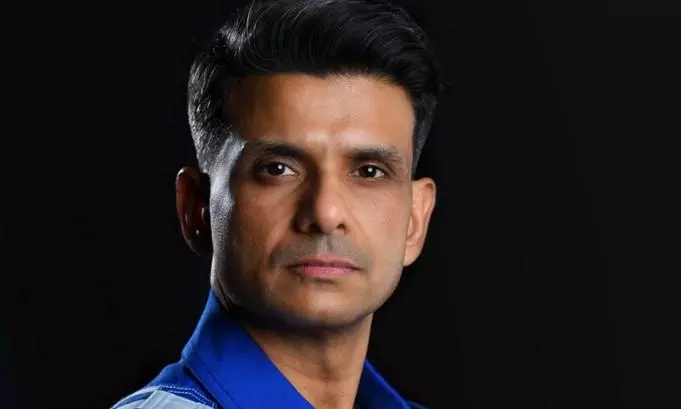
Indian Air Force’s Group Captain Shubhanshu Shukla (Image: Social Media)
The Indian Air Force’s Group Captain Shubhanshu Shukla has made history by becoming the first Indian astronaut to dock at the International Space Station (ISS), a global collaborative space lab, over 40 years after Wing Commander Rakesh Sharma travelled to the Soviet Union’s Salyut space station. Apart from Rakesh Sharma, there were at least four persons with Indian roots, who reached the Earth’s orbit or sub-orbit. Three of them are persons of Indian origin,
namely Kalpana Chawla (1997 and 2000), Sunita Williams (2006, 2012, 2024) and Sirisha Bandla (2021), while an Indian citizen, Gopichand Thotakura, became India’s first civilian space tourist in 2024. However, the June 25 launch aboard the SpaceX Falcon 9 and Crew Dragon capsule “Grace” via Axiom Mission 4 (Ax4) is unique: Unlike Sharma’s flight, Shukla would be gaining hands-on experience in operating the spacecraft. He is the commander-in-waiting for Gaganyaan4, which is expected to be launched in December 2027, and would play a crucial role in India’s space ambitions. As it is a prelude to India’s space exploration, Shukla’s ascent to orbit ignites inspiration far beyond any space agency. It strengthens India’s foothold in low Earth orbit and sets the stage for more ambitious extraterrestrial endeavours, beginning from the Moon.
The mission also carries enormous symbolic capital. Lakhs of Indians and space enthusiasts watched live the docking of the spacecraft with the International Space Station and the astronauts walking into the orbital laboratory on June 26. The sight of the Indian National Flag on Shukla’s flight suit has animated youth across India. Of whom, many could take up science as a career, strengthening the country’s already mature scientific ecosystem, and help in solving the many problems that the country faces now. The current space odyssey also underscores another pivot — commercial collaboration and private-public partnership. The core philosophy underlying this principle is to avoid an urge to reinvent the wheel. While many space technologies will find applications in defence, there could be many components which could simply be bought or outsourced to begin with. It will hasten project execution without unnecessary
delays and prevent overshooting of budget estimates.
The Indian space programme until now was mostly driven by the country’s need for technological advancement. While there are several lakhs of space enthusiasts in the country, the space programme will accelerate only if it can attract people’s attention. However, for it to happen, the government and scientists must make people connect with space technologies and their immense potential to change people’s lives for the better. Understanding outer space could unlock much of our potential. It could give us new insights into many issues confronting the Earth and people. Shubhanshu Shukla’s docking, therefore, is not merely ‘historic’ — it is a catalyst. It links the pride of Rakesh Sharma’s legacy with a rising power’s readiness to aim high, through Gaganyaan, Moon and beyond. For a nation in which stars play a crucial role in people’s lives, the trajectory is clear, even if the goal is ambitious: India’s permanent presence in Earth orbit and beyond.
The mission also carries enormous symbolic capital. Lakhs of Indians and space enthusiasts watched live the docking of the spacecraft with the International Space Station and the astronauts walking into the orbital laboratory on June 26. The sight of the Indian National Flag on Shukla’s flight suit has animated youth across India. Of whom, many could take up science as a career, strengthening the country’s already mature scientific ecosystem, and help in solving the many problems that the country faces now. The current space odyssey also underscores another pivot — commercial collaboration and private-public partnership. The core philosophy underlying this principle is to avoid an urge to reinvent the wheel. While many space technologies will find applications in defence, there could be many components which could simply be bought or outsourced to begin with. It will hasten project execution without unnecessary
delays and prevent overshooting of budget estimates.
The Indian space programme until now was mostly driven by the country’s need for technological advancement. While there are several lakhs of space enthusiasts in the country, the space programme will accelerate only if it can attract people’s attention. However, for it to happen, the government and scientists must make people connect with space technologies and their immense potential to change people’s lives for the better. Understanding outer space could unlock much of our potential. It could give us new insights into many issues confronting the Earth and people. Shubhanshu Shukla’s docking, therefore, is not merely ‘historic’ — it is a catalyst. It links the pride of Rakesh Sharma’s legacy with a rising power’s readiness to aim high, through Gaganyaan, Moon and beyond. For a nation in which stars play a crucial role in people’s lives, the trajectory is clear, even if the goal is ambitious: India’s permanent presence in Earth orbit and beyond.
( Source : Deccan Chronicle )

Next Story