DC Edit | India Gets SCO to Condemn Pahalgam and its Sponsors

The West may regard the SCO as a distant regional security organisation without great influence, but Washington’s disorder and the chaos in global trade sowed by President Donald Trump’s tariff tantrums led to this SCO meeting facilitating a major geopolitical shift.
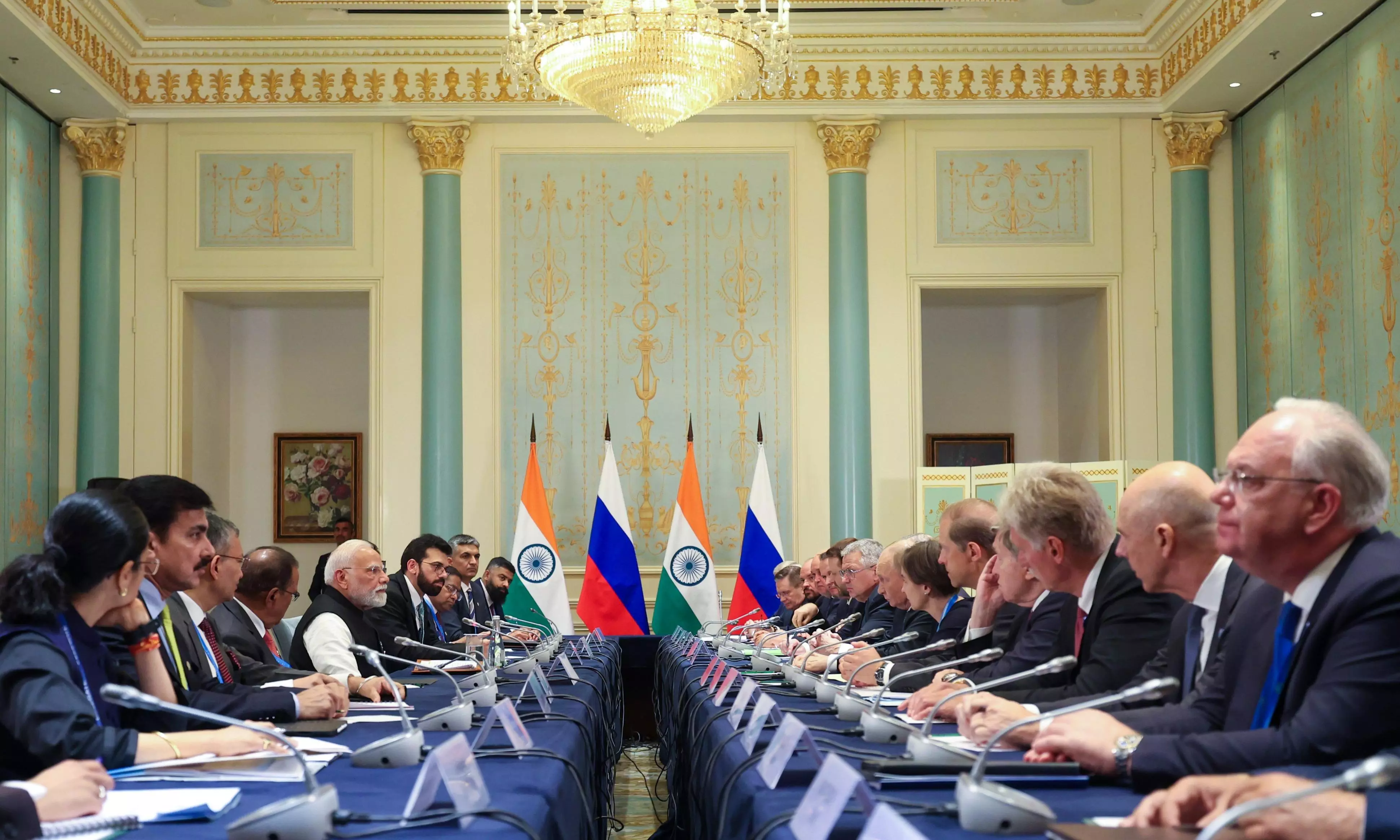
India and Prime Minister Narendra Modi have reason to feel satisfied about the way the Shanghai Cooperation Organization meeting unfolded in Tianjin. Representing the country most wounded by Pakistan’s state-sponsored terrorism, PM Modi leveraged India’s seat at this high table to bring everyone around to the reasonable viewpoint that terror is a threat to peace. In convincing the SCO to specifically geotag the April 2025 Pahalgam terror attack for condemnation, India won the day while stressing the fundamental point that sponsors of terror should also be held to account.
The declaration coming from a united SCO meeting is significant given the growing discord within the US alliance with European as well as Asian countries. However disparate their outlook and diverse their national priorities might seem, the convergence of Chinese President Xi Jinping, PM Modi and Russian President Vladimir Putin in Tianjin and a clutch of leaders of emerging economies has enabled giving shape to an incipient alternative worldview centred on a fairer multipolar world order.
The West may regard the SCO as a distant regional security organisation without great influence, but Washington’s disorder and the chaos in global trade sowed by President Donald Trump’s tariff tantrums led to this SCO meeting facilitating a major geopolitical shift. The troika of leaders of China, India and Russia was seen to be pleased to set the ball rolling in this direction.
The member states also condemned the military strikes by Israel in Gaza leading to innumerable casualties and creating a catastrophic situation of hunger and starvation. The Gaza reference exposes the double standards that the USA has been nursing in its reading of wars around the world in which it even dared to link the financing of the Ukraine war to India’s purchase of discounted Russian oil.
India’s fight for justice against Trumpian imperialism and double standards in dealing with Russian oil customers lends this more importance than any emphasis of a point of view at a multilateral event. In two days in Tianjin, India has made clear how it will be handling its right to stand by a strategic autonomy principle that sees it being involved in multiple politico-economic and strategic organisations.
India has emphasised its autonomy with a practical view of tariffs rather than an emotional one, which becomes apparent as it has chosen not to offend the USA further by slapping retaliatory tariffs. India’s autonomy was stressed once again as Mr Modi left after the SCO meeting without attending China’s military parade to commemorate the end of World War II with an eastern point of view.
The other notable occurrence was the unveiling of the fact that President Trump is not the only peace pundit in the world. PM Modi’s appeal to President Putin to find ways to end the war in Ukraine was a plea on behalf of humanity, which might carry more weight as it does not come from a transactional leader.
This was not the first time that PM Modi has broached the subject but it’s only the latest attempt in a series of attempts he has made in directly addressing Mr Putin on the war and he may well have used the opportunity of a ride in Mr Putin’s Russian-made limousine to speak to him of India’s pacifist philosophy and how it views all war as destructive and in which there are no real winners.
