DC Edit | India Basks in Games Glow After Japan Asiad

A fourth-place finish, new stars and breakthroughs brighten India’s road to 2030 and 2036
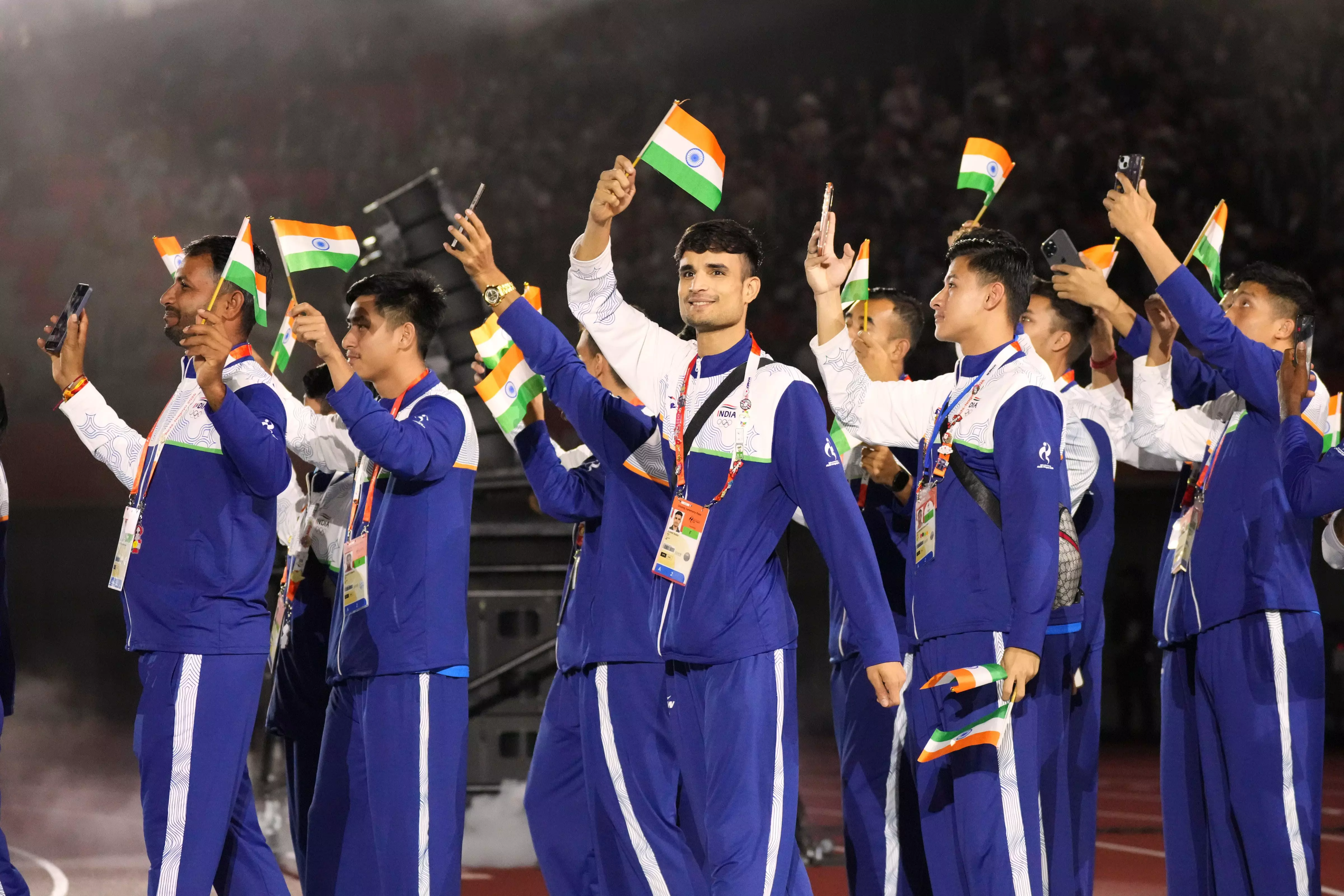
As the curtain fell on the Asian Games in Aichi-Nagoya, most of India and its athletes are sporting a satisfied grin. They managed to maintain their fourth place on the continental medals table behind powerhouse China, host Japan and sharp South Korea just like the previous edition in the Chinese city of Hangzhou, where India had recorded its largest tally of 107 medals.
The 2026 version fetched 22 fewer medals, but it certainly put springs in the steps of the sports fraternity. The fortnight was a roller-coaster for India, which started slow before picking up pace and finally finishing with a flourish. It resembled the women’s 4x400 metres relay race, in which the country struck gold thanks to Vithya Ramraj’s searing sprint in the final stretch of the anchor leg. That was the only gold at the popular track and field events from which Indian athletes bagged 24 medals, the most by any sport for the country.
Vithya also did herself proud by breaking the legendary P.T. Usha’s 42-year-old national record in the women’s 400 metres hurdles (of 55.42 seconds set at the 1984 Los Angeles Olympics) by clocking 54.75 seconds on her way to the bronze medal. Usha, who is the current Indian Olympic Association president, was present in person in Nagoya to congratulate the beaming achiever.
Gulveer Singh was another track hero, running his way to silvers in the 10,000 and 1,500 metres and a bronze in the 5,000 m events while Sawan Barwal landed the marathon silver with a national record of 2 hours 11 minutes and 37 seconds.
The archers were A+, shooting right into the tight-10 circle to collect five golds. Overall, they nailed nine medals from the arena for an amazing accomplishment.
The shooters and boxers were the next best with three golds each, but the ones wielding guns tallied 15 medals overall to six from the pugilists. The wrestlers also contributed six medals, including two golds while the kabaddi, cricket and hockey teams (men and women) swept the top medals to power India’s golden run.
Individually, four athletes finished with three medals each — shooter Neeru Dhanda and archer Kumkum Mohod (two golds and a silver); long distance runner Gulveer (two silvers and a bronze) while Vithya completed the set — gold, silver and bronze.
The Games turned the spotlight on achievers in new disciplines. Baranica Elangovan’s bronze in pole vault was India’s first ever at the Games. The other breakthroughs came from golfer Pranavi Urs (gold), Anahat Singh’s silver from the squash court, Roshiniba Devi’s wushu silver, Suchika Tariyal (Mixed Martial Arts, bronze), Pincky Balhara’s bronze from kurash, Jay Meena’s bronze in soft tennis, rowers Satnam Singh & Salman Khan (bronze) and the sepaktakraw men’s quadrant that kicked in a historic bronze medal. This clearly points to sports culture spreading far and wide in the country.
However, the established badminton and table tennis players could not measure up and managed just a bronze each, much to the dismay of fans who had pinned multi-medal hopes on them. A bit too disappointing when viewed against the backdrop of the Union Sports Ministry spending Rs 700 crore on athletes’ preparation for the Asian Games.
Overall, the Asiad success could not have come at a better time with India gearing up to host the Commonwealth Games in 2030 as well as bidding for the 2036 Olympics. It’s game on.