DC Edit | In Telangana’s Vision, Eco Growth To Pay Welfare Bills

Though the state’s financial situation was precarious, left heavily indebted by the BRS regime, the Revanth Reddy government focused on rolling out welfare schemes as promised in its manifesto
Two years ago, Telangana, India's youngest state, delivered an electoral verdict that national political commentators had never expected. The Bharat Rashtra Samithi was considered invincible, for it had the mass appeal of Kalvakuntla Chandrashekar Rao, and the tech-savvy image cultivated by his son K.T. Rama Rao. Yet, in the 2023 Assembly elections, the Congress led by Anumula Revanth Reddy, a person with a deep understanding of grassroots politics trounced Chandrashekar Rao.
Despite being an administrative greenhorn at the beginning, Revanth Reddy has navigated his party and the government that he headed skillfully for the last two years.
Though the state’s financial situation was precarious, left heavily indebted by the BRS regime, the Revanth Reddy government focused on rolling out welfare schemes as promised in its manifesto.
Beginning with the free bus travel for women, the government’s welfare measures include the supply of fine rice through the public distribution scheme, an additional subsidy for LPG cylinders, 200 units of free power, Indiramma housing, and a Rs 500-bonus on fine rice, among others.
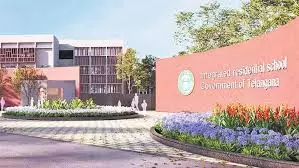
Instead of limiting the role of welfare schemes for sustenance, Revanth Reddy focused on providing quality education and skill development to all sections of society by establishing Young India schools and the Skill Development university — the two initiatives that could transform Telangana into a talent powerhouse.
Though the Congress drew a blank in the Assembly seats from the Hyderabad region, the Revanth Reddy government laid out plans to remodel the Telangana capital into a green city which is harmonious with nature yet technologically advanced.
As part of it, the government created a special task force called HYDRAA to reclaim occupied lake and river beds to prevent urban flooding, which had become notoriously frequent in Hyderabad, and sought to revive the river Musi, which had turned into a sewer due to decades of neglect. As a growing population strained the infrastructure, Revanth Reddy took a momentous decision to establish a new futuristic planned city, called Bharat Future City.
After laying the groundwork for a stable and clean state through welfare and development, the government directed its energies to attracting investments, which are crucial for sustainable development. The Telangana Rising Summit, underway at the Bharat Future City, which Mr Reddy has called an economic summit, is precisely directed to achieve this by showcasing the new, forward-looking Telangana, which is at peace with itself and aims to march ahead with confidence.
The state government’s agenda is truly ambitious by any measure, including to grow to a $3 trillion economy by 2047. If the Telangana’s plans are successful, it will become a model for other states in achieving sustainable development that encompasses a range of substance support, quality education, skilling, job creation, and business-friendly policies.
While the world is moving towards trade protectionism, and an intense competition among Indian states for investments could make the task that the Revanth Reddy government has set for itself quite difficult, India has time and again shown the world that nothing is impossible. Telangana hopefully takes inspiration from this indomitable spirit.
