DC Edit | Hope On Horizon For Thaw In India-US Ties?

Every US President — beginning with Bill Clinton and including Donald Trump in his first term — has recognised the economic limitations of the world’s most populous country and the world’s largest democracy in opening up its agriculture sector and protecting small businesses, the highest job providers in India
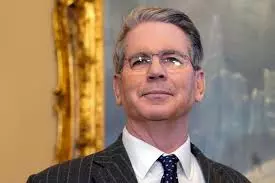
After several weeks of disparaging comments from US President Donald Trump and his officials, especially Peter Navarro, aimed at building pressure on India to concede to Washington’s demands on trade concessions, US treasury secretary Scott Bessent appears to have offered some hope for the resurrection of warm relations between India and the United States.
Though Mr Bessent characterised the state of India-US relations as “complicated”, particularly in light of newly imposed tariffs of up to 66 per cent on Indian products, the treasury secretary also highlighted the commercial and diplomatic convergence between India and the United States.
Relations between India and the US have long been considered among the strongest and most consequential in the world, owing to their common interests in containing the rise of China and ensuring a rules-based global order.
Every US President — beginning with Bill Clinton and including Donald Trump in his first term — has recognised the economic limitations of the world’s most populous country and the world’s largest democracy in opening up its agriculture sector and protecting small businesses, the highest job providers in India. They built relations with New Delhi while accommodating these realities. The re-election of Donald Trump — and the Republican majority in the US Congress — appears to have altered the equations in Washington.
Judging by his aggressiveness on trade tariffs, Trump in his second term appears keen on playing hardball with every country — irrespective of whether friend or foe. For him, the interests of American voters take precedence over every other consideration, including global alliances. Since farmers make up a large section of the voters who helped re-elect him, Trump seems determined to find them new markets — and what better option than India, the world’s most populous country?
India, however, cannot compromise on its hard-earned food security and make the welfare of one billion people subservient to the economic interests of 3.4 million American farmers. This has led to the current stalemate between two natural allies. Although the Trump administration imposed a 25 per cent trade tariff and an additional 25 per cent penal tariff ostensibly for importing Russian crude oil, most in India believe the sanctions were meant to force compliance with Washington’s demands.
While India needs US support to counter a rising China and accelerate its emergence as a developed country, no Indian government will barter away its food security. The sooner the Trump administration realises this, the better it will be for both India and the United States.
China has already surpassed the United States in many critical technologies. The Chinese are far ahead in science and technology compared to the Americans. No country in the world — except perhaps the United States — has the capacity to stare down Beijing as India can.
A strong and developed India is, therefore, in the interests of 340 million Americans and their country’s long-term economic and geopolitical future. Trump would do well to recognise this reality and not make India a punching bag to prove his greatness to his voters.
