DC Edit | Govt Needs To Drop New Rural Jobs Scheme Plan

Indeed, every salient feature of the MGNREGA scheme is done to death in the new proposed scheme. The most important element of the scheme was that it guarantees 100 days of work for the rural poor and the government was bound to compensate the registered persons monetarily if it could not employ them for the stipulated number of days
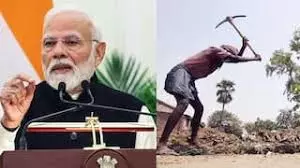
The decision of the Union government to rename and rework the Mahatma Gandhi National Rural Employment Guarantee Scheme (MGNREGS) and introduce a truncated version cuts at the very roots of a scheme that helped crores of Indians become part of the nation-building process and come out of poverty. It is not that the government cannot present another scheme with its focus areas as under the proposed Viksit Bharat Guarantee for Rozgar and Ajeevika Mission (Gramin) (VB-G RAM G) Bill; it’s just that it appears to be bent on eliminating the legacy of a scheme named after the Father of the Nation.
Indeed, every salient feature of the MGNREGA scheme is done to death in the new proposed scheme. The most important element of the scheme was that it guarantees 100 days of work for the rural poor and the government was bound to compensate the registered persons monetarily if it could not employ them for the stipulated number of days. This demand-driven scheme will now give way to a supply-driven scheme under the new bill wherein the registered persons will get the job only if the government can supply it to them; it is under no obligation to guarantee it, however. Liberalised economies have long stopped offering guarantees but such an approach by the government towards people from the lowest strata of society will hit them hard, more so when it undoes a guarantee so far in place.
Next, the MGNREGS was designed as a scheme fully sponsored and funded by the Union government. It’s now being transformed to yet another scheme where the Union government and states will share expenses at a ratio of 60:40. Earlier, it was a means for the Union government to help out cash-strapped state governments roll out projects that can benefit the rural economy and ensure guaranteed income for the labourers. The money in the hands of the poor entered the economic cycle and started moving it instantly. The benefits were many and could be felt across the segments of society.
It may be remembered that the United Progressive Alliance (UPA) government introduced the scheme in 2005 when the Union government did not enjoy the kind of control over tax revenue and purse strings as it now does thanks to the Goods and Services Tax regime. Still, the present government now wants to turn the scheme on its head and burden the already overburdened states. To add to states’ woes, the excess work undertaken by them would have to be paid for by those governments themselves.
And, too, under the new scheme, it will be the Union government that will decide the programmes to be undertaken. It has in fact listed out four focus areas. This is against the grain of the original scheme which handed over the planning and execution of projects to the grassroots. It is, therefore, the duty of the government to explain why it wants to thus centralise a scheme designed to help address local, rural and remote issues. One-size-fits-all schemes are against the principles of decentralisation.
It may be argued that the increase in the number of days offered under the scheme — to 125 from the existing 100 — is a welcome feature of the bill. However, holidays during the peak agriculture season will no doubt cancel another important aim of the original scheme that liberated agricultural labourers from the clutches of the landlords.
MGNEGA is named after the Father of the Nation who proposed the idea of antyodaya, or care for the last man. But the new pared down scheme aligns more with the authoritarian principles of the Sangh Parivar. The Union government must drop this destructive bill immediately as it does have a real potential to drive crores of beneficiaries of the old scheme back into penury.
