DC Edit | Govt Must Consult All On States’ Parliament Seats

An increase in the number of representatives in the Lok Sabha and in the state Assemblies is long due as they do not match the population explosion the country has seen in the last few decades
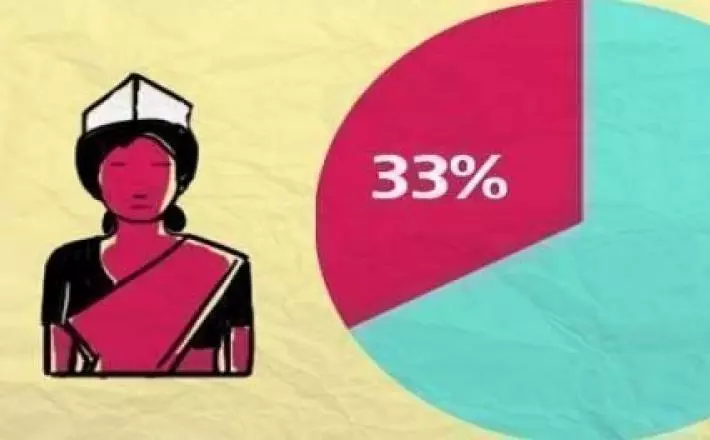
Prime Minister Narendra Modi’s statement on Saturday indicating that the the government was taking practical steps for the implementation of the law mandating 33 per cent reservation for women in the Lok Sabha and in state Assemblies, and that the government was planning to increase the number of seats in the Lok Sabha accordingly without upsetting the share of seats available to the states, are welcome.
The Prime Minister’s statement has come against the backdrop of Parliament planning to meet from April 16 to 18 to discuss and advance the Nari Shakti Vandan Act, which reports say will give statutory backing for the changes. Mr Modi’s statement takes away an entrenched fear among the southern states that they will be punished for implementing population control measures successfully over the past five decades and that a delimitation process based only on population could bring down their share in the seats in the lower house drastically.
An increase in the number of representatives in the Lok Sabha and in the state Assemblies is long due as they do not match the population explosion the country has seen in the last few decades. The Lok Sabha started off in 1951 with 489 seats for a population of 36 crore. The present figure of 545 seats was decided as part of the 31st amendment of the Constitution in 1973 when India’s population was 59 crore. India’s population is estimated to be 142 crore now. Additionally, India has one of the the poorest ratios for legislature representation for total population among modern democracies.
While an increase in the number of the seats in the Lok Sabha which is reflective of the population is very much in order, it has faced a practical roadblock. There was an assurance in the form of a Constitution amendment from the Union government to the states that active participation in the population control measures, and the resultant lesser headcount, will not impact their share of seats in the lower house of Parliament in the next 25 years. While the southern states have been successful in containing the population growth, several northern states are not, creating a piquant situation.
The proposal for an increase in the number of seats in the Lok Sabha after the 2026 Census based on population had sent some alarm bells ringing. The demands of the women’s reservation law gave a background for the reworking of the numbers, too.
The Prime Minister’s suggestion that the government intends to keep the states’ quota unaffected in terms of their share in the total number of seats thus brings a temporary solution to the difficult question. At the same time, the government must carefully plan the trajectory the population growth will take in India in the future. India at present has one of the youngest populations but it need not remain so. The pressures of population growth and the fears of a geriatric community are tough to balance; Parliamentary representation is just one such complication it would trigger. The government must start talking to all stakeholders and arrive at an agreeable path for the future.
